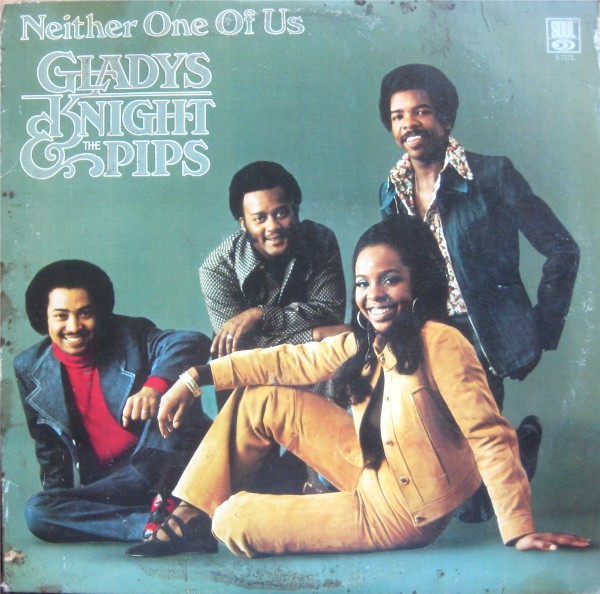
Neither One Of Us
 View on Discogs
Album Summary
Neither One Of Us came into the world in early 1973 on Soul Records, that deeply soulful subsidiary of the Motown empire, produced by the gifted hands of Joe Porter and Johnny Bristol. Recorded in Detroit, this album captured Gladys Knight and the Pips at the absolute peak of their powers — and anybody who was paying attention back then knew they were witnessing something special. Gladys brought that emotionally raw, gut-level vocal delivery that she was born to give, and the Pips wrapped around her with harmonies so tight and so polished they sounded like they were cut from the same beautiful cloth. The lush orchestral arrangements that Soul Records was known for in that era gave the whole project a grandeur that matched the emotional weight of the performances. This was a group firing on all cylinders, and the music knew it.
Reception
- The title track 'Neither One Of Us (Wants To Be The First To Say Goodbye)' ascended to number one on the Billboard R&B chart and climbed all the way to number two on the Billboard Hot 100 in 1973, proving that the world was ready and waiting for exactly this kind of soul.
- The album earned Gladys Knight and the Pips a Grammy Award for Best R&B Performance by a Duo or Group with Vocals for the title track, a recognition that was long overdue and absolutely deserved.
- Critics showered the project with praise for its emotional depth and the sheer authenticity of Gladys Knight's vocal work, setting the group apart from the broader Motown roster in a way that felt undeniable.
Significance
- Neither One Of Us stands as one of the defining soul records of the early 1970s, masterfully bridging the polished Motown sound with a more emotionally direct, southern soul sensibility that helped chart the course of R&B for the rest of the decade.
- This album represented the glorious culmination of Gladys Knight and the Pips' Motown era, arriving just before their celebrated move to Buddah Records — making it a landmark farewell statement to the label that first housed their greatness.
- The title track's themes of romantic resignation and shared heartbreak cut so deep that it has endured through decades of radio airplay and cultural memory, earning its rightful place among the greatest soul ballads ever committed to vinyl.
Samples
- Daddy Could Swear, I Declare — sampled across multiple hip-hop and R&B productions, with its rhythmic groove and declarative energy making it one of the more frequently lifted moments from this album's catalog.
- Neither One Of Us (Wants To Be The First To Say Goodbye) — sampled and interpolated by various artists drawn to its iconic melodic and emotional weight, its legacy extending well beyond its original 1973 release.
Tracklist
-
A1 Neither One Of Us (Wants To Be The First To Say Goodbye) —
 4:15
4:15
-
A2 It's Gotta Be That Way —
4:32
-
A3 For Once In My Life —
4:00
-
A4 This Child Needs Its Father —
3:15
-
A5 Who Is She (And What Is She To You) —
4:12
-
B1 And This Is Love —
3:21
-
B2 Daddy Could Swear, I Declare —
3:42
-
B3 Can't Give It Up No More —
3:38
-
B4 Don't It Make You Feel Guilty —
3:15

Artist Details
Gladys Knight And The Pips were a soul and rhythm and blues group out of Atlanta, Georgia, who came together in the late 1950s as a family act — with Gladys Knight leading her brother, sister, and two cousins through harmonies so tight they could make the midnight air stand still. Through the 1960s and into the 1970s, they delivered stone cold classics like "Midnight Train to Georgia" and "I Heard It Through the Grapevine," cementing their place as one of the greatest vocal groups to ever grace the American music landscape, with Gladys's raw, gospel-drenched voice carrying enough emotion to shake the soul right out of a person. Their legacy runs deep as a Southern river, bridging the gap between gospel roots and mainstream soul, and standing as a towering testament to the power of family, harmony, and Black musical tradition in America.