
Raising Hell
 View on Discogs
 View on Wikipedia
Album Summary
Raising Hell came roaring out of the speakers on May 15, 1986, dropped through Profile Records and birthed by the unstoppable creative partnership of Russell Simmons and Rick Rubin — two cats who understood something deep about where music was heading. Recorded largely at Chung King Studios in the heart of New York City, this record was no accident. Simmons and Rubin pushed Run-DMC with intention and fire, fusing hard rock guitar riffs with stripped-down hip-hop beats and DJ scratching in a way that felt both dangerous and undeniable. This was a deliberate creative escalation — Run-DMC reaching for something bigger, harder, and more powerful than anything hip-hop had put on wax before, and brother, they found it.
Reception
- Raising Hell became the first hip-hop album to achieve platinum certification, eventually moving over three million copies in the United States alone — a commercial milestone that the industry simply could not ignore.
- The album climbed to number three on the Billboard 200 and seized the number one position on the Billboard R&B/Hip-Hop Albums chart, setting a new standard for what a rap record could achieve on the mainstream charts.
- Critics met the album with widespread praise, citing its bold production and genre-defying ambition as a genuine breakthrough — the moment hip-hop demanded and received serious recognition from mainstream music criticism.
Significance
- The convergence of Run-DMC and Aerosmith on 'Walk This Way' stands as one of the most consequential moments in popular music history, cracking open mainstream rock radio and MTV to hip-hop in a way that permanently rewired the cultural landscape and bridged two audiences that had long lived on opposite sides of the dial.
- Raising Hell elevated hip-hop into the arena rock era, with Run-DMC becoming one of the first rap acts to headline major arenas on the strength of this record — proving that hip-hop was not a passing trend but a full-blown cultural force demanding the biggest stages.
- The album's seamless marriage of hard rock guitar tones, DJ scratching, and rap vocals laid down a blueprint for rap-rock crossover music that would echo through generations of artists, making Raising Hell one of the most influential records in the architecture of modern popular music.
Samples
- "Peter Piper" — built around the Bob James 'Take Me to the Mardi Gras' breakbeat, this track has itself become a widely sampled source, with its drum patterns and scratches appearing across countless hip-hop productions.
- "Walk This Way" — sampled and interpolated from Aerosmith's original, the Run-DMC version has since been referenced and sampled across hip-hop and pop productions as an emblem of the crossover era.
- "My Adidas" — sampled by numerous artists drawn to its stark drum programming and iconic cultural weight within hip-hop history.
- "It's Tricky" — one of the most recognizable hooks in hip-hop, sampled and interpolated across pop, hip-hop, and commercial productions over the decades.
- "You Be Illin'" — its drum break and rhythmic structure have been lifted by hip-hop producers seeking that classic mid-eighties New York street sound.
Tracklist
-
A1 Peter Piper —
 3:23
3:23
-
A2 It's Tricky —
3:03
-
A3 My Adidas —
2:47
-
A4 Walk This Way —
5:11
-
A5 Is It Live —
3:06
-
A6 Perfection —
2:52
-
B1 Hit It Run —
3:10
-
B2 Raising Hell —
5:31
-
B3 You Be Illin' —
3:26
-
B4 Dumb Girl —
3:31
-
B5 Son Of Byford —
0:27
-
B6 Proud To Be Black —
3:14

Artist Details
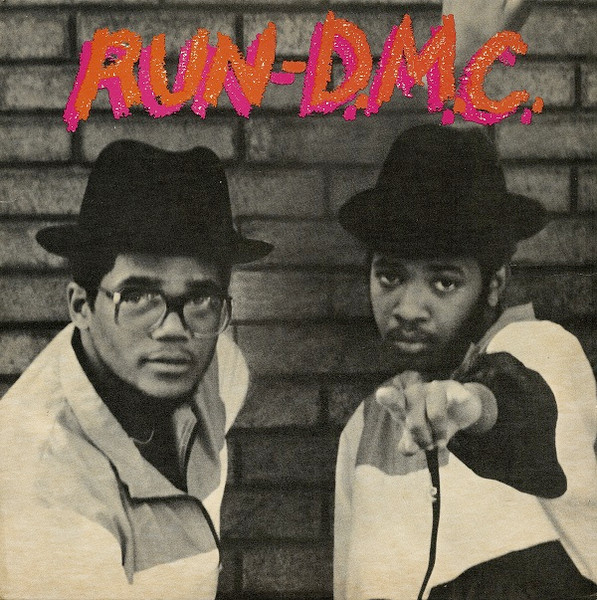
Run-DMC burst onto the scene out of Hollis, Queens, New York in the early 1980s, and brothers Joseph "Rev Run" Simmons and Darryl "DMC" McDaniels, alongside DJ Jam Master Jay, rewrote the entire rulebook of hip-hop with their raw, stripped-down beats, thunderous drum machines, and that unmistakable fusion of hard rock and street rap that hit you like a freight train. These cats weren't just making music — they were the first hip-hop group to go platinum, the first to grace the cover of Rolling Stone, and their landmark collaboration with Aerosmith on "Walk This Way" cracked open the mainstream like nobody's business, bringing rap to audiences who didn't even know they needed it. Run-DMC laid the foundation for every rapper who came after them, proving that hip-hop wasn't a passing trend but a cultural force powerful enough to reshape American music forever.