Tough Guys
 View on Discogs
 View on WhoSampled
Album Summary
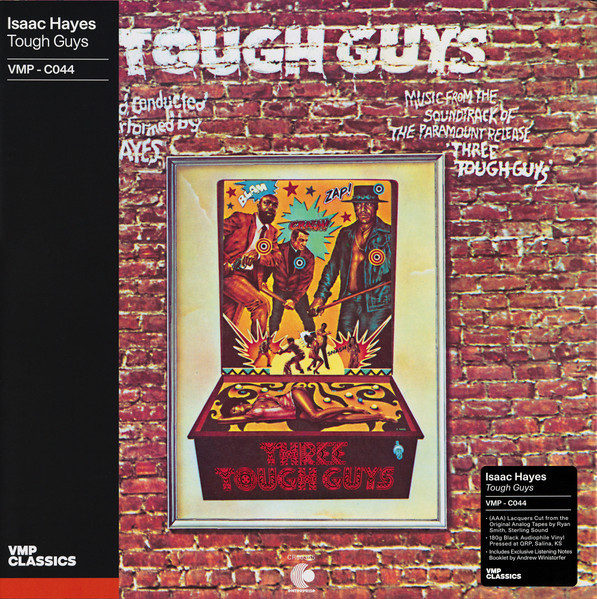
Isaac Hayes laid down 'Tough Guys' as the soundtrack to the 1974 blaxploitation film of the same name, releasing it through Enterprise/Stax Records — the same home that had watched him ascend to the throne of cinematic soul. Hayes, ever the architect of his own vision, produced the album himself, bringing that same commanding creative authority he'd carried since the beginning. This record arrived during a fertile stretch when Hollywood was knocking hard on the doors of Black composers, hungry for the kind of raw authenticity and street-level grandeur that only someone like Isaac Hayes could deliver. 'Tough Guys' was born from that moment in time — a moment when funk, film, and Black artistry were locked in a powerful, undeniable groove together.
Reception
- The album performed modestly on the R&B charts, carried in no small part by Hayes's loyal following and the still-churning commercial engine of the blaxploitation film cycle.
- Critical reception among fans of Hayes's orchestral funk approach was generally warm, though some reviewers positioned it as a workmanlike soundtrack effort rather than the kind of earth-shaking statement his earlier film scoring had represented.
- By 1974, the blaxploitation marketplace had grown crowded, and the album's commercial showing reflected an audience that had begun to reach its saturation point with the genre — even when the music was this good.
Significance
- Tough Guys stands as living proof of Isaac Hayes's towering role in forging the blueprint for orchestral, funk-driven film scoring — a blueprint that shaped the sound of Black cinema in the early 1970s and sent ripples through decades of music that followed.
- The record is a masterclass in Hayes's singular ability to marry gritty, street-hardened funk with sweeping lush orchestration, a combination that carved out a distinct and powerful African American cinematic voice at a pivotal moment in Hollywood history.
- As one of several film projects Hayes helmed during this era, Tough Guys reinforces his status not merely as a performer but as a fully realized auteur — a composer and producer who understood that the screen and the soul could speak the same language.
Samples
- Run Fay Run — one of the most heavily sampled tracks in Hayes's catalog, with a rich hip-hop legacy spanning decades of producers drawn to its relentless, hypnotic groove.
- Hung Up On My Baby — sampled across multiple hip-hop productions, with its deep pocket funk arrangement proving irresistible to beatmakers seeking that classic Hayes-built tension.
- Title Theme — has attracted sampling attention from producers drawn to its cinematic weight and slow-burning orchestral funk atmosphere.
- Buns O' Plenty — picked up by hip-hop producers for its rhythmic density and the kind of raw, rolling groove that defined Hayes's approach to soundtrack construction.
Tracklist
-
A1 Title Theme —
 2:32
2:32
-
A2 Randolph & Dearborn —
4:24
-
A3 The Red Rooster —
4:04
-
A4 Joe Bell —
4:57
-
B1 Hung Up On My Baby 103
6:15
-
B2 Kidnapped —
2:40
-
B3 Run Fay Run —
2:45
-
B4 Buns O' Plenty —
4:37
-
B5 The End Theme —
1:13

Artist Details
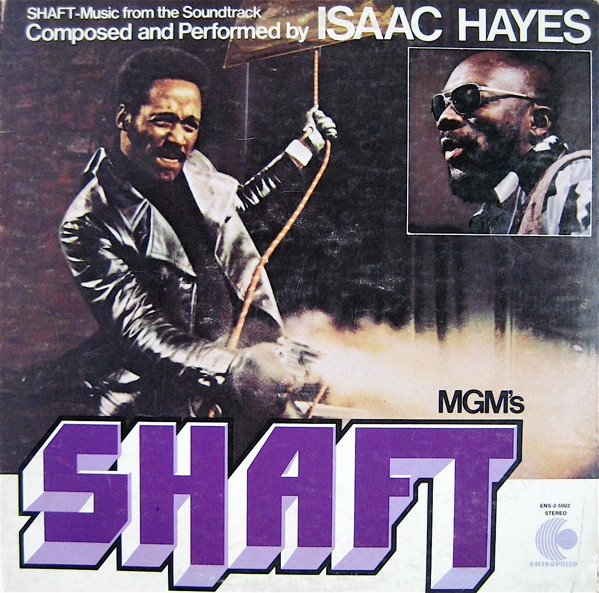
Isaac Hayes was a Memphis-born soul mastermind who rose to legendary status in the late 1960s and 1970s, first as a songwriter and producer for Stax Records — where he helped craft the sound of Otis Redding and Sam & Dave — before stepping into the spotlight himself with his lush, orchestrated brand of deep soul and funk that turned albums like *Hot Buttered Soul* and the *Shaft* soundtrack into stone-cold classics. That *Shaft* theme didn't just win him an Academy Award in 1972, it made him the first Black artist to win in a non-acting category, and it cemented his place as a towering figure who brought Black masculinity, sensuality, and sophistication to the forefront of American popular culture. Hayes moved through the music world like velvet thunder — bold, smooth, and utterly unforgettable — proving that a brother from Covington, Tennessee could shake the whole world.