Madvillainy 2: The Madlib Remix
 View on Discogs
 View on Wikipedia
Album Summary
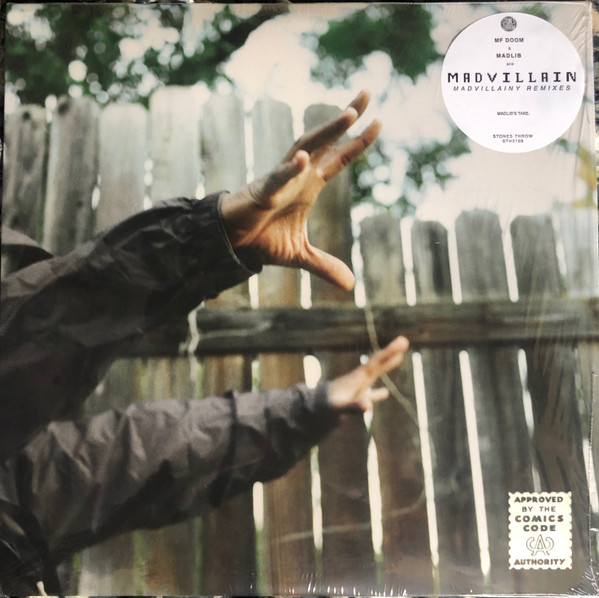
Madvillainy 2: The Madlib Remix came rolling out of Stones Throw Records in 2008 like a late-night transmission from another dimension — a bold, restless reimagining of the legendary 2004 Madvillainy album by the duo Madvillain, comprised of the masked wordsmith MF DOOM and the Oxnard beat scientist Madlib. Rather than a conventional sequel, this project finds Madlib doing something few producers have the audacity or the vision to attempt: tearing apart his own masterwork and rebuilding it from the inside out. The instrumental foundations are stripped, restructured, and reconstructed entirely, while DOOM's inimitable vocal performances remain largely intact, now floating over whole new sonic landscapes. It is Madlib treating the original album not as a finished monument but as raw clay — still warm, still moldable — a testament to his relentless, experimental spirit and his deeply held belief that creation is a process with no true endpoint.
Reception
- The release was warmly embraced by dedicated fans and discerning critics already deep in the Madvillain universe, though it drew considerably less mainstream press attention than the groundbreaking original album.
- Critics who engaged with it generally praised the project as a rare and fascinating window into Madlib's production philosophy, noting how the reimagined beats cast DOOM's rhymes in striking new light and revealed previously hidden textures in the original performances.
- It did not chart significantly, functioning far more as a limited-release collector's artifact within the underground hip-hop community than as any kind of commercial offering — and that, for Stones Throw, was entirely by design.
Significance
- Madvillainy 2 stands as one of the most striking examples in hip-hop history of a producer officially remixing his own canonical work, with Madlib treating the original Madvillainy not as sacred and untouchable but as a living document subject to perpetual reinvention.
- The album deepened the already towering cult legacy of the Madvillain project by constructing an entire alternate sonic universe from the same lyrical performances, reinforcing the duo's status as genuinely avant-garde forces in underground rap who operated entirely outside the boundaries of commercial convention.
- As a Stones Throw Records release, it stands as a defining artifact of that label's ethos — the deliberate, unapologetic prioritization of artistic experimentation over accessibility — and remains a touchstone for producers and listeners who understand that the studio is not a factory but a laboratory.
Tracklist
-
A1 Pow —

-
A2 No Brain —
-
A3 Pearls —
-
A4 Light Of The Past —
-
A5 Boulder Holder —
-
A6 Borrowed Time —
-
B1 Space Ho's Coast To Coast —
-
B2 Invazion (Interlude) —
-
B3 Draino —
-
B4 Fire In The Hole —
-
B5 Heat Niner —
-
C1 Monkey Suit —
-
C2 Fluid (Instrumental) —
-
C3 Can't Reform Em —
-
C4 Redd Spot (Interlude) —
-
C5 Running Around With Another —
-
C6 Butter King Jewels —
-
D1 The Sermon —
-
D2 Roller Coaster Rider (Instrumental) —
-
D3 3.14 —
-
D4 Confucius Spot (Interlude) —
-
D5 Never Go Pop —
-
D6 Savage Beast (Instrumental) —
-
D7 Cold One —
-
D8 Cold One (Reprise) —

Artist Details
Madvillain is the legendary underground hip-hop duo born from the powerful union of rapper MF DOOM and producer Madlib, coming together in Los Angeles in the early 2000s to drop their one and only masterpiece, Madvillainy, in 2004 — a record so raw, so abstract, and so beautifully strange that it rewired what cats thought rap music could even be. Their sound was a hypnotic collision of Madlib's dusty, jazz-soaked, chopped-up beats and DOOM's labyrinthine rhymes, dripping with comic book imagery, villain mythology, and a kind of deliberate weirdness that felt like bebop filtered through a funhouse mirror. That album didn't just earn a cult following — it became the holy scripture of independent hip-hop, cementing both men as untouchable icons and proving that art made purely on its own terms, outside the mainstream machine, could echo through generations.