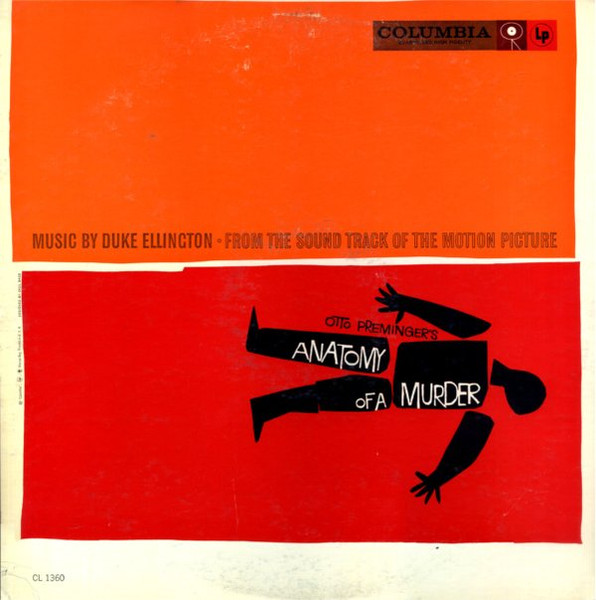
Otto Preminger's Anatomy Of A Murder (From The Sound Track Of The Motion Picture)
 View on Discogs
Album Summary
Duke Ellington And His Orchestra laid down one of the most remarkable recordings in jazz and film history when they crafted the soundtrack to Otto Preminger's courtroom drama 'Anatomy of a Murder' in 1959, released on Columbia Records. Ellington himself composed and conducted the entire score, with his longtime musical soulmate Billy Strayhorn lending his genius as a close collaborator — and the whole thing came together in a breathtakingly short window of time after the band sat down and watched the film. That kind of creative lightning in a bottle was pure Duke. What emerged was not just a movie score but a full-blooded jazz statement, one that stands as one of the first major Hollywood film scores ever composed and performed by a Black jazz artist — a milestone that reverberates through every note pressed into that Columbia vinyl.
Reception
- The soundtrack drew widespread critical acclaim upon release, with reviewers marveling at how Ellington translated courtroom tension, flawed characters, and moral ambiguity into pure jazz language — something no Hollywood composer had dared to do quite like this before.
- The album earned Duke Ellington a Grammy nomination, a recognition that underscored what the jazz world already knew — that the Duke was operating on a level of compositional seriousness that demanded the industry's full attention.
- Critics of the era singled out the score's seamless weaving of blues, swing, and cool jazz as a bold and sophisticated contrast to the conventional orchestral arrangements that dominated Hollywood film music at the time.
Significance
- This album holds a towering place in music history as one of the earliest major American film scores composed and performed by a Black artist, representing a genuine crack in the racial walls of the Hollywood studio system that had kept Black composers on the outside looking in for decades.
- Ellington forever changed the conversation about what jazz could do inside a movie theater — his score proved that jazz was not just nightclub music but a dramatic language capable of carrying the full emotional and narrative weight of serious cinema, paving the way for every jazz-influenced film composer who came after him.
- The recording captured the Duke Ellington Orchestra firing on all cylinders, with luminous contributions from soloists including Johnny Hodges and Paul Gonsalves, and it remains one of the most definitive and revered examples of jazz deployed as a cinematic storytelling force.
Tracklist
-
A1 Main Title And Anatomy Of A Murder —

-
A2 Flirtibird —
-
A3 Way Early Subtone —
-
A4 Hero To Zero —
-
A5 Low Key Lightly —
-
A6 Happy Anatomy —
-
B1 Midnight Indigo —
-
B2 Almost Cried —
-
B3 Sunswept Sunday —
-
B4 Grace Valse —
-
B5 Happy Anatomy —
-
B6 Haupé —
-
B7 Upper And Outest —

Artist Details
Duke Ellington And His Orchestra — now there's a name that carries the weight of pure musical royalty, baby. Born out of Washington D.C. in the early 1920s and rising to legendary status at Harlem's Cotton Club, Duke Ellington led one of the most sophisticated and swinging big bands jazz has ever known, blending lush orchestral arrangements with blues, swing, and classical influences into a sound that was wholly and unmistakably his own. Edward Kennedy Ellington didn't just shape the sound of American music — he elevated jazz into a serious art form, composing thousands of works that stand as a towering testament to Black American genius and creativity, making his orchestra one of the most culturally significant ensembles the world has ever had the privilege of hearing.