Hobo's Lullaby
 View on Discogs
 View on Wikipedia
Album Summary
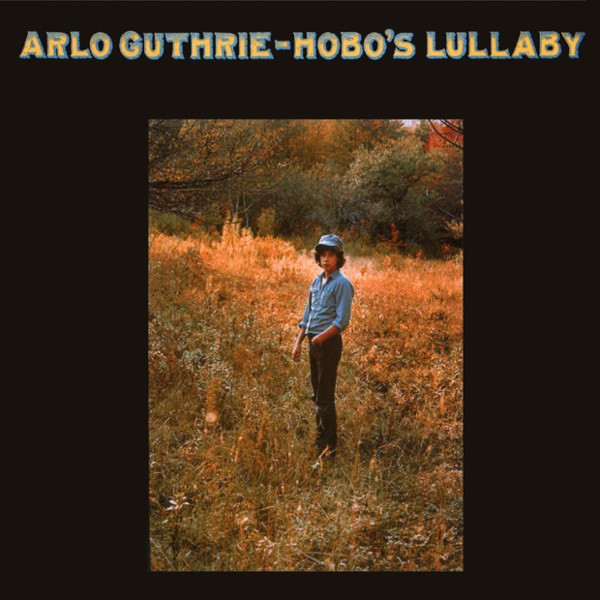
Hobo's Lullaby came to life in 1972 on Reprise Records, arriving at a moment when Arlo Guthrie was doing something truly beautiful — stepping out from the long shadow of his legendary father Woody and carving his own name into the bark of American folk music. Produced by Lenny Waronker, this album found Arlo in a warm and unhurried place, weaving together traditional folk and country material with original compositions in a way that felt less like a recording session and more like a front-porch gathering. The record captured Guthrie's easy, conversational singing style and his deep reverence for the hobo troubadour tradition, delivering something honest and timeless in an era when the singer-songwriter movement was blooming all across the American landscape.
Reception
- The album achieved meaningful commercial success for a folk-oriented release of its time, driven in large part by the breakout performance of Steve Goodman's 'The City Of New Orleans,' which became one of Arlo Guthrie's signature songs and reached the Top 20 on the Billboard Hot 100.
- Within folk and Americana circles, critical reception was warm and respectful, with reviewers recognizing Guthrie's authentic and unpretentious approach to both traditional material and contemporary songwriting.
- The album helped solidify Guthrie's standing as a serious recording artist in his own right, beyond the novelty of 'Alice's Restaurant,' and earned him a devoted following among fans of roots music and the singer-songwriter tradition.
Significance
- Hobo's Lullaby stands as a defining document of the early 1970s folk-country crossover moment, a time when artists were reaching back into the roots of American music and finding something urgent and alive in the old songs — and Arlo Guthrie was one of the truest voices of that movement.
- The album honors the hobo and working-class storytelling tradition that Woody Guthrie helped immortalize, with Arlo demonstrating through tracks like '1913 Massacre' and the title song 'Hobo's Lullaby' that he was not just carrying his father's torch but burning it bright on his own terms.
- By mixing traditional folk standards, a Woody Guthrie composition, and the brilliant contemporary songwriting of Steve Goodman's 'The City Of New Orleans,' Guthrie created an album that bridged generations of American folk music with grace and genuine soul.
Tracklist
-
A1 Anytime 77
 1:46
1:46
-
A2 The City Of New Orleans 145
4:31
-
A3 Lightning Bar Blues 136
2:47
-
A4 Shackles And Chains —
2:49
-
A5 1913 Massacre 49
4:15
-
A6 Somebody Turned On The Light 74
3:13
-
B1 Ukulele Lady 126
3:21
-
B2 When The Ship Comes In 74
4:24
-
B3 Mapleview (20%) Rag 131
2:05
-
B4 Days Are Short 78
4:15
-
B5 Hobo's Lullaby 185
3:57

Artist Details
Arlo Guthrie, son of the legendary folk poet Woody Guthrie, emerged from the rich soil of the American folk revival in the late 1960s, carrying his father's torch of storytelling right into the hearts of a generation hungry for truth and meaning. His 1967 epic talking blues masterpiece Alice's Restaurant Massacree put him on the map in a big way, stretching nearly 19 minutes of pure American wit and anti-war sentiment that became an anthem for the counterculture movement, and his gentle, rolling version of Steve Goodman's City of New Orleans became a top ten hit in 1972 that reminded everyone what it felt like to love this country even when times were hard. Arlo stood at the crossroads of folk, country, and rock and roll, a humble troubadour whose music and legacy cemented his place not just in music history, but in the very conscience of a nation finding its way through one of its most turbulent chapters.