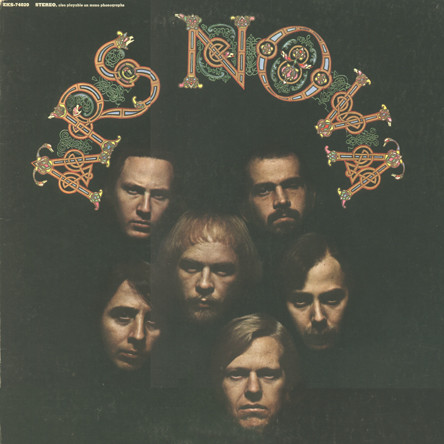
Ars Nova
 View on Discogs
 View on Wikipedia
Album Summary
Ars Nova's self-titled debut dropped in 1968 on the storied Elektra Records label, and baby, this was no ordinary arrival. This New York-based ensemble — steeped in classical training but absolutely restless with it — brought together a sound that had no real business existing in 1968, and yet here it was, fully formed and fearless. The album captured a group of serious musicians who had looked at the Western classical tradition, tipped their hats to it, and then walked straight off the map into something altogether wilder. Blending Renaissance and medieval influences with psychedelic rock textures, jazz sensibility, and avant-garde compositional daring, the sessions produced one of the more genuinely surprising records to come out of the late 1960s experimental underground. The result was an album that felt like it existed outside of time — which, given how deeply the group was reaching back into early music while simultaneously pushing forward into uncharted sonic territory, was exactly the point.
Reception
- The album found its audience primarily among the adventurous listeners and experimental music communities of the late 1960s, making little impact on mainstream commercial charts but earning genuine respect in the circles that mattered.
- Critical reception at the time acknowledged the ensemble's bold fusion of early classical forms with contemporary psychedelic and avant-garde sensibilities, though widespread recognition eluded the record upon its initial release.
- The album remained a cult artifact for decades, appreciated by those who stumbled upon it as a rare and uncommonly sophisticated artifact of 1960s experimental music.
Significance
- Ars Nova's debut stood as one of the earliest and most fully realized examples of the classical-rock fusion movement, doing something genuinely rare — bringing rigorous early music scholarship into direct conversation with the electric, searching spirit of the psychedelic era.
- The album's structure, woven together with entr'actes drawn from Renaissance and medieval source material alongside original compositions, created a listening experience that was as much a statement about music history as it was a piece of living, breathing 1968 artistry.
- Tracks like 'March Of The Mad Duke's Circus' and 'Fields Of People' demonstrated the ensemble's gift for marrying the ornate and the visceral, helping lay groundwork for what would later be called progressive rock and chamber rock.
Tracklist
-
A1 Pavan For My Lady 173
 2:45
2:45
-
A2 General Clover Ends A War 118
2:12
-
A2b Entracte: Le Messe Notre Dame —
0:30
-
A3 And How Am I To Know 126
4:45
-
A3b Entracte: Dancer —
0:25
-
A4 Album In Your Mind 122
3:01
-
A5 Zarathustra (Instrumental) —
3:30
-
B1 Fields Of People 103
2:52
-
B1a Entracte: Vita De L'Alma Mia —
0:45
-
B2 Automatic Love 132
4:06
-
B2a Entracte: A Thought —
0:47
-
B3 I Wrapped Her In Ribbons (After Ibiza) —
2:18
-
B3a Entracte: Ada Wulff November 12, 1956 —
0:18
-
B4 Song To The City 134
2:08
-
B4a Entracte: Aquel Cabellero —
0:55
-
B5 March Of The Mad Duke's Circus 92
3:17

Artist Details
Ars Nova was a psychedelic rock outfit that emerged out of New York City in the late 1960s, blending classical baroque influences with swirling organ-driven rock in a way that made heads spin and ears perk up all across the underground scene. Their self-titled debut in 1968 on Atlantic Records showcased a band that wasn't afraid to get experimental, weaving together harpsichords, jazz textures, and hard rock in a fusion that was years ahead of what most cats were even dreaming about. They never quite broke through to mainstream stardom, but their bold approach to merging classical composition with rock energy left a fingerprint on the art rock and progressive rock movements that would come roaring into the next decade.