
On The Threshold Of A Dream
 View on Discogs
Album Summary
On the Threshold of a Dream was laid down at Decca's studio in London and released in April 1969 on Deram Records, a subsidiary of the mighty Decca label. Produced by the incomparable Tony Clarke — the quiet architect behind the band's most visionary work — this record was the Moody Blues doing what nobody else on the planet was doing quite like them. The Mellotron, in the gifted hands of Mike Pinder, washes over every groove like a symphony that decided it wanted to rock, giving the whole album a lush, orchestral warmth that just wraps itself around your soul. And those spoken-word philosophical passages framing the journey from beginning to end — that was no accident, baby. That was a band telling the world they were thinking deeper, reaching higher, and inviting every last listener to come along for the ride.
Reception
- The album soared straight to number 1 on the UK Albums Chart, a triumphant commercial statement that proved the Moody Blues had locked into something the public was hungry for — and hungry they were.
- Across the Atlantic, the record performed with impressive strength in the United States, cementing the band's reputation as a genuine transatlantic force in the rock world.
- Critical reception among devotees of progressive and psychedelic rock was warmly enthusiastic, though certain mainstream voices of the day found the album's philosophical reach a touch too lofty — a charge that only seemed to make the fans love it more.
Significance
- On the Threshold of a Dream stands as one of the true cornerstones of early progressive rock, weaving together classical sensibilities, existential poetry, and electric rock instrumentation in a way that lit a torch for an entire generation of artists who followed in the 1970s.
- Mike Pinder's sovereign command of the Mellotron on this record did nothing less than help crown that instrument as the defining sonic signature of the progressive rock era, with its influence heard unmistakably in the work of bands like Yes and Genesis who came after.
- The album's philosophical spoken-word framework — that spiritual bookending of the whole listening experience — captured the late-1960s countercultural soul in full bloom, reflecting a generation's deep hunger for meaning, Eastern thought, and the expansion of human consciousness.
Tracklist
-
A1 In The Beginning 143
 2:08
2:08
-
A2 Lovely To See You 126
2:35
-
A3 Dear Diary 88
3:56
-
A4 Send Me No Wine 187
2:20
-
A5 To Share Our Love 76
2:54
-
A6 So Deep Within You 97
3:07
-
B1 Never Comes The Day 106
4:43
-
B2 Lazy Day 110
2:43
-
B3 Are You Sitting Comfortably 98
3:31
-
B4 The Dream 106
0:55
-
B5 Have You Heard - Part I —
1:23
-
B6 The Voyage 75
4:07
-
B7 Have You Heard - Part II —
2:38

Artist Details
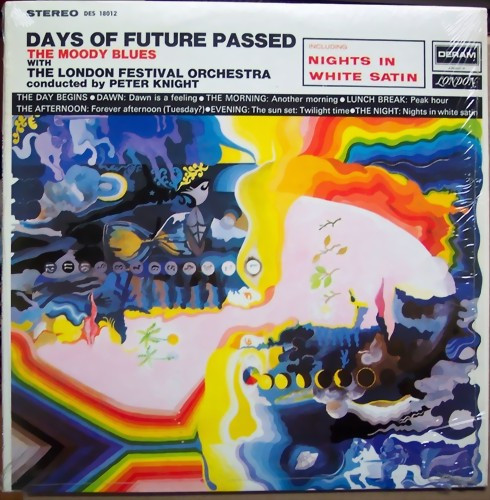
The Moody Blues were a magnificent British rock outfit that came together in Birmingham, England back in 1964, weaving together psychedelic rock, classical orchestration, and philosophical lyricism into a sound so lush and cosmic it practically invented the art rock and progressive rock genres before anyone even had a name for them. Their landmark 1967 album Days of Future Passed, recorded with the London Festival Orchestra, was a groundbreaking fusion of rock and classical music that shook the industry to its core and proved once and for all that rock and roll could be a serious, soul-stirring art form. These cats left an undeniable mark on music history, influencing generations of artists and earning a well-deserved induction into the Rock and Roll Hall of Fame in 2018, their dreamy, transcendent sound forever a reminder that music at its finest can lift the spirit straight to the stars.