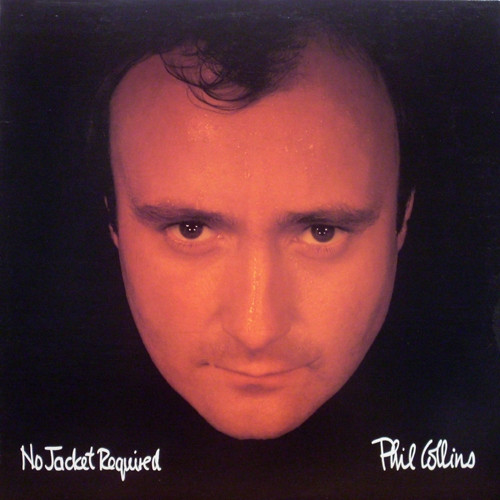
No Jacket Required
 View on Discogs
 View on Wikipedia
Album Summary
"No Jacket Required" came into this world in February of 1985 on Atlantic Records, and brother, it arrived like a force of nature. Recorded across 1984 and into 1985 — with significant time spent at the Power Plant in New York — this was Phil Collins stepping fully into his own spotlight, away from the Genesis mothership, and planting his flag in the soil of pure, uncut pop-rock gold. The man helmed production duties himself alongside his trusted collaborator Hugh Padgham, the two of them together crafting a sound so crisp and so full it practically leapt out of the speakers. The album's title said it all — no pretense, no formality, just Phil Collins showing up and showing out with a collection of songs that were warm, human, and impossible to resist.
Reception
- No Jacket Required hit the Billboard 200 at number one and dug in for 27 weeks in the top 10, making it one of the defining commercial triumphs of 1985.
- The album reached number one not just in the United States but across multiple major markets including the United Kingdom, Germany, and Australia, cementing Collins as a truly global force.
- Critics acknowledged the songwriting maturity on display and the album's immaculate pop-rock production, though a contingent of purists raised an eyebrow at how far Collins had traveled from the progressive rock world of Genesis.
Significance
- No Jacket Required stood as a monument to the mid-1980s production aesthetic — drum machines and synthesizers woven seamlessly into the fabric of live instrumentation, creating a sound that was simultaneously cutting-edge and deeply soulful.
- The album helped write the blueprint for how a musician rooted in progressive rock could cross over into mainstream pop without sacrificing the emotional weight that made the music worth caring about in the first place.
- At its core, No Jacket Required was a testament to the power of vulnerability — Collins leaning into introspective, personal storytelling at a moment when 1980s rock was hungry for exactly that kind of raw, unguarded honesty.
Samples
- Sussudio — one of the most recognizable tracks from the album, it has attracted notable sampling and interpolation interest over the decades owing to its infectious groove and iconic synth-bass foundation.
- Take Me Home — sampled and referenced across multiple hip-hop and R&B productions, with its anthemic quality making it a recurring source material for artists seeking emotional uplift in their records.
Tracklist
-
A1 Sussudio 121
 4:23
4:23
-
A2 Only You Know And I Know 141
4:20
-
A3 Long Long Way To Go 117
4:20
-
A4 I Don't Wanna Know 130
4:12
-
A5 One More Night 68
4:47
-
B1 Don't Lose My Number 40
4:46
-
B2 Who Said I Would 131
4:01
-
B3 Doesn't Anybody Stay Together Anymore 108
4:18
-
B4 Inside Out 94
5:14
-
B5 Take Me Home 117
5:51

Artist Details
Phil Collins, the British drummer turned frontman extraordinaire, first made his bones with the progressive rock giants Genesis back in 1970 before stepping out into the solo spotlight in 1981 with his landmark album Face Value, blending rock, pop, and soul into something that just grabbed you by the collar and wouldn't let go. That man's gated reverb drum sound on "In the Air Tonight" didn't just define a song — it defined a whole era, echoing through the 80s like a heartbeat you couldn't escape, and his ability to move between arena rock and tender balladry made him one of the most commercially dominant artists of his generation. Collins stood as a rare bridge between the album-oriented rock world and the glossy pop mainstream, racking up Grammy Awards and chart-topping hits on both sides of the Atlantic while leaving a sonic fingerprint on the decade that producers and fans are still feeling to this very day.