The Best Of ZZ Top
 View on Discogs
 View on Wikipedia
Album Summary
London Records dropped 'The Best Of ZZ Top' in 1977, and it was a long time coming — a beautifully curated snapshot of what that little ol' band from Texas had been cooking up since the early part of the decade. Produced throughout by the band's architect and longtime manager Bill Ham, this compilation drew from the deep well of ZZ Top's London Records catalog, pulling together the finest moments from their gritty, blues-drenched early years spanning roughly 1971 through 1976. Ham had always known how to frame Billy Gibbons' razor-wire guitar tone and let Dusty Hill and Frank Beard lock into that low-down groove, and this collection made that vision undeniable in one place. The album arrived at a pivotal moment — ZZ Top was preparing to move on to Warner Bros., and London was putting a bow on one of the most authentically Texan runs in rock and roll history, giving the world one last proper look at where it all began.
Reception
- The compilation performed strongly on the commercial front, riding the wave of ZZ Top's fiercely loyal fanbase across the American South and Southwest, a devoted audience the band had earned through years of relentless, sweat-soaked touring.
- Critics welcomed the album as an honest and well-assembled introduction to the band's early catalog, with particular praise directed at the raw interplay between Billy Gibbons' blues-rooted guitar work and the rhythmic foundation laid down by Dusty Hill and Frank Beard.
- The release served its commercial purpose admirably, keeping ZZ Top's profile alive and well during a transitional period between major studio efforts and helping sustain their momentum heading into a new chapter with a new label.
Significance
- This compilation stands as the definitive document of ZZ Top's London Records era — a raw, unpolished, gloriously blues-heavy body of work that set them apart from every other hard rock outfit walking the earth in the 1970s, and it deserves to be heard as exactly that.
- At a time when Southern rock and Texas blues were running deep through the cultural bloodstream of America, this album delivered ZZ Top's rootsy, dust-on-the-boots sound to a broader audience who may have missed these records the first time around.
- The release represents a genuine turning point in the band's story, closing the book on their formative years with dignity and authority, and quietly signaling that the three men from Houston were about to become something much bigger than even their most faithful believers had imagined.
Samples
- Tush — one of ZZ Top's most recognizable grooves, this track has been sampled and interpolated across hip-hop and funk-influenced productions over the decades, making it the most frequently borrowed moment in the band's early catalog.
- La Grange — built on one of the most primal boogie riffs in rock history and drawing from John Lee Hooker's blues foundation, this track has been sampled and referenced by hip-hop and rock artists drawn to its raw, locomotive energy.
- Beer Drinkers And Hell Raisers — sampled by various artists attracted to its stomping, hard-charging rhythm track, cementing its place as one of the grittier source cuts from the band's early period to find a second life in other recordings.
Tracklist
-
A1 Tush 144
 2:14
2:14
-
A2 Waitin' For The Bus 99
2:59
-
A3 Jesus Just Left Chicago 107
3:29
-
A4 Francine 127
3:33
-
A5 Just Got Paid 99
4:27
-
B1 La Grange 161
3:51
-
B2 Blue Jean Blues 65
4:42
-
B3 Backdoor Love Affair 105
3:20
-
B4 Beer Drinkers And Hell Raisers —
3:23
-
B5 Heard It On The X 113
2:23

Artist Details
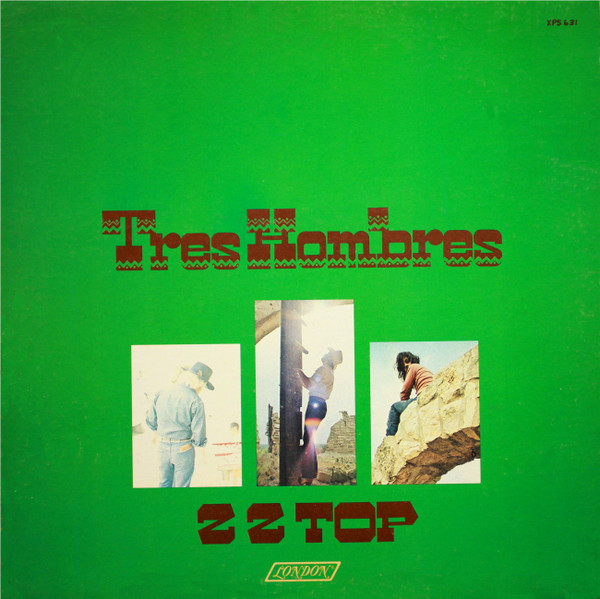
ZZ Top is that magnificent trio out of Houston, Texas — Billy Gibbons, Dusty Hill, and Frank Beard — who came together around 1969 and cooked up a sound so raw and righteous it could only be called Texas blues rock, all thick guitar riffs, boogie grooves, and gritty swagger that made you feel like you were cruising down a dusty highway at midnight. They built their reputation the hard way, touring relentlessly through the early seventies and dropping records like *Tres Hombres* in 1973 that cemented them as one of the baddest acts in rock and roll, long before the whole world caught on. Their staying power is undeniable — those two cats with the legendary beards and the sharp suits became genuine American icons, bridging the gap between blues tradition and arena rock while influencing every guitar-slinging outfit that came after them.