Muddy Waters
 View on Discogs
 View on Wikipedia
Album Summary
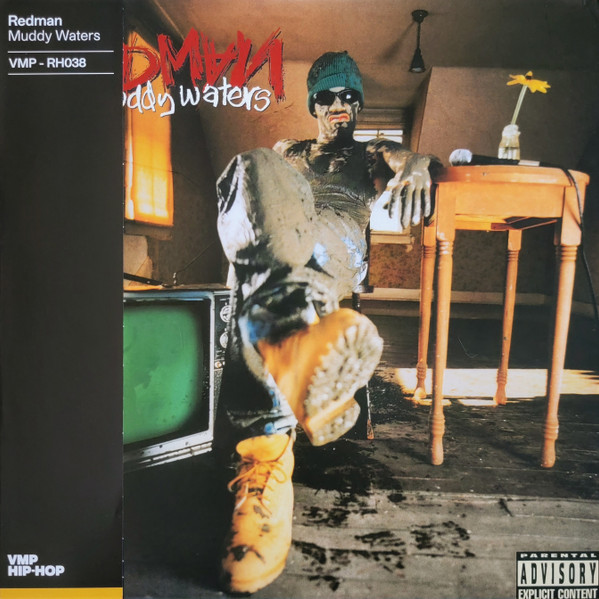
Now listen here, because this one matters. Muddy Waters dropped on September 24, 1996, through Def Jam Recordings, and it stands as Redman's third studio album — the record where everything came together like a slow-burning groove on a Friday night. Born and raised out of Newark, New Jersey, Redman built this thing from the ground up, handling the bulk of production himself alongside his mentor and partner in rhyme, the legendary Erick Sermon. The title wasn't chosen lightly — paying direct homage to the great blues patriarch Muddy Waters, it announced from jump that this was music with roots, with grit, with soul running through every bar. Recorded during a moment when East Coast hip-hop was asserting itself with raw authority, Muddy Waters captured Redman at the height of his powers, channeling the psychedelic funk of an earlier era into something that felt wholly new, wholly Newark, and wholly his own.
Reception
- Muddy Waters debuted at number 4 on the Billboard 200 and climbed to number 2 on the Top R&B/Hip-Hop Albums chart, representing the strongest commercial performance of Redman's career up to that point and proving that underground credibility and mainstream reach could walk hand in hand.
- Critics embraced the album with deep respect, singling out its dense, layered production and Redman's off-kilter, internally rhyming lyricism as hallmarks of mid-90s hip-hop craft at its finest — the kind of record that rewarded repeat listening like a well-worn vinyl pressing.
- The album earned gold certification in the United States, driven by genuine word-of-mouth passion among hip-hop heads who recognized its cohesive, album-oriented vision at a time when that approach was becoming increasingly rare.
Significance
- Muddy Waters stands as one of the defining statements of the funk-influenced New Jersey hip-hop sound, weaving psychedelic soul samples and groove-heavy production into the harder edges of East Coast boom-bap with a seamlessness that few artists before or since have managed.
- Redman's performance across this album — his dense internal rhyme schemes, his comedic timing, his raw visceral energy — cemented his place among the most technically gifted and stylistically distinctive MCs of his entire generation, a reputation that only grew stronger with time.
- The album's unapologetic blending of gritty street lyricism with deep funk and soul sensibility, guided in no small part by Erick Sermon's production instincts, made Muddy Waters a touchstone for a whole wave of producers and artists who came after, seeking that same sacred intersection of groove and rawness.
Samples
- Whateva Man — sampled by numerous producers in the years following its release, with the track drawing attention for its melodic hook and laid-back funk construction, making it one of the more referenced cuts from this album in later hip-hop production.
- Soopaman Luva 3 — one of the standout narrative tracks in Redman's catalog, it has been referenced and interpolated in hip-hop circles as a touchstone of his storytelling style and has attracted sampling interest for its distinctive musical backdrop.
Tracklist
-
A1 Iz He 4 Real 80
 1:35
1:35
-
A2 Rock Da Spot 92
4:10
-
A3 Welcome (Interlude) 87
2:06
-
A4 Case Closed 90
2:57
-
A5 Pick It Up 94
4:11
-
B1 Smoke Buddah 86
2:34
-
B2 Whateva Man 172
3:08
-
B3 On Fire 92
3:50
-
B4 Do What Ya Feel —
4:15
-
C1 Creepin' 79
3:59
-
C2 It's Like That (My Big Brother) 91
2:55
-
C3 Da Bump 85
4:11
-
C4 Yesh Yesh Ya'll 90
3:58
-
D1 What U Lookin' 4 91
4:06
-
D2 Soopaman Luva 3 88
4:11
-
D3 Rollin' 89
4:09
-
D4 Da Ill Out 90
3:35

Artist Details
Redman, born Reggie Noble in Newark, New Jersey, burst onto the hip-hop scene in the early 1990s with a raw, unfiltered energy that made heads spin from the jump — his 1992 debut *Whut? Thee Album* announced a wild, witty lyricist who blended hardcore street grit with a gonzo sense of humor that nobody else was doing quite like that. Signed to JIVE Records and closely aligned with EPMD's Hit Squad collective, Redman carved out a legacy as one of the most respected MCs and producers in the game, later teaming up with Method Man for the beloved duo Blackout!, solidifying his place as a bridge between the East Coast boom-bap tradition and the funkier, looser vibes coming out of the Brick City. His influence runs deep through hip-hop culture — a cat's MC who never chased trends, just kept it funky, funny, and ferociously ill, earning the kind of respect that doesn't fade with time.