
Where I Should Be
 View on Discogs
 View on Wikipedia
Album Summary
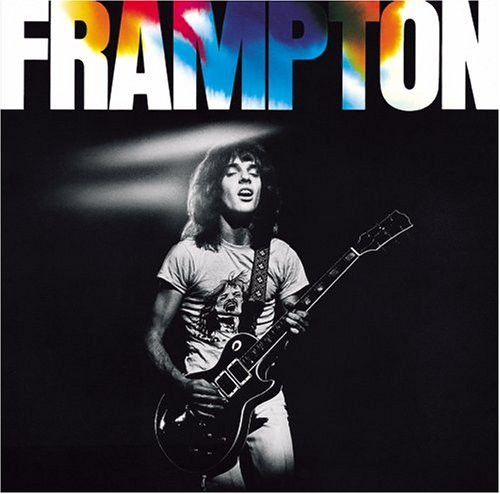
Peter Frampton laid down 'Where I Should Be' during one of the more turbulent stretches of his career — a man carrying the weight of one of the best-selling live albums in rock history on his shoulders, trying to find his footing in a studio landscape that had shifted beneath him like sand. Released in 1979 on A&M Records and produced by Frampton himself alongside seasoned collaborators, this record was his earnest, soulful reach back toward the mainstream — a man who knew how to write a melody and wasn't about to let the times take that away from him. The production leans into that late-seventies sheen, polished and radio-conscious, but underneath it you can still hear the guitarist and songwriter who made believers out of arenas full of people just a few years prior.
Reception
- The album climbed into the top 20 of the Billboard 200, a respectable and meaningful showing that proved Frampton still had the ears of a significant audience, even if the numbers couldn't touch the stratospheric heights of his mid-decade peak.
- The lead single 'I Can't Stand It No More' found a warm home on rock radio, becoming the album's most recognized moment and keeping Frampton's name firmly in the rotation at stations across the country.
- Critical reception landed somewhere in the middle of the dial — some writers tipped their hats to Frampton's melodic instincts and craftsmanship, while others felt the polished production buffed away some of the raw, breathing energy that had made his live reputation so formidable.
Significance
- Released at the tail end of a decade that had both crowned and humbled him, 'Where I Should Be' stands as a genuine document of Frampton's resilience — a record that refused to wave the white flag and instead doubled down on melodic rock at a moment when the industry was chasing other sounds.
- The album captures the real tension of 1979 rock — the push and pull between an artist's instinct to stay true to guitar-driven songcraft and the commercial gravity of a pop landscape being reshaped by disco and the early rumblings of new wave.
- It reinforced something important about Peter Frampton's legacy: that his gifts as a melodic rock songwriter and studio craftsman existed independently of the live spectacle that had made him famous, and that those gifts were still very much alive and working.
Tracklist
-
A1 I Can't Stand It No More 105
 4:13
4:13
-
A2 Got My Feet Back On The Ground 105
3:56
-
A3 Where I Should Be (Monkey's Song) 116
4:29
-
A4 Everything I Need 125
5:14
-
A5 May I Baby 77
3:36
-
B1 You Don't Know Like I Know 112
3:14
-
B2 She Don't Reply 117
3:57
-
B3 We've Just Begun 166
5:26
-
B4 Take Me By The Hand 120
4:14
-
B5 It's A Sad Affair 108
4:18

Artist Details
Peter Frampton, that silky-voiced British guitar wizard, burst out of Beckenham, England in the late sixties before finding his true calling as a solo artist in the early seventies, blending hard rock, pop, and blues into a sound so smooth it could melt butter on a cold morning. His 1976 live masterpiece *Frampton Comes Alive!* became one of the best-selling live albums of all time, with that talk box guitar tone on "Do You Feel Like We Do" becoming the sound of a generation, flooding every FM radio station from coast to coast. Peter Frampton didn't just make records — he made moments, cementing himself as one of rock's most beloved guitar poets and a defining voice of the mid-seventies rock explosion.