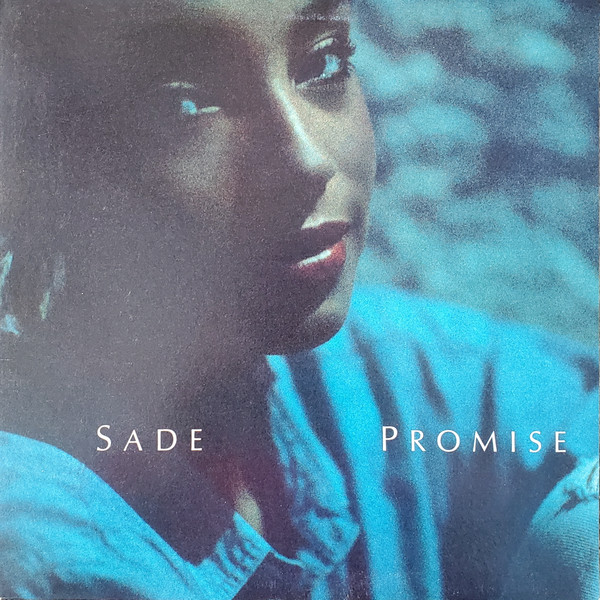
Promise
 View on Discogs
 View on Wikipedia
Album Summary
Promise was released in November 1985 on Epic Records, the follow-up that the whole world was waiting on after Sade Adu and her band burst onto the scene like a cool breeze through an open window. Recorded in London and produced by the same dream team of Robin Millar and the band themselves — with Sade, Stuart Matthewman, Paul Spencer Denman, and Andrew Hale locked in together like they were born playing as a unit — this album was crafted with the same unhurried elegance that made people stop whatever they were doing and just listen. The band had a vision, and nobody was going to rush them out of it. Epic knew they had something rare on their hands, and they gave these artists the space to let it breathe.
Reception
- Promise was a commercial triumph, reaching number one on the UK Albums Chart and climbing to number one on the Billboard 200 in the United States, cementing Sade's status as a genuine international force.
- Critics marveled at the album's cool sophistication and emotional restraint, praising Sade Adu's voice as one of the most distinctive and assured in contemporary music — a velvet instrument that said more with a whisper than most singers could say with a shout.
- The single 'The Sweetest Taboo' became a significant worldwide hit, further proof that this band was operating on a frequency all their own.
Significance
- Promise stands as a defining document of the mid-1980s quiet storm movement, proving that subtlety, class, and restraint could be just as powerful — and far more lasting — than the bombast dominating the charts at the time.
- The album deepened Sade's signature fusion of soul, jazz, and sophisti-pop, with tracks like 'Is It A Crime' and 'Jezebel' showcasing a band that had grown more confident and emotionally complex without losing an ounce of their silky, understated grace.
- Promise helped redefine what a Black British artist could sound like on the world stage, blending cosmopolitan elegance with deeply felt emotion in a way that crossed genre lines and spoke to audiences who had never heard anything quite like it before.
Samples
- "The Sweetest Taboo" — sampled by numerous artists across R&B and hip-hop, with one of its most recognized uses being in the work of artists building smooth, late-night sonic landscapes throughout the 1990s and 2000s.
- "Never As Good As The First Time" — sampled and interpolated by various producers drawn to its melodic warmth and rhythmic groove, finding a second life in R&B productions.
Tracklist
-
A1 Is It A Crime 123
 6:18
6:18
-
A2 The Sweetest Taboo 91
4:31
-
A3 War Of The Hearts 181
6:46
-
A4 Jezebel 92
5:27
-
B1 Mr. Wrong 169
2:46
-
B2 Never As Good As The First Time 107
4:57
-
B3 Fear 95
4:06
-
B4 Tar Baby 97
3:55
-
B5 Maureen 96
4:18

Artist Details
Sade is one of those rare gems that came along and changed the whole temperature of the room — born out of London in the early 1980s, this British-Nigerian singer Helen Folasade Adu and her band blended jazz, soul, R&B, and quiet storm into something so silky and sophisticated it practically invented its own category. From their 1984 debut *Diamond Life* to timeless classics like *Smooth Operator* and *No Ordinary Love*, Sade carved out a sound that was cool, understated, and deeply emotional all at once, earning them Grammy Awards and a loyal following that has never wavered across decades. Their cultural significance lies in how they proved that music rooted in elegance and restraint could be just as powerful as anything loud and flashy — Sade didn't chase trends, they simply existed above them, and the world kept coming back for more.