Sundown
 View on Discogs
 View on Wikipedia
Album Summary
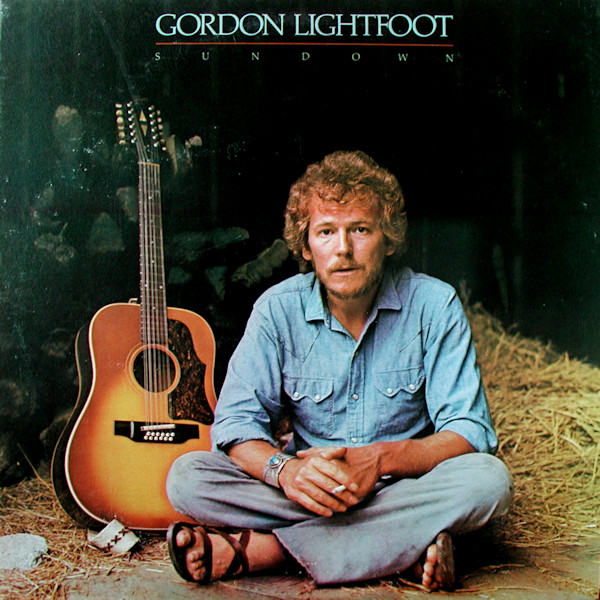
Sundown came to life in 1974 on Reprise Records, and baby, it was the sound of a man absolutely at the height of his powers. Produced by Lenny Waronker and Joe Wissert, the album captured Gordon Lightfoot in a moment of rare creative and commercial alignment — that sweet spot where artistic integrity and mainstream appeal weren't fighting each other, they were dancing together. Waronker and Wissert helped shape a production that was warm, intimate, and immaculately crafted, letting Lightfoot's acoustic guitar work and that unmistakable baritone voice sit right up front where they belonged. This was a record that felt like it was made by people who truly believed in the music, and every groove on it proves they were right to feel that way.
Reception
- Sundown reached number one on the Billboard 200, making it Gordon Lightfoot's most commercially successful album and a genuine blockbuster moment for folk-influenced music in the mid-1970s.
- The title track 'Sundown' climbed to number one on the Billboard Hot 100, earning massive radio rotation across North America and cementing Lightfoot as a crossover force appealing to both folk devotees and mainstream pop audiences.
- The album achieved platinum certification and sustained a remarkable chart presence, proving that sophisticated acoustic songwriting could compete at the highest level of the mainstream marketplace.
Significance
- Sundown stands as one of the finest examples of the sophisticated folk-pop sound that defined the early 1970s — acoustic guitar craftsmanship meeting accessible pop sensibility in a way that never felt compromised or watered down.
- The album showcases Lightfoot's extraordinary gift for narrative songwriting, with tracks like 'Circle Of Steel' and 'Carefree Highway' demonstrating the melancholic storytelling tradition that made Canadian singer-songwriters a force to be reckoned with on the world stage.
- Sundown represents a pivotal commercial peak for folk-influenced material on mainstream radio, proving in real time that depth and accessibility were never mutually exclusive — a lesson the music industry needed to hear then and still needs to hear now.
Tracklist
-
A1 Somewhere U.S.A. 105
 2:50
2:50
-
A2 High And Dry 89
2:12
-
A3 Seven Island Suite 83
6:00
-
A4 Circle Of Steel 117
2:45
-
A5 Is There Anyone Home 86
3:15
-
B1 The Watchman's Gone 81
4:25
-
B2 Sundown 103
3:45
-
B3 Carefree Highway 85
3:45
-
B4 The List 91
3:00
-
B5 Too Late For Prayin' 104
4:15

Artist Details
Gordon Lightfoot is a celebrated Canadian singer-songwriter born on November 17, 1938, in Orillia, Ontario, who began his professional music career in the early 1960s and became one of the most iconic figures in folk and country music. His sound is characterized by introspective, narrative-driven songwriting, fingerpicked acoustic guitar, and a warm baritone voice that blends folk, country, and soft rock influences. Lightfoot achieved widespread acclaim with songs such as If You Could Read My Mind, Sundown, and The Wreck of the Edmund Fitzgerald, the latter becoming a landmark piece of storytelling in popular music. His compositions were covered by artists including Elvis Presley, Bob Dylan, and Johnny Cash, cementing his status as one of the great songwriters of his generation. Lightfoot was a defining voice in the Canadian music identity and played a pivotal role in elevating folk music to mainstream audiences during the 1960s and 1970s, earning him induction into the Canadian Music Hall of Fame and a Governor General's Performing Arts Award.