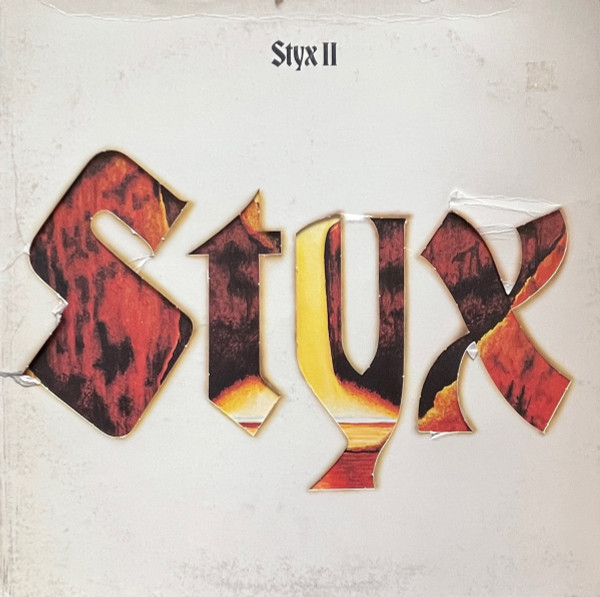
Styx II
 View on Discogs
 View on Wikipedia
Album Summary
Styx II came rolling out of Chicago in 1973 on the RCA Records label, and brother, this was a band finding its wings. Produced by John Ryan alongside the band themselves, this sophomore effort captured Styx at a pivotal crossroads — still rooted in the hard rock soil of their 1972 debut but reaching up toward something grander, something more theatrical and progressive. The fellas from the Windy City were cooking up ideas in the studio that would take years to fully bloom, and Styx II is the beautiful, restless evidence of that creative hunger at work.
Reception
- Styx II made an appearance on the Billboard 200, though commercial success was modest — the band was still building the kind of grassroots following that would eventually turn them into arena rock royalty
- Critical response at the time was measured, with reviewers acknowledging the band's growing musicianship while sensing that their most distinctive and powerful statement was still on the horizon
Significance
- Styx II stands as a genuine artifact of the band's artistic evolution, showcasing their early appetite for longer compositional structures and concept-driven songwriting that would become the backbone of their legendary 1970s run
- The album captures the moment when Styx began stretching beyond straightforward rock territory, weaving in progressive and theatrical elements — a creative restlessness that would eventually produce some of the most beloved rock records of the decade
- Tracks like 'Lady' hint at the melodic sophistication and emotional depth the band was cultivating, marking Styx II as essential listening for anyone who wants to understand where that magic truly began
Tracklist
-
A1 You Need Love 177
 3:47
3:47
-
A2 Lady 136
2:58
-
A3 A Day 78
8:24
-
A4 You Better Ask 139
3:55
-
B1 Little Fugue In "G" 67
1:19
-
B2 Father O.S.A. 147
7:10
-
B3 Earl Of Roseland 141
4:41
-
B4 I'm Gonna Make You Feel It 106
2:23

Artist Details
Styx came roaring out of Chicago, Illinois in 1972, a band that blended hard rock muscle with progressive rock sophistication and those lush, sweeping keyboard textures that made a late-night drive feel like a journey to another dimension. They built their sound from the ground up in the Midwest club circuit before breaking wide open with anthems like Lady and Come Sail Away, tracks that proved rock and roll could be grand and theatrical without losing its soul. Their run through the late seventies and into the eighties made them one of the best-selling acts of the era, and they stood as a testament to the idea that American rock could dream just as big as anything coming out of Britain.