MM..Food
 View on Discogs
 View on Wikipedia
Album Summary
MF Doom — the man behind the mask, the villain of villains — cooked up MM..Food and served it piping hot through Rhymesayers Entertainment in November 2004. Self-produced under his Metal Fingers alias, this record was a full-course meal conceived, seasoned, and plated entirely by Doom himself, recorded with the kind of shadowy, basement-laboratory intimacy that had become his signature. The food theme wasn't just a gimmick, baby — it was a philosophical statement, a whole concept wrapped in boom-bap beats and laced with cartoon samples, turning the mundane act of eating into a meditation on hunger, survival, greed, and the rap game itself. Doom was operating in a zone all his own in 2004, and this album stands as proof that one man with a mask, a microphone, and a vision could rewrite the rules of what hip-hop was supposed to sound like.
Reception
- MM..Food was embraced by critics as a densely layered and intellectually rewarding work, with reviewers praising Doom's labyrinthine rhyme schemes and the cohesive conceptual framework holding the album together.
- The album found a devoted underground audience immediately upon release, cementing Doom's reputation as one of the most distinctive voices in independent hip-hop during the mid-2000s.
- While it did not chart prominently on mainstream charts, MM..Food grew steadily in critical stature over the years, frequently appearing on retrospective best-of lists for both 2004 and the broader decade.
Significance
- MM..Food stands as a landmark of underground hip-hop's golden era in the 2000s, demonstrating that a fully independent, uncompromising artistic vision could resonate deeply without any commercial concessions.
- The album's food-as-metaphor concept — running through every track from Beef Rapp to Kookies — elevated it as one of hip-hop's most fully realized thematic projects, influencing a generation of artists who saw concept albums as a legitimate and powerful format.
- Doom's dense, multi-layered lyricism throughout tracks like Rapp Snitch Knishes and One Beer helped expand the vocabulary of what rap wordplay could be, pushing the craft toward a more literary and self-referential space that would echo through independent hip-hop for years to come.
Samples
- One Beer — sampled by Nas in "Where's The Love" and widely cited as one of the most beloved Doom productions to be revisited by other artists in the years following the album's release.
- Rapp Snitch Knishes — has been referenced and interpolated in various underground hip-hop contexts, recognized as one of the album's most memorable and oft-revisited tracks.
- Beef Rapp — the opening track has been sampled and flipped by producers in the underground hip-hop community drawn to its raw, declarative energy.
Tracklist
-
A1 Beef Rapp 92
 4:39
4:39
-
A2 Hoe Cakes 184
3:54
-
A3 Potholderz 87
3:20
-
B1 One Beer 180
4:18
-
B2 Deep Fried Frenz 96
4:59
-
B3 Poo-Putt Platter 159
1:13
-
B4 Fillet-O-Rapper 107
1:03
-
B5 Gumbo 87
0:49
-
C1 Fig Leaf Bi-Carbonate 92
3:19
-
C2 Kon Karne 92
2:51
-
C3 Guinnesses —
4:41
-
D1 Kon Queso 108
4:00
-
D2 Rapp Snitch Knishes 190
2:52
-
D3 Vomitspit 93
2:48
-
D4 Kookies 110
4:02

Artist Details
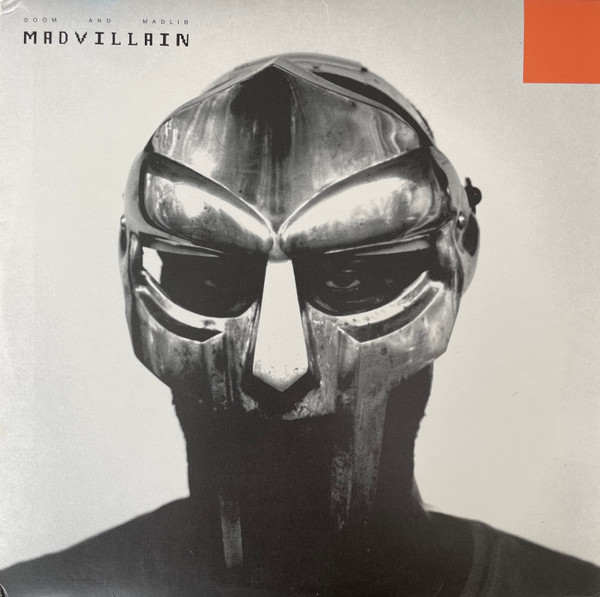
MF DOOM, the masked villain of hip-hop, was a Queens-born, British-raised lyrical genius born Daniel Dumile, who emerged from the underground in the late 1990s and built one of the most criminally underappreciated catalogues in rap history, blending jazz-soaked beats, comic book mystique, and labyrinthine wordplay into a sound that was unlike anything the game had ever heard. His landmark 1999 album Operation: Doomsday laid the foundation for a legacy that stretched through celebrated projects like Madvillainy with Madlib and MM..FOOD, earning him a devoted cult following and cementing his status as a producer-rapper whose influence quietly shaped a generation of artists from Kendrick Lamar to Earl Sweatshirt. When DOOM passed on Halloween 2020, the world lost not just a rapper but a true architect of underground hip-hop, a man whose iron mask became a symbol of artistic freedom and whose music continues to resonate like a deep, slow groove that never loses its soul.