
Slowhand
 View on Discogs
 View on Wikipedia
Album Summary
Slowhand was laid down at the Record Plant in Los Angeles and released on November 18, 1977, on the RSO Records label — and honey, when this record dropped, it felt like the whole world stopped to listen. Produced by the legendary Glyn Johns, a man who had already worked his magic with The Rolling Stones and The Who, this album found Eric Clapton in a place of rare grace and confidence. It captured him at a creative and commercial peak in his solo career, a man who had already given the world Cream and Derek and the Dominos, now stepping into the spotlight fully on his own terms and delivering something that felt both deeply personal and undeniably timeless.
Reception
- Slowhand reached No. 2 on the Billboard 200 chart and went on to achieve multi-platinum certification in the United States, cementing its status as one of Clapton's best-selling albums.
- The album received widespread critical acclaim, with reviewers consistently praising Clapton's guitar work and Glyn Johns's polished production, which struck a rare balance between blues-rock authenticity and mainstream accessibility.
- Lay Down Sally emerged as a massive hit single, becoming one of Clapton's signature songs and charting in the top 40 across multiple countries.
Significance
- Slowhand stood as a defining statement of the late 1970s blues-rock movement, proving that guitar-driven music rooted in the blues could achieve serious mainstream commercial success without losing its soul or its credibility.
- The album showcased Clapton's remarkable versatility as both a guitarist and a songwriter, weaving together original compositions and carefully chosen covers in a way that felt cohesive, honest, and deeply felt from the first note to the last.
- Slowhand marked a pivotal moment in Clapton's artistic evolution — the point where the cult hero of the British blues explosion fully and undeniably became one of the most beloved mainstream rock artists in the world.
Samples
- Cocaine — one of the most recognized guitar tracks in classic rock history, widely interpolated and referenced across hip-hop and rock productions over the decades.
- Lay Down Sally — sampled and interpolated across multiple recordings, its warm groove and melodic structure making it a recurring touchstone for producers seeking a vintage 1970s feel.
Tracklist
-
A1 Cocaine 103
 3:38
3:38
-
A2 Wonderful Tonight 96
3:41
-
A3 Lay Down Sally 95
3:52
-
A4 Next Time You See Her 172
3:58
-
A5 We're All The Way 97
2:30
-
B1 The Core 103
8:42
-
B2 May You Never 130
2:57
-
B3 Mean Old Frisco 81
4:38
-
B4 Peaches And Diesel 97
4:48

Artist Details
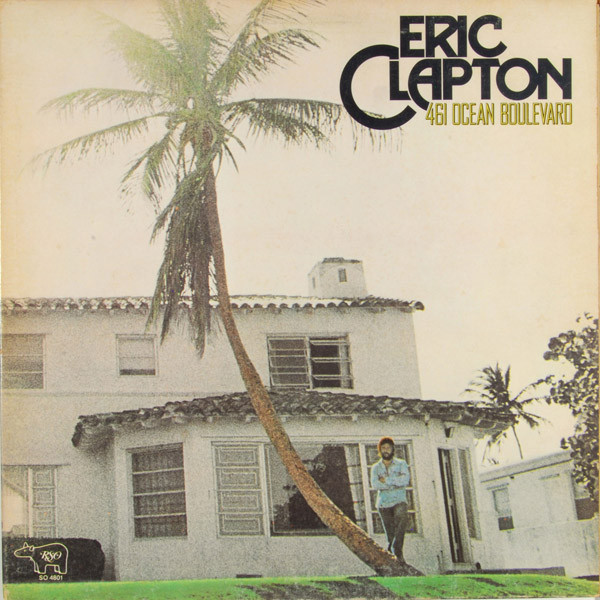
Eric Clapton, born in Ripley, Surrey, England in 1945, emerged from the British blues explosion of the early 1960s and went on to become one of the most celebrated guitarists this world has ever had the pleasure of hearing, burning through iconic groups like the Yardbirds, John Mayall's Bluesbreakers, Cream, and Blind Faith before stepping fully into the spotlight as a solo artist. His tone — warm, crying, and deeply rooted in the Delta blues of Robert Johnson yet electric with a rock fire all his own — earned him the legendary street-corner tag "Clapton is God," and he backed that up with timeless records like *Layla*, *461 Ocean Boulevard*, and *Slowhand*. Beyond the music, Clapton stands as a bridge between American blues traditions and British rock royalty, a man who took the soul of Muddy Waters and BB King and carried it to arenas full of people who had never heard those names, keeping the blues alive and breathing for generations to come.