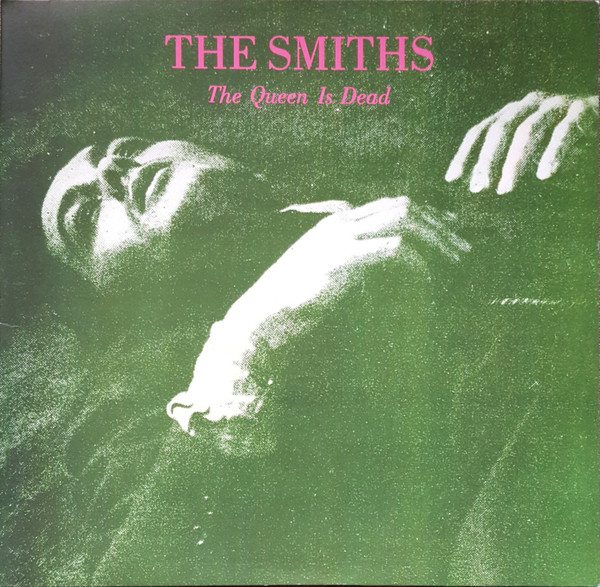
The Queen Is Dead
 View on Discogs
 View on Wikipedia
Album Summary
The Queen Is Dead was laid down between 1985 and early 1986 at RAK Studios and Amazon Studios in Liverpool, a period that was anything but smooth sailing for the band — legal disputes with their former label and mounting internal tensions hung heavy in the air. Yet somehow, some way, The Smiths walked into those studios and came out the other side with something transcendent. Produced by Morrissey and Johnny Marr alongside their trusted collaborator Stephen Street, and released on Rough Trade Records on June 16, 1986, this record captured the band at the absolute summit of their powers. Marr's guitar work reached a new kind of luminous complexity, and Morrissey's pen was sharper and more emotionally devastating than ever before. Out of turbulence came a masterpiece.
Reception
- The album climbed to number two on the UK Albums Chart upon its release and was met with widespread critical acclaim, with publications like NME immediately recognizing it as a landmark of British alternative rock.
- Rolling Stone and other major critical institutions later enshrined it among the greatest albums ever recorded, placing it within their top 100 albums of all time across multiple revisions of that hallowed list.
- Though its commercial footprint in the United States was modest at the time of release, the album cultivated a deep and devoted cult following that swelled considerably in the decades that followed, elevating its reputation to near-mythological status.
Significance
- The Queen Is Dead stands as the definitive artistic statement of 1980s British indie rock, marrying post-punk guitar textures with songwriting of uncommon literary depth and emotional rawness — a combination that left an indelible mark on alternative music for generations to come.
- Morrissey's lyricism across this album cuts deep into the marrow of British identity, the monarchy, sexuality, class, and alienation, making it one of the most culturally charged and politically resonant records to emerge from the Thatcher era.
- From the sardonic grandeur of the title track's assault on the royal family and British class structure to the aching vulnerability of tracks like 'There Is A Light That Never Goes Out,' the album confirmed The Smiths as one of the most socially and emotionally engaged bands their country had ever produced.
Tracklist
-
A1 The Queen Is Dead (Take Me Back To Dear Old Blighty) (Medley) —
 6:23
6:23
-
A2 Frankly, Mr. Shankly 111
2:17
-
A3 I Know It's Over 113
5:48
-
A4 Never Had No One Ever 194
3:36
-
A5 Cemetry Gates 105
2:39
-
B1 Bigmouth Strikes Again 134
3:12
-
B2 The Boy With The Thorn In His Side 118
3:15
-
B3 Vicar In A Tutu 124
2:21
-
B4 There Is A Light That Never Goes Out 68
4:02
-
B5 Some Girls Are Bigger Than Others 81
3:14

Artist Details
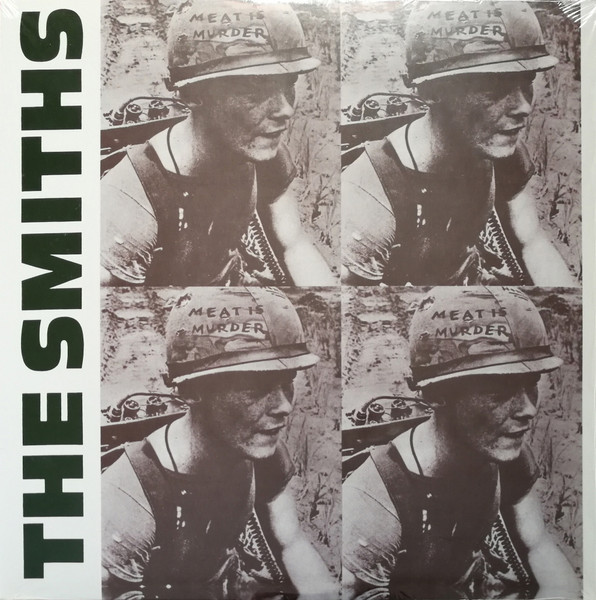
The Smiths were a groundbreaking alternative rock band that came together in Manchester, England in 1982, led by the iconic pairing of vocalist Morrissey and guitarist Johnny Marr, whose jangly, melodic guitar work wrapped around Morrissey's darkly witty, deeply introspective lyrics to create a sound that was unlike anything else happening in the music world at the time. They became the architects of indie rock and post-punk revival, their records like *The Queen Is Dead* and *Meat Is Murder* hitting the souls of an entire generation of young misfits and dreamers who finally heard their own loneliness and longing reflected back at them. Though they disbanded in 1987 after just five years together, their influence stretched far and wide across decades of music, touching everyone from Radiohead to Arcade Fire, cementing them as one of the most important and emotionally resonant bands to ever grace a turntable.