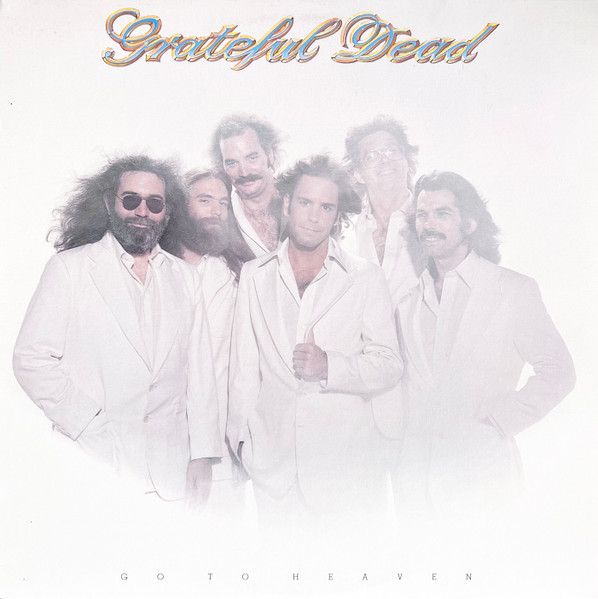
Go To Heaven
 View on Discogs
Album Summary
Go To Heaven came rolling out in April 1980 on Arista Records, and brother, it was a record that carried the weight of a band in transition — and the hope of something new breathing life into that transition. Produced by Gary Lyons and laid down at Club Front, the Dead's own rehearsal and recording sanctuary tucked away in San Rafael, California, this album arrived as the first studio statement to feature the warm, soulful presence of Brent Mydland on keys. Brent had stepped into the fold in 1979 after Keith Godchaux's departure, and from the very first notes on this record, his fingerprints are all over it — bringing a polished, full-bodied rock and soul texture that gave the Grateful Dead a fresh complexion without ever fully shedding that cosmic California spirit that made them legends in the first place.
Reception
- Go To Heaven climbed to number 23 on the Billboard 200, a respectable showing that reflected the band's steady commercial footing during their Arista Records period.
- Critical response landed somewhere between cool and conflicted — reviewers and devoted Dead Heads alike raised an eyebrow at the album's sleek, radio-ready production, feeling it smoothed over some of the rough, exploratory edges that had always defined the band's truest magic.
- The now-iconic cover photograph — the boys suited up in white like they had a reservation somewhere celestial — became a cultural conversation piece all its own, equal parts tongue-in-cheek humor and symbol of the creative tension between mainstream ambition and countercultural soul.
Significance
- Go To Heaven stands as a genuine artifact of the Grateful Dead navigating the commercial currents of the early 1980s, a time when even the most visionary legacy acts were feeling the industry's pull toward accessibility and airplay.
- The album formally introduced Brent Mydland as a full creative voice in the Dead's studio universe, and tracks like Feel Like A Stranger and Lost Sailor showed that his soulful vocal power and keyboard sensibility were not just complementary — they were transformative.
- Despite the polarized reactions it stirred, Go To Heaven quietly did its job, sustaining the band's commercial presence and fan base at a pivotal moment, helping keep the Grateful Dead train rolling strong into one of their most beloved decades of live performance.
Tracklist
-
A1 Alabama Getaway —
 3:36
3:36
-
A2 Far From Me —
3:40
-
A3 Althea —
6:51
-
A4 Feel Like A Stranger —
5:07
-
B1 Lost Sailor —
5:54
-
B2 Saint Of Circumstance —
5:40
-
B3 Antwerp's Placebo (The Plumber) —
0:38
-
B4 Easy To Love You —
3:40
-
B5 Don't Ease Me In —
3:13

Artist Details
The Grateful Dead, born out of the psychedelic haze of San Francisco in 1965, were a one-of-a-kind sonic journey — blending rock, folk, blues, country, and jazz into something that just couldn't be put in a box, led by the incomparable Jerry Garcia alongside Bob Weir, Phil Lesh, and the rest of that righteous crew. They became the beating heart of the counterculture movement, pioneers of the jam band world, and architects of a devoted community called the Deadheads who followed them from city to city like a beautiful rolling caravan of free spirits. Their legacy stretches far beyond record sales — they changed the very way people thought about live music, community, and the spiritual connection between a band and its audience, leaving a mark on American culture that still resonates deep into the soul of music today.