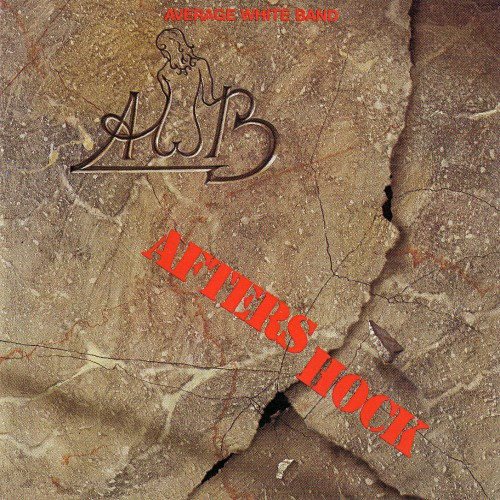
Aftershock
 View on Discogs
 View on Wikipedia
Album Summary
Average White Band dropped 'Aftershock' in 1988 on the Track Record label, and baby, this was a band refusing to go quietly into that good night. The Scottish funk and soul architects — anchored by the singular talents of Hamish Stuart and Alan Gorrie — stepped into the studio and wrestled with the realities of a music world that had traded warm analog grooves for cold digital shimmer. Produced with the slick, synthesizer-heavy aesthetic that was the law of the land in late-1980s R&B and dance music, 'Aftershock' finds AWB threading the needle between their hard-won blue-eyed soul identity and the drum machine-driven sounds that were commanding radio and club floors in that era. It is a record made by professionals who knew exactly who they were, even as the industry around them was shifting beneath their feet like the very earthquake its title suggests.
Reception
- The album moved through the marketplace without generating the kind of mainstream chart thunder that had crowned the band's mid-1970s peak, a fate shared by many veteran funk and soul acts trying to find footing in the late-1980s commercial landscape.
- Critics of the period tended to tip their hats to the band's undeniable musicianship and professionalism while raising an eyebrow at the heavily processed, synth-layered production, which some felt worked against the organic, breathing groove that had made Average White Band legends in the first place.
- No breakout crossover singles emerged from the album to move the needle in any significant way on either the UK or US pop and R&B charts, keeping 'Aftershock' largely within the orbit of the band's existing fanbase.
Significance
- 'Aftershock' stands as a living document of the tension legacy funk and soul acts faced in the late 1980s — the push and pull between honoring an organic, groove-rooted identity and embracing the digitally polished production vocabulary that the era demanded, making it historically valuable precisely because of that struggle.
- As one of the band's final studio statements before a period of significantly reduced recording activity, 'Aftershock' functions as a bookend chapter in the Average White Band story, a testament to the resilience of artists who built their name on feel and refused to simply walk away when the commercial tides turned against them.
- The record sits within a broader and deeply significant cultural moment when British blue-eyed soul artists were being forced to reckon with a rapidly reshaping music industry — one increasingly defined by hip-hop, new jack swing, and electronic dance production — and 'Aftershock' captures that reckoning with honesty and craft.
Tracklist
-
A1 The Spirit Of Love 113
 4:05
4:05
-
A2 Sticky Situation 94
4:29
-
A3 Aftershock 113
4:07
-
A4 Love At First Sight 180
4:47
-
B1 I'll Get Over You 112
4:32
-
B2 Later We'll Be Greater 102
3:52
-
B3 Let's Go All The Way 150
5:53
-
B4 We're In Too Deep 118
3:54
-
B5 Stocky Sachoo-A-Shun 94
1:38

Artist Details
Average White Band is a Scottish funk and soul group that formed in Dundee and Edinburgh, Scotland, in 1972, though they quickly relocated to the United States where they found their greatest success. The band, whose self-deprecating name humorously acknowledged their status as white musicians playing Black American-influenced music, developed a tight, rhythmically sophisticated sound rooted in funk, R&B, and jazz fusion. They achieved massive commercial success with their 1974 instrumental hit Pick Up the Pieces, which reached number one on the Billboard Hot 100 and became one of the defining funk tracks of the decade. Their ability to authentically master a genre largely pioneered by African American artists earned them widespread respect from both critics and peers, including legends like Herbie Hancock and Chaka Khan, who collaborated with them. Average White Band holds a significant place in music history as one of the few non-American acts to be embraced by the Black music community, and their catalog continues to be widely sampled by hip-hop producers and featured in film and television soundtracks.