
Doris
 View on Discogs
 View on Wikipedia
Album Summary
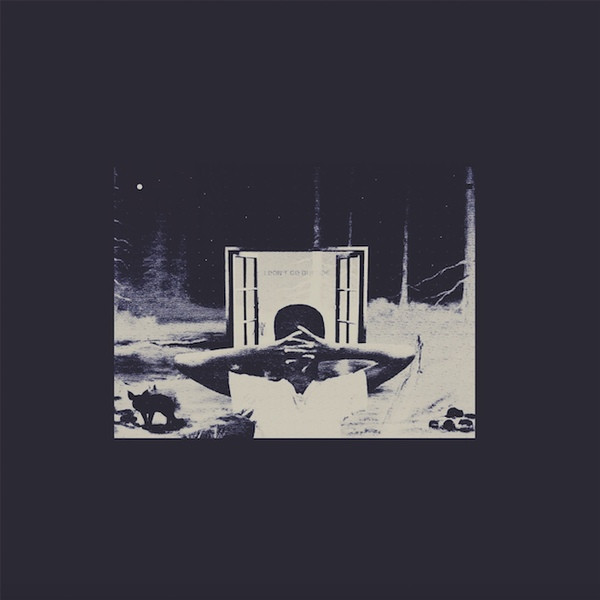
Doris came together in 2012 and into the early months of 2013, a record that arrived like a slow burn on a late-night session — deliberate, heavy, and impossible to shake. Earl Sweatshirt laid this one down while still planted in Los Angeles, surrounded by the extended Odd Future family, and the album found its home on Odd Future Records, dropping on August 20, 2013. The production credits read like a who's-who of the collective's inner circle — Tyler, The Creator, Tae Beast, Left Brain, and a handful of other architects who understood that Earl needed something murkier, something that breathed differently than what the rap game was serving up at the time. This was not a young man in a hurry. This was a young man with something to say, and he took his time saying it.
Reception
- Doris debuted at number 5 on the Billboard 200, marking the highest chart position of Earl Sweatshirt's career at that point in time.
- The album received widespread critical acclaim, with Pitchfork and other major music publications singling out its introspective production and dense, layered lyricism as genuinely revelatory.
- Critics broadly recognized Doris as the moment Earl Sweatshirt stepped out from the shadow of shock-rap associations and announced himself as one of the most serious lyrical voices in contemporary hip-hop.
Significance
- Doris marked a profound maturation in Earl Sweatshirt's artistic direction, trading provocation for introspection and introducing a depression-tinged sonic palette and intricate wordplay that would go on to shape an entire generation of underground rap artists.
- The album featured collaborations with MF DOOM, Vince Staples, and other pillars of underground hip-hop, weaving together generational threads and helping legitimize Odd Future as a collective of serious, lasting artistic vision rather than mere provocateurs.
- Doris contributed meaningfully to the evolution of alternative hip-hop in the mid-2010s, establishing a template for vulnerable, beat-driven lyricism that resonated far beyond the Odd Future universe and into the broader independent rap landscape.
Samples
- Chum — one of the most emotionally resonant tracks on the album, subsequently sampled and interpolated by underground and alternative hip-hop artists drawn to its raw confessional weight and sparse, hypnotic production.
- Hive — its slow-rolling, atmospheric instrumental has been lifted and referenced by producers operating in the darker corners of independent hip-hop seeking to capture that same suffocating, late-night energy.
- Centurion — the track's brooding sonic foundation has found its way into the sample libraries of producers aligned with the introspective, lo-fi aesthetic that Doris helped define.
Tracklist
-
A1 Pre 99
 2:52
2:52
-
A2 Burgundy 130
2:07
-
A3 20 Wave Caps 77
2:12
-
A4 Sunday 136
3:26
-
A5 Hive 72
4:37
-
A6 Chum 76
4:04
-
A7 Sasquatch 80
2:48
-
B1 Centurion 166
3:04
-
B2 523 145
1:32
-
B3 Uncle Al 94
0:53
-
B4 Guild 108
3:54
-
B5 Molasses 79
2:16
-
B6 Whoah —
3:16
-
B7 Hoarse 139
3:52
-
B8 Knight 84
3:14

Artist Details
Earl Sweatshirt, born Thebe Neruda Kgositsile, emerged out of Los Angeles in the late 2000s as a teenage prodigy and founding member of the rap collective Odd Future, dropping mixtapes that had the underground hip-hop world buzzing like a late-night jam session nobody could stop talking about. His sound is a deeply introspective, jazz-tinged, lo-fi brand of hip-hop — dense with internal rhyme schemes, abstract lyricism, and murky, meditative production that feels like it's coming from somewhere deep in the soul. He stands as one of the most critically celebrated voices of his generation, carrying forward the torch of thoughtful, avant-garde rap in a way that honors the craft while pushing it somewhere altogether new.