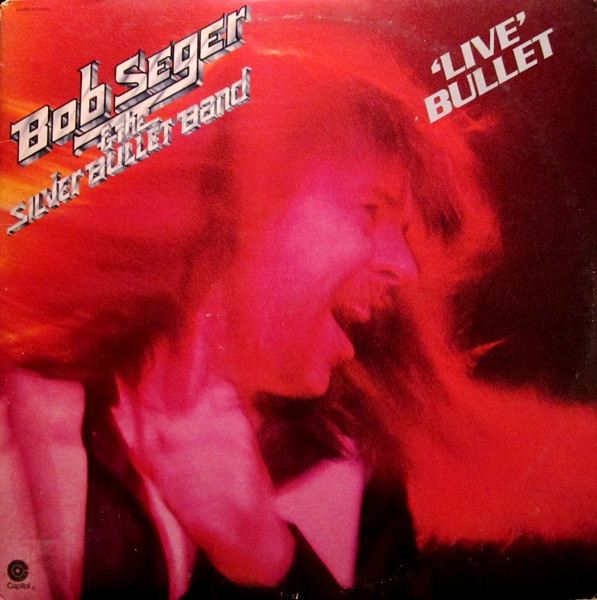
Live Bullet
 View on Discogs
 View on Wikipedia
Album Summary
Live Bullet was laid down over two nights in September 1975 at Cobo Hall in Detroit, Michigan — and honey, if you were there, you already know what kind of fire got captured on those tapes. Bob Seger and The Silver Bullet Band were playing for their people, their city, and every single soul in that arena felt it. Released in April 1976 on Capitol Records and produced by Seger himself alongside his longtime manager Eddie 'Punch' Andrews, this double live album wasn't just a concert souvenir — it was a battle cry. The resources were modest, but what poured out of that Detroit crowd was anything but. That raw, aching hometown energy gave the record a truth and urgency that no amount of studio polish could ever manufacture, and Capitol Records had something on their hands that would keep on giving long after the pressing plant cooled down.
Reception
- Live Bullet didn't storm the charts overnight — it climbed the way real things do, slow and sure, carried on the shoulders of word-of-mouth from fans who pressed it into the hands of anyone who'd listen, eventually reaching number 34 on the Billboard 200 and spending a remarkable stretch of years on the charts that few live albums in history can match.
- Critics received the album with genuine reverence, singling out Seger's commanding, gritty vocal performances and the band's locked-in ferocity as evidence that this was among the finest live rock documents the 1970s had yet produced.
- More than any studio release before it, Live Bullet cracked open the national consciousness for Bob Seger, transforming him from a beloved Midwest regional hero into a full-fledged American rock star and laying the groundwork for the mainstream breakthrough that was coming just around the corner.
Significance
- Live Bullet stands as one of the defining monuments of heartland rock, enshrining the blue-collar, working-class spirit that would pulse through the heart of American rock and roll for the rest of the decade and well into the next.
- The album rewrote the playbook on what a live record could accomplish commercially and artistically, proving that a concert recording released with conviction could function as a career-defining statement rather than a stopgap between studio efforts — a lesson the music industry took to heart.
- Cobo Hall and the ferociously devoted Detroit audience become something more than a backdrop on this record — they become co-authors of it, cementing Detroit's identity as sacred ground for hard-driving, no-nonsense American rock and roll.
Tracklist
-
A1 Nutbush City Limits —
 3:18
3:18
-
A2 Travelin' Man —
4:40
-
A3 Beautiful Loser —
3:29
-
A4 Jody Girl —
4:21
-
B1 I've Been Working —
4:00
-
B2 Turn The Page —
4:51
-
B3 U.M.C. —
3:11
-
B4 Bo Diddley —
5:19
-
C1 Ramblin' Gamblin' Man —
3:00
-
C2 Heavy Music —
8:12
-
C3 Katmandu —
5:41
-
D1 Lookin' Back —
2:34
-
D2 Get Out Of Denver —
3:42
-
D3 Let It Rock —
8:03

Artist Details
Bob Seger and the Silver Bullet Band burst out of Detroit, Michigan in the mid-1970s like a freight train carrying the working-class soul of America, blending heartland rock, blues, and R&B into an anthemic sound that felt like it was written for every hardworking soul who ever hit the open road. Seger had been grinding in the Detroit music scene since the late 1960s, but it was the formation of the Silver Bullet Band and the release of Live Bullet in 1976 that finally put him on the national map, followed by the unstoppable Night Moves, which cemented his status as one of rock and roll's most authentic voices. Their music became the soundtrack of blue-collar America, with songs like Against the Wind and Old Time Rock and Roll standing as timeless testaments to a generation that believed in the power of a good song played loud and played proud.