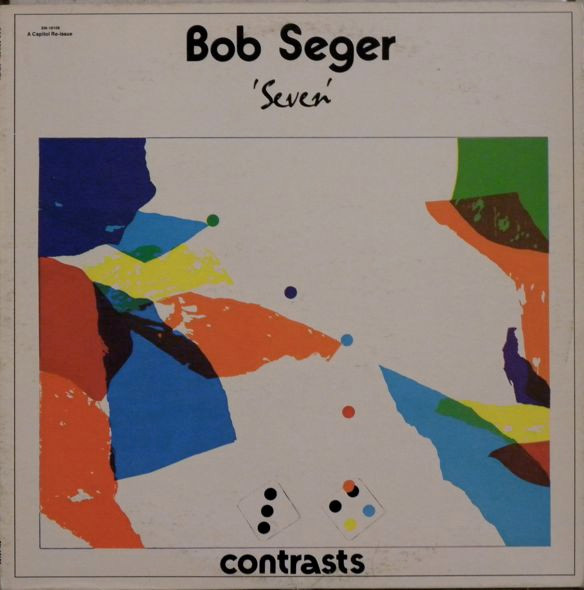
Seven
 View on Discogs
 View on Wikipedia
Album Summary
"Seven" was recorded and released in 1974 on Capitol Records, marking a pivotal chapter in Bob Seger's journey from celebrated Detroit regional act to a artist on the cusp of national recognition. Produced by Seger himself, the album captured his raw, unfiltered energy and blue-collar storytelling sensibility at a moment when American rock was finding its working-class voice. Released during the heart of the 1970s rock era, "Seven" showcased Seger's evolving command of the studio and his deepening ability to blend hard rock grit with blues and country-tinged authenticity.
Reception
- "Seven" reached #52 on the Billboard 200 chart, representing a meaningful commercial foothold for Seger as he built momentum toward mainstream stardom.
- Critics responded positively to the album's raw rock energy and Seger's powerful vocal delivery, affirming his reputation as a serious artist with roots far deeper than regional Detroit fame.
Significance
- "Seven" stands as a defining document of mid-1970s American heartland rock, weaving together hard rock, blues, and country influences into the kind of honest, working-class sound that would soon captivate a national audience.
- Tracks like "Get Out Of Denver" and "Cross Of Gold" exemplify Seger's gift for anthemic, road-worn storytelling, laying the artistic groundwork for the platinum-selling records that would follow later in the decade.
- The album represents a crucial transitional moment in Seger's career, demonstrating a songwriter and performer growing fully into his identity before the commercial breakthrough that would make him a household name.
Tracklist
-
A1 Get Out Of Denver 161
 2:42
2:42
-
A2 Long Song Comin' 78
4:26
-
A3 Need Ya 94
3:20
-
A4 School Teacher 118
2:43
-
A5 Cross Of Gold 118
2:20
-
B1 UMC (Upper Middle Class) —
3:12
-
B2 Seen A Lot Of Floors 95
2:57
-
B3 20 Years From Now 78
4:30
-
B4 All Your Love 78
4:27

Artist Details
Oh baby, let me tell you about the one and only Bob Seger, a gritty, heartland rock poet born and raised in Detroit, Michigan, who started grinding out his blue-collar anthems back in the mid-1960s before hitting his stride with the Silver Bullet Band in the early 1970s, blending hard rock, heartland rock, and soul-drenched R&B into a sound that felt like a cold Michigan night and a warm whiskey all at once. Seger's raw, raspy voice and working-class storytelling made classics like Night Moves, Turn the Page, and Old Time Rock and Roll into the soundtrack of an entire generation of American dreamers, truckers, and lovers, earning him a rightful place in the Rock and Roll Hall of Fame in 2004. More than just a rock star, Seger became a symbol of authentic, no-frills American rock music at a time when the industry was getting flashy, reminding everybody that the real power was always in the honest, unpolished truth of the human experience.