Eat A Peach
 View on Discogs
 View on Wikipedia
Album Summary
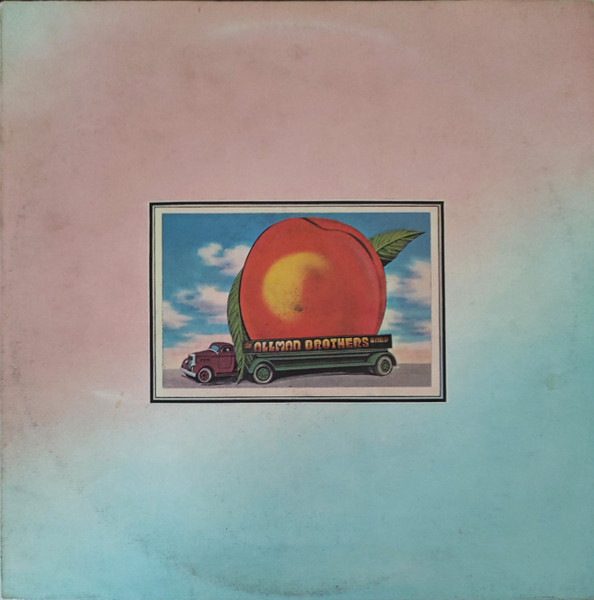
Eat a Peach was laid down in 1971 and early 1972, a bittersweet labor of love born from both triumph and tragedy. Recorded at Atlantic Records' facilities and produced by the incomparable Tom Dowd — the man who had already worked his magic with Cream and Derek and the Dominos — this album carried a weight that went beyond the music itself. Duane Allman had been taken from this world in a motorcycle accident in October 1971, and the band pressed on with a devotion and grief that you can feel in every note. Released on February 12, 1972, on Capricorn Records through Atlantic, Eat a Peach stands as both a farewell to a guitar genius and a testament to a band that refused to let the fire go out. It weaves together live recordings that captured Duane in his full glory with freshly cut studio tracks, creating something that is part monument, part moving forward — and all soul.
Reception
- Eat a Peach reached number 4 on the Billboard 200, a remarkable commercial achievement that confirmed the Allman Brothers Band had crossed over from cult heroes to mainstream rock royalty.
- Critics embraced the album with deep respect, praising its musical maturity, the emotional gravity of its performances, and the seamless blend of live and studio material.
- The album achieved platinum certification, proving that the band's expansive, jam-driven vision could find a massive audience without compromising a single note.
Significance
- Eat a Peach stands as one of the defining statements in Southern rock history, fusing blues, country, and free-flowing improvisational rock into an album that set the template for generations of bands to come.
- The album preserves Duane Allman's transcendent slide guitar work for all time, while also showcasing the extraordinary dual-guitar interplay between Duane and Dickey Betts that gave the Allman Brothers Band their unmistakable voice.
- By bringing together sprawling live epics like Mountain Jam alongside intimate studio gems like Melissa and Little Martha, the album demonstrated that Southern rock could contain multitudes — raw power and quiet beauty, living side by side.
Tracklist
-
A1 Ain't Wastin' Time No More 91
 3:40
3:40
-
A2 Les Brers In A Minor 122
9:03
-
A3 Melissa 83
3:54
-
B Mountain Jam 156
19:37
-
C1 One Way Out 212
4:58
-
C2 Trouble No More 137
3:43
-
C3 Stand Back 152
3:24
-
C4 Blue Sky 96
5:09
-
C5 Little Martha 91
2:07
-
D Mountain Jam Cont'd. —
15:06

Artist Details
The Allman Brothers Band rose up out of Macon, Georgia in 1969 like a slow-burning fire that nobody could put out, built on the visionary genius of brothers Duane and Gregg Allman, who fused the raw soul of the blues with the free-spirited improvisation of jazz and rock to birth something the world would come to call Southern rock. Their landmark live album *At Fillmore East* from 1971 stands as one of the greatest recordings in all of American music, capturing that loose, sprawling, guitar-driven sound that could take a crowd on a twenty-minute journey and leave them breathless. Through tragedy, breakups, and rebirths, the Allman Brothers proved that their music was bigger than any single moment, leaving behind a legacy that cracked open the American South and showed the whole world the depth and beauty living inside it.