
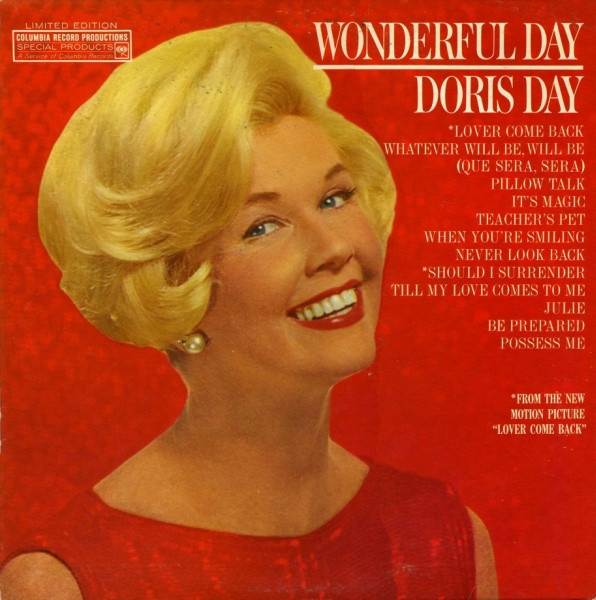
Wonderful Day
 View on Discogs
 View on Wikipedia
Album Summary
Doris Day's 'Wonderful Day' came gliding out of Columbia Records in 1961, and honey, it was everything you'd expect from a woman who had become one of the most beloved voices in all of American popular music. Recorded during a period when Day was juggling the bright lights of her film career with her enduring devotion to the recording studio, this album carries that signature glow she always brought to the microphone. Columbia dressed her voice in the kind of lush, full-band orchestrated arrangements that the label did better than just about anybody in those days, and the result is a collection that feels warm and complete from the first note to the last. It is a record that captures Doris Day in full command of her instrument, confident and radiant, doing what she was born to do.
Reception
- The album performed modestly on the charts during its release period, reflecting the broader cultural shifts of the early 1960s as rock and roll continued to reshape the landscape of popular music and the audience for traditional orchestrated pop vocal recordings began to evolve.
- Among fans of classic American pop vocal music, the album was received warmly, with Day's characteristic clarity of tone and her effortlessly bright delivery drawing consistent praise from those who appreciated the craftsmanship of the form.
- The album did not generate a breakout standalone hit single from its new material, but was regarded by contemporary listeners and reviewers as a polished and thoroughly satisfying entry in her distinguished discography.
Significance
- 'Wonderful Day' stands as a beautifully preserved snapshot of pre-Beatles mainstream American pop at its most refined and optimistic, a testament to the orchestrated vocal tradition that ruled the airwaves before the seismic cultural shifts of the mid-1960s came rolling in.
- The album deepens the body of work through which Doris Day helped define the warmhearted, sunlit 'girl-next-door' archetype in American popular music and culture during the postwar era, an image as carefully crafted as it was genuinely felt.
- Released at a transitional crossroads in American music history, the record captures the graceful last movement of a golden age of big-band influenced pop vocal production, making it a meaningful cultural document for anyone who wants to understand where American popular music had been before everything changed.
Tracklist
-
A1 Lover Come Back —

-
A2 Pillow Talk 103
-
A3 Be Prepared —
-
A4 Whatever Will Be, Will Be (Que Sera, Sera) —
-
A5 It's Magic 81
-
A6 Never Look Back —
-
B1 Should I Surrender? —
-
B2 Teacher's Pet —
-
B3 When You're Smiling —
-
B4 Possess Me 122
-
B5 Julie —
-
B6 Till My Love Comes To Me —

Artist Details
Doris Day, born Doris Mary Ann Kappelhoff in Cincinnati, Ohio in 1922, was one of the sweetest, most luminous voices to ever grace the American pop and big band scene, rising to fame in the late 1940s and carrying that sunshine right on through the 1950s with a warm, honeyed sound that could make a rainy day feel like a Sunday afternoon. She cut her teeth singing with Les Brown and His Band of Renown before launching a solo career that gave the world timeless treasures like "Que Sera, Sera" and "Secret Love," cementing her place not just in music but in the hearts of an entire generation. Beyond the records, Doris Day became a cultural icon whose breezy, wholesome image and undeniable talent helped define the sound and spirit of postwar American optimism, making her one of the most beloved entertainers the twentieth century ever produced.

