Day By Night
 View on Discogs
 View on Wikipedia
Album Summary
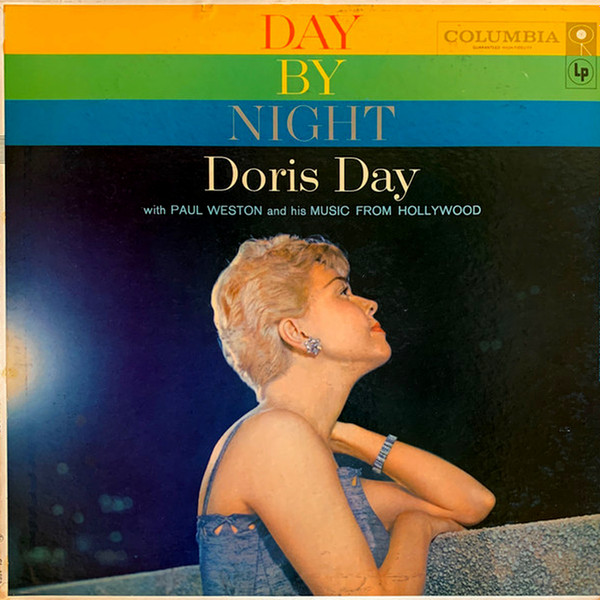
Back in 1956, Doris Day stepped into the studio for Columbia Records and laid down something truly special — a collection that would be pressed and released to the world in 1957 under the title 'Day By Night.' Now that title, honey, is no accident — it's a beautiful play on her surname, a wink and a nod that sets the whole mood before the needle even drops. Produced under the watchful eye of Columbia's pop division and dressed up with lush, late-night arrangements, this record was built from the ground up to showcase the warm, velvet intimacy of Day's voice in a way that her singles never quite had the room to do. This was a mood album — a carefully crafted after-hours experience, the kind of record you put on when the lights are low and the world outside has gone quiet, reflecting that gorgeous mid-1950s tradition of major pop vocalists building thematically unified LP journeys for a grown, sophisticated audience.
Reception
- Critics who encountered 'Day By Night' responded with genuine appreciation, singling out Day's nuanced and emotionally assured vocal performances as the beating heart of the collection — here was a singer in full command of her craft.
- While the album was not a seismic chart event in the way some of her hit singles had been, it performed with quiet, steady strength among her loyal adult contemporary audience, reinforcing her rock-solid commercial presence on Columbia Records through the mid-1950s.
- Reviewers consistently pointed to the album's cohesive nocturnal atmosphere as one of its greatest virtues, praising Day's remarkable ability to sustain a mood of intimacy and sophistication across an entire program of carefully chosen standards.
Significance
- Day By Night stands as a textbook example of the 1950s concept mood album — that beautiful format where a major pop vocalist didn't just stack up singles but instead wove a full emotional and atmospheric world across an entire LP side, from 'I See Your Face Before Me' all the way through to 'The Lamp Is Low.'
- The album deepens and reinforces Doris Day's standing as one of the towering female vocalists of the postwar American pop era, proving across twelve tracks that her artistry was every bit as sophisticated and versatile as the great standards she was interpreting.
- Sitting right at the cultural crossroads of the 1950s, this record is a living document of the moment when the LP format was evolving from a singles anthology into a serious artistic statement — and artists like Doris Day were the ones doing the heavy lifting to make that transformation happen.
Tracklist
-
A1 I See Your Face Before Me 119
 3:31
3:31
-
A2 Close Your Eyes 131
2:29
-
A3 The Night We Called It A Day —
3:00
-
A4 Dream A Little Dream Of Me 147
3:44
-
A4 Under A Blanket Of Blue 66
3:03
-
A6 You Do Something To Me —
2:47
-
B1 Stars Fell On Alabama 112
3:30
-
B2 Moon Song 111
3:45
-
B3 Wrap Your Troubles In Dreams (And Dream Your Troubles Away) —
2:25
-
B4 Soft As The Starlight 84
2:15
-
B5 Moonglow 69
3:50
-
B6 The Lamp Is Low 90
3:33

Artist Details
Doris Day, born Doris Mary Ann Kappelhoff in Cincinnati, Ohio in 1922, was one of the sweetest, most luminous voices to ever grace the American pop and big band scene, rising to fame in the late 1940s and carrying that sunshine right on through the 1950s with a warm, honeyed sound that could make a rainy day feel like a Sunday afternoon. She cut her teeth singing with Les Brown and His Band of Renown before launching a solo career that gave the world timeless treasures like "Que Sera, Sera" and "Secret Love," cementing her place not just in music but in the hearts of an entire generation. Beyond the records, Doris Day became a cultural icon whose breezy, wholesome image and undeniable talent helped define the sound and spirit of postwar American optimism, making her one of the most beloved entertainers the twentieth century ever produced.