Day Dreams
 View on Discogs
 View on Wikipedia
Album Summary
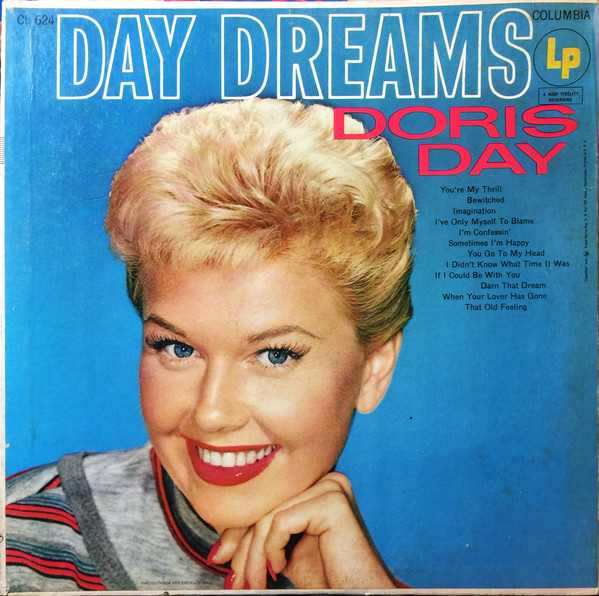
Day Dreams drifted into the world courtesy of Columbia Records in 1955, and honey, it was something special from the very first groove. Produced under the watchful, meticulous hand of Mitch Miller — the man who was shaping the entire sound of Columbia's pop roster from his A&R throne — this record found Doris Day wrapped in lush, warm orchestration and doing what she did better than just about anybody breathing at the time: making you feel every single syllable like it was written just for that moment. This was Doris at her most intimate, leaning into a collection of romantic ballads and timeless pop standards that suited her honeyed, emotionally honest voice like a velvet glove. Columbia knew exactly what they had in her, and Day Dreams was a lovingly crafted showcase of that gift, built for the grown-up pop audience that had been faithful to Doris since her big band days and wasn't about to stop showing up now.
Reception
- Day Dreams landed comfortably within Doris Day's reliable commercial run at Columbia, appealing strongly to the broad adult pop audience that had made her one of the label's most bankable recording artists throughout the early and mid-1950s.
- Critics of the period responded warmly to the album's ballad-heavy programming, consistently pointing to Day's vocal clarity and emotional sincerity as qualities that elevated familiar material into something deeply felt.
- The record fit naturally into the respectable chart presence Day maintained during this era, reinforcing her standing as one of the most consistent and beloved voices in mainstream American pop.
Significance
- Day Dreams stands as a pure, luminous example of the mid-1950s mood LP — that beautiful format designed to wrap the adult pop listener in a complete emotional atmosphere from side one to side two, and Doris Day was one of its reigning queens.
- The album is a testament to Mitch Miller's production philosophy in its full flower — pairing a vocalist of rare natural warmth with sweeping orchestral arrangements that didn't overwhelm but instead elevated, a formula that defined Columbia's pop identity in this golden era.
- Historically, Day Dreams captures Doris Day at a fascinating crossroads, still a dominant force on the recording side of her career while the gravitational pull of Hollywood was growing stronger by the season — making this record a precious document of an artist at the height of her musical powers.
Tracklist
-
A1 You're My Thrill 75
 2:41
2:41
-
A2 Bewitched 79
-
A3 Imagination 108
-
A4 I've Only Myself To Blame 81
3:26
-
A5 I'm Confessin' —
-
A6 Sometimes I'm Happy 83
-
B1 You Go To My Head 101
-
B2 I Didn't Know What Time It Was 83
-
B3 If I Could Be With You (One Hour Tonight) —
-
B4 Darn That Dream 67
-
B5 When Your Lover Has Gone 34
-
B6 That Old Feeling 111

Artist Details
Doris Day, born Doris Mary Ann Kappelhoff in Cincinnati, Ohio in 1922, was one of the sweetest, most luminous voices to ever grace the American pop and big band scene, rising to fame in the late 1940s and carrying that sunshine right on through the 1950s with a warm, honeyed sound that could make a rainy day feel like a Sunday afternoon. She cut her teeth singing with Les Brown and His Band of Renown before launching a solo career that gave the world timeless treasures like "Que Sera, Sera" and "Secret Love," cementing her place not just in music but in the hearts of an entire generation. Beyond the records, Doris Day became a cultural icon whose breezy, wholesome image and undeniable talent helped define the sound and spirit of postwar American optimism, making her one of the most beloved entertainers the twentieth century ever produced.