
What's New
 View on Discogs
 View on Wikipedia
Album Summary
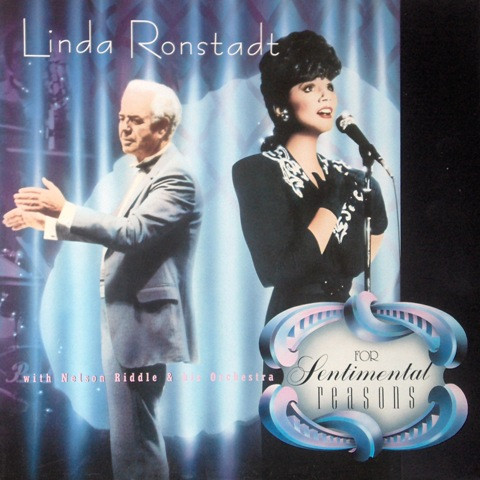
Linda Ronstadt's 'What's New' arrived in September 1983 on Asylum Records, and honey, it stopped the world cold. This was a woman who had ruled the rock and pop charts for the better part of a decade, and here she was stepping into the warm, golden light of the Great American Songbook — a place where few artists of her generation had dared to wander. Produced by her trusted partner Peter Asher, the album was recorded with the full, sweeping grandeur of the Nelson Riddle Orchestra, with the legendary Riddle himself — the same man who had conjured orchestral magic for Frank Sinatra and Nat King Cole — arranging and conducting every note. The project grew out of Ronstadt's deep, genuine love for the jazz and pop standards of the 1930s and 1940s, and what came out of those sessions was something lush, timeless, and utterly unlike anything else on the radio in 1983.
Reception
- The album was a massive commercial triumph, climbing to number three on the Billboard 200 and earning quadruple platinum certification in the United States, standing as one of the best-selling albums of both 1983 and 1984.
- Critical reception was strong and deeply felt, with reviewers praising Ronstadt's luminous vocal performances and Nelson Riddle's breathtaking orchestrations — and while a few early voices questioned the artistic sincerity of the project, those doubts melted away quickly in the face of the music itself.
- The album earned Ronstadt a Grammy nomination for Best Pop Vocal Performance, Female, a recognition that underscored how seriously the industry had come to regard this bold artistic statement.
Significance
- At a moment when MTV and synth-pop were dominating the cultural conversation, 'What's New' proved that the great American popular standards still had a beating heart — and that a massive audience was hungry to hear them sung with soul and conviction.
- The collaboration with Nelson Riddle created a living, breathing bridge between Ronstadt and the golden age of American popular music, lending the album a historical gravity and artistic credibility that few of her contemporaries could have achieved.
- The album is widely credited as a catalyst for the broader revival of interest in pre-rock American standards, planting seeds that would later bloom in the careers of artists like Harry Connick Jr. and in Tony Bennett's celebrated late-career renaissance.
Tracklist
-
A1 What's New 176
 3:55
3:55
-
A2 I've Got A Crush On You 177
3:28
-
A3 Guess I'll Hang My Tears Out To Dry 81
4:13
-
A4 Crazy He Calls Me 71
3:33
-
A5 Someone To Watch Over Me 84
4:09
-
B1 I Don't Stand A Ghost Of A Chance With You —
4:06
-
B2 What'll I Do 164
4:06
-
B3 Lover Man (Oh Where Can You Be) 86
4:18
-
B4 Good-Bye 113
4:47

Artist Details
Linda Ronstadt is a stone-cold legend, a powerhouse vocalist out of Tucson, Arizona who burst onto the scene in the late 1960s and absolutely owned the 1970s with a sound that could slide effortlessly from country-rock to pop to straight-up blue-eyed soul — the kind of voice that made you pull your car over and just *listen*. She bridged the gap between the Laurel Canyon singer-songwriter scene and mainstream radio gold, racking up hits like You're No Good and Blue Bayou while producing some of the best-selling albums of the entire decade, and in doing so she became one of the first women in rock to truly command the industry on her own terms. Her influence stretches wide and deep, paving the way for a generation of female artists who dared to be both commercially successful and artistically fearless, and her legacy stands as a testament to what happens when raw talent meets absolute determination.