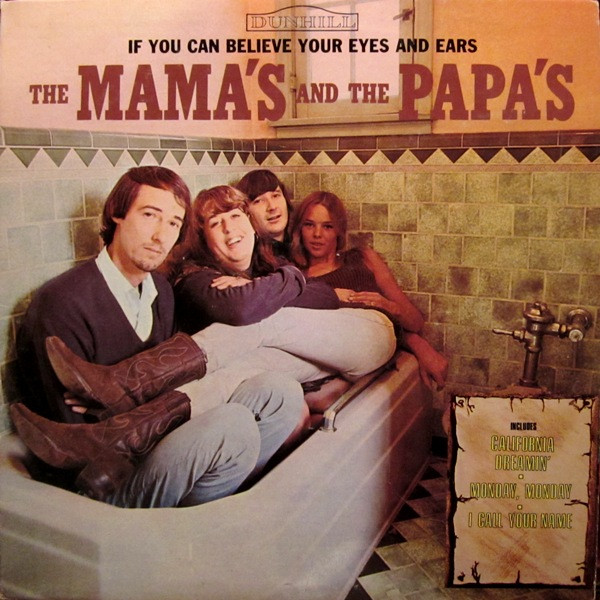
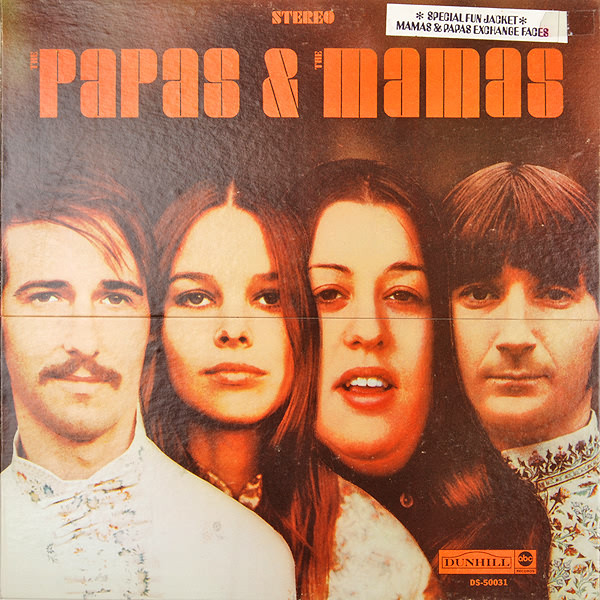
The Papas & The Mamas
 View on Discogs
 View on Wikipedia
Album Summary
The Papas & The Mamas came into the world in March 1968 on Dunhill Records, the fourth and final studio album from one of the most harmonically gifted quartets to ever grace the pop landscape. Produced by the masterful Lou Adler — the same cat who had shepherded their earlier glories — the album was born out of a studio atmosphere thick with creative tension and personal turbulence. John Phillips, Michelle Phillips, Denny Doherty, and the incomparable Mama Cass Elliot were still weaving those lush, layered vocal tapestries that had made them legends, but the cracks were beginning to show. The group was navigating the stormy waters of interpersonal conflict and a music scene that was shifting beneath their feet, and yet they walked into those sessions and laid down something that still shimmers with beauty and craft. The album stands as a testament to what these four souls could conjure together, even as the dream was quietly fading.
Reception
- The album peaked at #4 on the Billboard 200, a respectable showing by any measure, though it represented a step back from the commercial heights the group had commanded with their earlier releases.
- Contemporary reviews acknowledged the album's polished, sophisticated production while noting a sense of creative fatigue relative to the groundbreaking work the group had delivered during their 1966–1967 peak.
- The album generated less commercial momentum and critical fervor than its predecessors, signaling that the group's reign atop the pop mainstream was drawing to a close.
Significance
- The Papas & The Mamas stands as the closing chapter of one of the most luminous careers in 1960s pop, capturing the Mamas & the Papas at a twilight moment — still brilliant, still capable of breathtaking harmony, but on the eve of their dissolution in 1969.
- The album is a living document of the baroque pop and sophisticated vocal-group sound that defined the mid-to-late 1960s, showcasing the group's signature layered arrangements at a time when rock was moving hard toward psychedelia and heavier territory.
- Tracks like 'Safe In My Garden,' 'Twelve Thirty,' and 'Dream A Little Dream Of Me' reflect the group's continued artistic range, blending introspective lyricism with orchestral pop production in a way that few of their contemporaries could match.
Samples
- "Dream A Little Dream Of Me" — Mama Cass's lead vocal performance on this track has made it one of the most recognized and revisited recordings from the album, with the song appearing in numerous film and television contexts and serving as the foundation for interpolations and samples across pop and hip-hop productions over the decades.
- "Twelve Thirty" — originally released on an earlier Mamas & Papas record but rendered here in a definitive late-period form, this track has been sampled and interpolated in hip-hop and soul productions drawn to its evocative melodic identity.
Tracklist
-
A1 The Right Somebody To Love 84
 0:34
0:34
-
A2 Safe In My Garden 174
3:10
-
A3 Meditation Mama (Transcendental Women Travels) —
4:19
-
A4 For The Love Of Ivy 77
3:40
-
A5 Dream A Little Dream Of Me 66
3:14
-
A6 Mansions 106
3:43
-
B1 Gemini Childe 81
4:05
-
B2 Nothing's Too Good For My Little Girl 106
3:05
-
B3 Too Late 84
4:07
-
B4 Twelve Thirty 113
3:22
-
B5 Rooms 106
2:45
-
B6 Midnight Voyage 109
3:11

Artist Details
The Mamas & The Papas were a dream-woven folk-pop vocal group that came together in Los Angeles in 1965, blending the voices of John Phillips, Denny Doherty, Cass Elliot, and Michelle Phillips into some of the most lush, harmonically rich sounds the decade ever produced — hits like "California Dreamin'" and "Monday Monday" became the very soundtrack of a generation searching for sunshine and freedom. They stood right at the crossroads of the folk revival and the psychedelic pop explosion, helping to bridge those worlds with an elegance that few could match, and their influence on West Coast sound and the whole spirit of the counterculture runs deeper than most folks ever stop to appreciate. Though their run was tragically short, burning bright from 1965 to 1968, the music they left behind carries the kind of ache and beauty that just doesn't age — pure soul wrapped in California gold.