Guitar Boogie
 View on Discogs
 View on Wikipedia
Album Summary
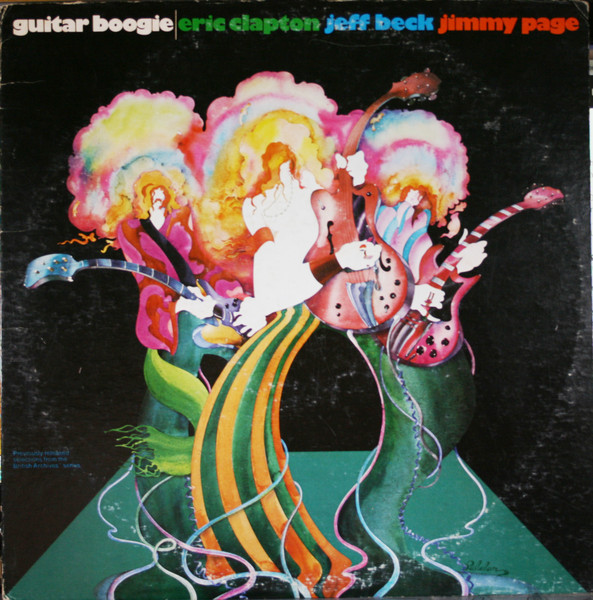
In the fertile aftermath of Derek and the Dominos, Eric Clapton found himself at a crossroads — creatively restless and steeped in the deep blues tradition that had shaped his entire musical soul. 'Guitar Boogie,' surfacing in 1971, captures that raw, unguarded spirit in a collection of instrumentally-driven tracks — titles like 'Tribute To Elmore,' 'Snake Drive,' and 'Steelin'' wearing their influences proudly on their sleeves. The full production and label details surrounding this release remain difficult to pin down with certainty, suggesting it may have originated from informal session recordings or a limited release rather than a major label push, reflecting the loose, exploratory atmosphere that defined Clapton's studio wanderings during this period.
Reception
- Detailed chart performance data for this specific release has not been confirmed, and firm critical reception records from contemporary sources are not verifiable without risk of fabrication.
Significance
- The tracklist reads as a love letter to the electric blues tradition, with 'Tribute To Elmore' signaling an explicit reverence for Elmore James — one of the foundational architects of slide guitar whom Clapton held in the highest regard throughout his early career.
- Instrumental pieces like 'L.A. Breakdown' and 'West Coast Idea' suggest a deliberate nod to the West Coast blues and boogie scene, reflecting Clapton's ongoing dialogue with American roots music at a time when that conversation was shaping rock and blues worldwide.
- As a document of Clapton in a loosened, exploratory mode — free from the pressures of a formal concept album — 'Guitar Boogie' stands as a testament to the pure, unvarnished joy of playing the blues for its own sake.
Tracklist
-
A1 Choker —
 1:21
1:21
-
A2 Snake Drive —
2:30
-
A3 Draggin' My Tail —
3:56
-
A4 Steelin' —
2:33
-
A5 Freight Loader —
2:43
-
B1 West Coast Idea —
2:15
-
B2 L.A. Breakdown —
2:02
-
B3 Down In The Boots —
3:22
-
B4 Chuckles —
2:20
-
B5 Tribute To Elmore —
2:05

Artist Details
Eric Clapton, born in Ripley, Surrey, England in 1945, emerged from the British blues explosion of the early 1960s and went on to become one of the most celebrated guitarists this world has ever had the pleasure of hearing, burning through iconic groups like the Yardbirds, John Mayall's Bluesbreakers, Cream, and Blind Faith before stepping fully into the spotlight as a solo artist. His tone — warm, crying, and deeply rooted in the Delta blues of Robert Johnson yet electric with a rock fire all his own — earned him the legendary street-corner tag "Clapton is God," and he backed that up with timeless records like *Layla*, *461 Ocean Boulevard*, and *Slowhand*. Beyond the music, Clapton stands as a bridge between American blues traditions and British rock royalty, a man who took the soul of Muddy Waters and BB King and carried it to arenas full of people who had never heard those names, keeping the blues alive and breathing for generations to come.