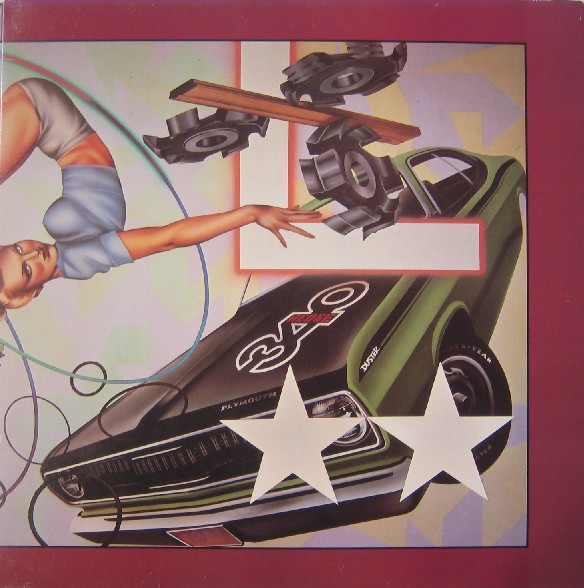
Heartbeat City
 View on Discogs
 View on Wikipedia
Album Summary
Heartbeat City came roaring out of the speakers in 1984 on Elektra Records, and baby, this was The Cars firing on all cylinders at the absolute peak of their powers. The Boston new wave architects stepped into the studio with the legendary Robert John "Mutt" Lange — the same cat who had been turning AC/DC and Def Leppard into arena-filling machines — and together they crafted something that felt like the future and the present all at once. Lange brought that big, gleaming, synth-drenched production style that the MTV era was hungry for, while Ric Ocasek and the boys never let go of those razor-sharp hooks and that cool, detached elegance that made The Cars unlike anybody else on the dial. The result was a record that sounded like neon lights and late nights — polished to a high shine but never losing the soul underneath.
Reception
- Heartbeat City climbed all the way to number 3 on the Billboard 200 and stayed on that chart for well over a year, making it one of the most commercially triumphant moments in The Cars' storied career.
- The album delivered multiple charting singles, with 'You Might Think' reaching number 8 on the Billboard Hot 100 and the aching, unforgettable 'Drive' rising to number 3 — proof that this record had both the energy and the emotion to move people.
- Critics recognized the album's accessible, synth-pop sheen as a deliberate and successful evolution, though some noted it marked a cleaner, more commercial turn from the rawer instincts of the band's earlier recordings.
Significance
- Heartbeat City stands as one of the defining statements of mid-1980s new wave, a record that showed the world how electronic textures and power pop songwriting could lock together in perfect, shimmering harmony.
- The album's deep relationship with MTV — driven by heavy rotation for videos from the record — helped cement The Cars as architects of the visual music era, demonstrating that a band could be cinematic and sonically adventurous at the same time.
- Heartbeat City proved that a band could embrace the production language of a new decade without surrendering their identity, and that lesson echoed through the second half of the 1980s as rock acts everywhere tried to find that same balance.
Samples
- Drive — one of the most recognizable ballads of the 1980s, with its hypnotic synth figure and emotional resonance making it a recurring source for samples and interpolations across multiple genres in subsequent decades.
Tracklist
-
A1 Hello Again 129
 3:47
3:47
-
A2 Looking For Love 153
3:52
-
A3 Magic 118
3:57
-
A4 Drive 56
3:55
-
A5 Stranger Eyes 153
4:26
-
B1 You Might Think 136
3:04
-
B2 It's Not The Night 128
3:49
-
B3 Why Can't I Have You 206
4:04
-
B4 I Refuse 131
3:16
-
B5 Heartbeat City 143
4:31

Artist Details
The Cars rolled out of Boston, Massachusetts in 1976, and baby, when they hit the scene they brought something fresh — a slick, icy blend of new wave cool and classic rock muscle that made them absolutely undeniable on radio and MTV alike. Ric Ocasek led that tight five-piece crew through a string of stone-cold classics, from "Just What I Needed" to "Drive," bridging the gap between the raw energy of punk and the polished shimmer of the synth-pop era that was coming in hot. The Cars stand as one of the great architects of the new wave movement, earning their rightful place in the Rock and Roll Hall of Fame in 2018 and leaving behind a catalog that still sounds like the future, even now.