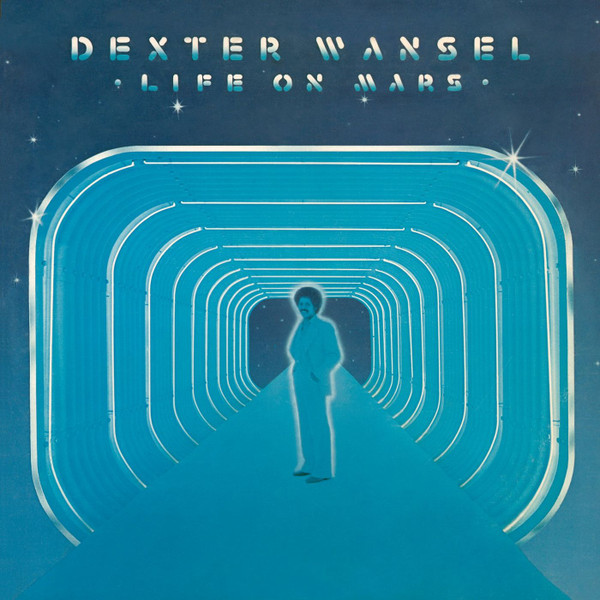
Life On Mars
 View on Discogs
Album Summary
Life On Mars came to life in 1976, born out of the legendary Philadelphia International Records — the house that Kenny Gamble and Leon Huff built into the crown jewel of American soul music. Produced by Gamble, Huff, and the remarkably gifted Dexter Wansel himself, this record captured a young keyboard virtuoso stepping boldly into his own spotlight. Wansel had already been putting in serious work behind the scenes as a session player and arranger for the Philly International family, but Life On Mars was his statement — his declaration. He wrapped that warm, lush Philadelphia soul sound around shimmering synthesizers and cosmic arrangements, conjuring something that felt like it was beamed in from another dimension while still hitting you right in the chest. This was 1976, and Wansel was pointing toward the future.
Reception
- Life On Mars found a warm and enthusiastic home on soul and funk radio formats, earning Wansel strong support from the same audiences who had come to trust the Philadelphia International seal of quality.
- Critics took note of the album's forward-thinking synthesizer work, praising Wansel's ability to weave electronic textures into the sophisticated, orchestrated soul sound that Philadelphia International had made its signature.
Significance
- Life On Mars stands as one of the earliest and most fully realized examples of synthesizer-driven soul-funk, with Wansel demonstrating that electronic instrumentation could carry the same emotional weight as a full string section or a Hammond B-3.
- The album represents a pivotal chapter in the Philadelphia International story, showing that the label's signature lush, polished sound could stretch far beyond its earthly roots and reach toward something genuinely cosmic and avant-garde.
- Arriving years before the electronic soul boom of the 1980s reshaped popular music, Life On Mars marked Dexter Wansel as a true pioneer — a musician who heard tomorrow's music while everyone else was still dancing to today's.
Samples
- Life On Mars — one of the album's most recognized titles among crate-digging producers, the track's synthesizer textures and rhythmic foundation have drawn the attention of hip-hop and R&B beatmakers across decades.
- Theme From The Planets — a deeply atmospheric instrumental that has found a second life in sample-based production, prized for its sweeping synthesizer lines and cinematic soul energy.
- One Million Miles From The Ground — a fan favorite among producers, its groove and cosmic keyboard work have made it a recurring source for hip-hop and neo-soul samples.
- Rings Of Saturn — the hypnotic, synthesizer-rich texture of this track has made it a sought-after source for producers looking to bring that deep Philly cosmic soul feel into their work.
Tracklist
-
A1 A Prophet Named K.G. 141
 4:20
4:20
-
A2 Life On Mars 117
5:50
-
A3 Together Once Again 130
4:23
-
A4 Stargazer 143
3:20
-
B1 One Million Miles From The Ground 143
5:00
-
B2 You Can Be What You Wanna Be 121
5:04
-
B3 Theme From The Planets 80
4:53
-
B4 Rings Of Saturn 144
3:43

Artist Details
Dexter Wansel was a Philadelphia-born keyboardist, composer, and producer who emerged in the mid-1970s as one of the sharpest minds in the legendary Philadelphia International Records stable, crafting lush, cosmic soul and jazz-funk soundscapes that felt like they were beamed down from another galaxy. Working alongside the great Thom Bell and Kenny Gamble and Leon Huff, Wansel laid down keyboard magic on sessions for the O'Jays, Phyllis Hyman, and countless others before stepping into the spotlight with his own brilliant solo outings like Life on Mars in 1976, cementing his place as a key architect of the Philly Soul sound. His synthesis of orchestral grandeur, electronic textures, and deep rhythmic groove helped define not just an era but an entire emotional vocabulary for Black music in America, and his fingerprints can be heard echoing through modern neo-soul and electronic music to this very day.