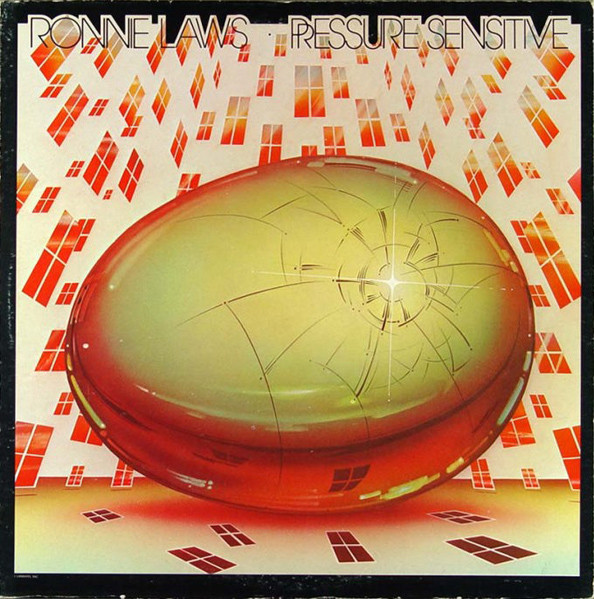
Pressure Sensitive
 View on Discogs
 View on Wikipedia
Album Summary
Pressure Sensitive was the debut album from Texas-born saxophonist Ronnie Laws, released in 1975 on the storied Blue Note Records label. Produced by Wayne Henderson of The Crusaders, this record was something special from the moment the needle dropped — Henderson brought with him a deep understanding of the Los Angeles jazz-funk scene, and that West Coast sophistication is woven into every groove on this album. Recorded at a time when Blue Note was boldly repositioning itself toward contemporary jazz-funk sounds to stay vital and relevant in a fast-changing musical landscape, the sessions captured Laws and a tight ensemble of session musicians firing on all cylinders. Laws' expressive soprano and tenor saxophone work takes center stage throughout, and the result is a debut that sounds less like a young man finding his footing and more like a fully formed artist arriving right on time.
Reception
- Pressure Sensitive was a genuine commercial triumph for Blue Note, climbing to the top of the jazz charts and injecting new energy into a label that was hungry to reassert itself in the mid-1970s marketplace.
- Critics embraced the album with open arms, singling out Laws' fluid, singing saxophone tone and the seamless way the record wove jazz improvisation together with deep funk grooves, heralding him as a significant new voice in contemporary jazz.
- The track 'Always There' emerged as the album's defining moment, earning heavy rotation on jazz and soul radio stations across the country and establishing Ronnie Laws as a crossover artist with appeal that reached well beyond the jazz faithful.
Significance
- Pressure Sensitive stands as a landmark recording in the jazz-funk fusion canon, representing one of the most convincing bridges between the hard bop tradition and the commercially oriented funk and smooth jazz sounds that would come to define the late 1970s and beyond.
- The album arrived at a pivotal moment in Blue Note's storied history, helping to signal a new artistic and commercial direction for the label as it navigated the shifting tastes of a decade that was transforming popular music from the ground up.
- Decades after its release, Pressure Sensitive continues to hold a revered place in the culture — not only as a document of mid-70s Los Angeles jazz-funk at its finest, but as an album whose influence quietly spread into hip-hop and beyond through the work of producers and artists who recognized the depth and soul locked in these grooves.
Samples
- Always There — one of the most sampled tracks in hip-hop history, with celebrated uses including Pete Rock's productions, cementing this single cut's legacy far beyond the jazz world and ensuring the album's name would be spoken with reverence across generations of producers and collectors.
- Tidal Wave — sampled across numerous hip-hop and soul productions, prized by crate-digging producers for its propulsive rhythm and atmospheric texture.
- Nothing To Lose — picked up by hip-hop producers drawn to its infectious funk foundation, contributing further to the album's remarkable sampling legacy.
Tracklist
-
A1 Always There 103
 4:52
4:52
-
A2 Momma 125
4:20
-
A3 Never Be The Same 108
4:23
-
A4 Tell Me Something Good 92
4:50
-
B1 Nothing To Lose 104
4:54
-
B2 Tidal Wave 95
4:08
-
B3 Why Do You Laugh At Me —
3:55
-
B4 Mis' Mary's Place 81
3:32

Artist Details
Ronnie Laws is an American saxophonist and flutist born on October 3, 1950, in Houston, Texas, who rose to prominence as a solo artist in the mid-1970s after early experience playing with Earth, Wind & Fire and Hugh Masekela. His sound blends jazz, funk, R&B, and soul, creating a style often associated with the smooth jazz and jazz-funk movements that defined much of the decade's instrumental music. He signed with Blue Note Records and released his debut album Pressure Sensitive in 1975, which became a landmark recording in the jazz-funk genre, featuring the widely sampled track "Always There." Laws is considered a pivotal figure in the crossover between jazz and popular music, and his recordings have been heavily sampled by hip-hop artists, extending his cultural influence well into subsequent generations. His brother Hubert Laws is also a celebrated flutist, making the Laws family a notable dynasty in American jazz history.