There's A Riot Goin' On
 View on Discogs
 View on Wikipedia
Album Summary
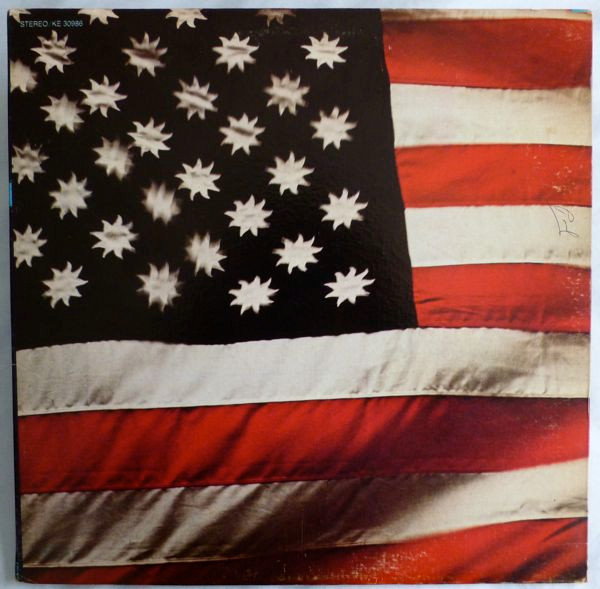
Cut deep in the creative crucible of Record Plant Studios in Los Angeles across 1970 and 1971, 'There's A Riot Goin' On' stands as one of the most haunting and courageous artistic statements the funk world has ever witnessed. Sly Stone produced the entire affair himself under the Epic Records banner, and brother — he did it largely alone, overdubbing most of the instrumental parts himself, coaxing something dark and beautiful out of early drum machine technology and layers of murky studio texture. Gone was the electric, jubilant roar of the Family Stone in full flight. In its place came something slower, heavier, and far more troubled. Released in November 1971, this record arrived on the heels of the monumental 'Stand!' and carried with it the weight of a man — and a nation — that had been through something. Sly wasn't just making music. He was documenting a reckoning.
Reception
- Debuted at number one on the Billboard 200 chart and spent five weeks at the top position, becoming one of the year's best-selling albums.
- Received mixed critical reviews upon release, with some critics unsettled by its dark and deliberately unpolished sound, while others recognized it as a bold and emotionally raw artistic statement ahead of its time.
- The album's commercial momentum proved undeniable over the long run, eventually earning platinum certification with sales surpassing two million copies.
Significance
- Pioneered a darker, more introspective strain of funk that turned away from the euphoric communal spirit of the late 1960s, capturing instead the disillusionment, paranoia, and fatigue that had settled over Black America and the counterculture as the new decade began.
- Established Sly Stone as a visionary in the solo artist-as-producer mold, demonstrating that a single creative voice — armed with studio technology and uncompromising vision — could reshape the entire vocabulary of funk and R&B, influencing everyone from Prince to D'Angelo.
- The album's minimalist arrangements, deliberate murkiness, and heavy reliance on rhythm over melody presaged the experimental and proto-funk aesthetics that would echo through alternative R&B, hip-hop production, and art funk for decades to come.
Samples
- "Family Affair" — one of the most sampled tracks in the funk and hip-hop canon, with its drum machine groove and hypnotic bassline appearing in recordings by artists across multiple generations of hip-hop and R&B.
- "Runnin' Away" — the melodic vocal hook and rhythmic foundation have been lifted and reimagined by hip-hop producers drawn to its raw, looping energy.
- "Thank You For Talking To Me Africa" — the sparse, rolling groove of this closing meditation has been sampled extensively, with its deeply influential drum and bass texture turning up in foundational hip-hop productions.
- "Luv N' Haight" — the brooding funk pocket of this album opener has attracted producers seeking its dark, hypnotic bottom-end atmosphere.
- "Brave & Strong" — the locked-in rhythmic pulse of this track has found a second life in hip-hop, sampled for its relentless, grinding groove.
Tracklist
-
A1 Luv N' Haight 96
 4:01
4:01
-
A2 Just Like A Baby 97
5:12
-
A3 Poet 164
3:01
-
A4 Family Affair 108
3:06
-
A5 Africa Talks To You "The Asphalt Jungle" —
8:45
-
A6 There's A Riot Goin' On —
0:00
-
B1 Brave & Strong —
3:28
-
B2 (You Caught Me) Smilin' 97
2:53
-
B3 Time 95
3:03
-
B4 Spaced Cowboy 174
3:57
-
B5 Runnin' Away 103
2:51
-
B6 Thank You For Talking To Me Africa —
7:14

Artist Details
Sly & The Family Stone burst onto the scene out of San Francisco in 1966, led by the visionary Sylvester Stewart — better known as Sly Stone — and they cooked up a sound so rich and revolutionary it made the whole world get up and dance, blending funk, soul, rock, and psychedelia into something nobody had ever heard before. This group was a trailblazer not just musically but socially, putting together one of the first racially and gender-integrated bands in popular music and delivering anthems like "Everyday People" and "Thank You" that spoke truth to a nation caught in the fire of the Civil Rights Movement and counterculture revolution. Their influence runs so deep it flows through the veins of Prince, Earth Wind & Fire, and Parliament-Funkadelic, and any serious student of soul and funk music knows that without Sly & The Family Stone, the whole landscape of popular music would look and sound completely different.