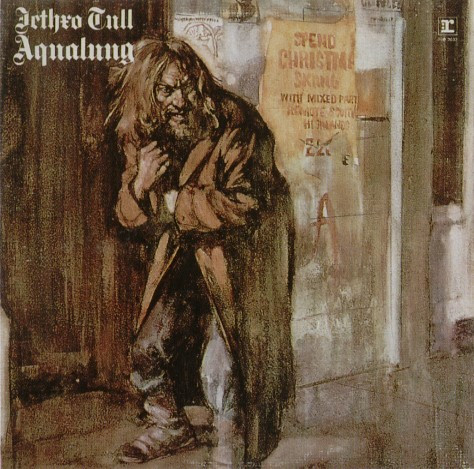
Aqualung
 View on Discogs
 View on Wikipedia
Album Summary
Now here's an album that changed the game, baby — Aqualung, laid down at Island Studios in London and sent out into the world by Chrysalis Records in March of 1971. Jethro Tull produced this masterpiece themselves, with the steady hands of engineer Eddie Kramer helping to capture that raw, gritty, soulful sound that nobody else on the planet could touch. Ian Anderson and the boys were stepping into new territory here, leaving behind the looser blues of their earlier work and moving toward something deeper, something with weight and intention — a rock sound driven by real ideas, real characters, and real questions about the human condition. This was not a band playing it safe. This was a band swinging for the fences.
Reception
- Reached #7 on the UK Albums Chart and #16 on the US Billboard 200, cementing Jethro Tull as a major force on both sides of the Atlantic.
- Received widespread critical acclaim for its ambitious and fearless blend of hard rock, acoustic folk, and blues — a combination that critics and fans alike recognized as something genuinely new.
Significance
- Aqualung helped pioneer the concept-driven rock album format, weaving together character studies and unflinching social commentary — particularly around organized religion and society's treatment of the downtrodden — in a way that pushed progressive rock into bold new emotional territory.
- This album defined Jethro Tull's signature sound for a generation, with Ian Anderson's flute soaring over thunderous guitar riffs from Martin Barre, proving that complexity and raw power were not mutually exclusive.
- Tracks like Locomotive Breath and My God demonstrated that a rock band could tackle spiritual crisis and institutional hypocrisy with the same force that others brought to love songs — and that ambition reverberated through progressive and alternative rock for decades to come.
Samples
- Aqualung — one of the most recognized riffs in classic rock, the main guitar and flute motif has been sampled and interpolated across hip-hop and electronic music productions over the decades, making it the most widely referenced track from this album in modern music culture.
Tracklist
-
A1 Aqualung 123
 6:31
6:31
-
A2 Cross-Eyed Mary 86
4:06
-
A3 Cheap Day Return 81
1:21
-
A4 Mother Goose 97
3:51
-
A5 Wond'ring Aloud 148
1:53
-
A6 Up To Me 99
3:14
-
B1 My God 88
7:08
-
B2 Hymn 43 96
3:15
-
B3 Slipstream 153
1:12
-
B4 Locomotive Breath 123
4:23
-
B5 Wind-Up 146
6:01

Artist Details
Jethro Tull burst onto the scene out of Luton, England back in 1967, led by the wild and wonderfully eccentric Ian Anderson — a man who made the flute as hard-rocking as any electric guitar — blending blues, folk, classical, and heavy rock into something the world had never quite heard before. They were the architects of progressive rock at its most adventurous, dropping landmark records like Aqualung and Thick as a Brick that challenged what an album could even be, earning them a devoted following on both sides of the Atlantic and a permanent place in the rock and roll pantheon. Their legacy is one of fearless originality, proving that serious musicianship and theatrical, literary ambition had every right to live right alongside the raw power of rock.