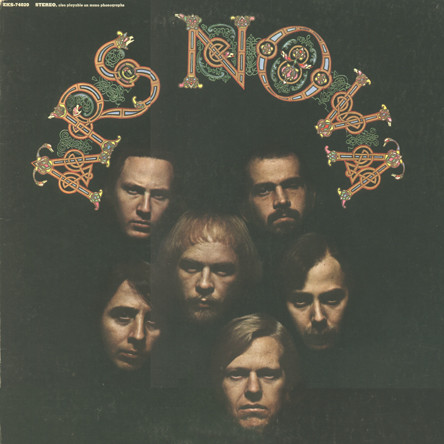

Blood, Sweat And Tears
 View on Discogs
 View on Wikipedia
Album Summary
Blood, Sweat & Tears' self-titled second album — the one that put their name in lights, baby — was laid down in 1968 and came roaring out of Columbia Records in March of 1969, produced by the steady hand of James William Guercio and the band themselves. With new lead vocalist David Clayton-Thomas stepping into the fold, this was a band reborn, recharged, and ready to set the world on fire. What they captured on those sessions was something that hadn't quite been heard before — a wall of brass meeting rock and roll at the crossroads, wrapped in lush arrangements that felt like they belonged in Carnegie Hall just as much as they did on your FM dial. This was the record that changed the conversation.
Reception
- The album climbed all the way to No. 1 on the Billboard 200, proving that sophistication and soul could sell just as hard as anything else on the charts.
- It took home the Grammy Award for Album of the Year in 1970, beating out some of the heaviest hitters of that extraordinary era.
- "Spinning Wheel" became a massive radio hit, reaching No. 2 on the Billboard Hot 100 and cementing David Clayton-Thomas as one of the most distinctive voices of his generation.
Significance
- This album stands as the definitive crystallization of brass-rock fusion — the moment the genre stopped being an experiment and became a full-blooded art form, with horn sections and rock instrumentation locked together in perfect, soulful communion.
- By weaving in classical references like the Variations On A Theme By Erik Satie alongside gutbucket blues and pop songcraft, Blood, Sweat & Tears made the case that rock music had no ceiling — that it could reach as high and as wide as any orchestral tradition.
- The record arrived at a crossroads moment in American culture, and its blend of ambition, accessibility, and raw emotional power helped define what serious popular music could aspire to be as the turbulent 1960s gave way to a new decade.
Samples
- Spinning Wheel — one of the most recognized brass-rock recordings of the era, with its horn riffs and rhythmic groove drawing the attention of hip-hop and soul producers across multiple decades of sampling culture.
- You've Made Me So Very Happy — the charged, soulful energy of this track has found its way into the crates of producers drawn to its horn stabs and rhythmic intensity.
- God Bless The Child — this powerful reimagining of the Billie Holiday standard carries a sampling legacy tied to its rich melodic and harmonic depth, attracting artists across genres.
Tracklist
-
A1 Variations On A Theme By Erik Satie (1st And 2nd Movements) —
 2:33
2:33
-
A2 Smiling Phases —
5:08
-
A3 Sometimes In Winter —
3:08
-
A4 More And More —
3:03
-
A5 And When I Die —
4:04
-
A6 God Bless The Child —
5:57
-
B1 Spinning Wheel —
4:06
-
B2 You've Made Me So Very Happy —
4:18
-
B3 Blues - Part II —
11:55
-
B4 Variation On A Theme By Erik Satie (1st Movement) —
1:37

Artist Details
Blood, Sweat & Tears burst onto the scene out of New York City in 1967, bringing with them a sound so rich and layered it made your soul stand at attention — a glorious fusion of jazz, rock, blues, and full brass-section arrangements that nobody had quite heard before. Led by the powerhouse vocals of David Clayton-Thomas, they helped pioneer the jazz-rock genre alongside Chicago and proved that a horn section belonged right there in the heart of rock and roll, earning them Grammy Awards and chart-topping hits like "Spinning Wheel" and "You've Made Me So Very Happy." Their cultural significance runs deep, as they represented a moment when musicians refused to be boxed in, expanding the sonic palette of an entire generation and leaving a brass-kissed fingerprint on the sound of the late '60s and early '70s that still resonates today.