A Space In Time
 View on Discogs
 View on Wikipedia
Album Summary
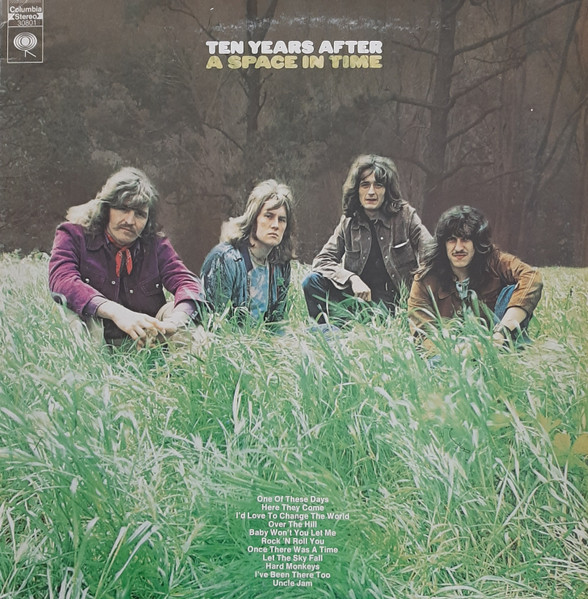
A Space In Time came together in 1971 on Deram Records, and baby, it was something special — Ten Years After stepping into a new light, stretching out and letting the music breathe in ways their earlier records only hinted at. The band took the production reins themselves, working alongside their engineering team to craft an album that felt both intimate and expansive, a true document of where these cats were in their creative journey. Released at the absolute peak of their touring power, fresh off the kind of road-warrior grind that forged great rock and roll bands into legends, A Space In Time captured Alvin Lee and the boys channeling all of that hard-earned energy into some of the most focused and emotionally resonant recordings of their career. This was blues-rock with something to say, and the world was listening.
Reception
- The album achieved meaningful commercial success, climbing into the top 20 on the UK charts and standing as one of the most commercially triumphant releases in the band's catalog.
- Critical response was warm and respectful, with reviewers noting a new maturity in the band's songwriting and a tighter, more refined approach to arrangements without sacrificing the raw energy that made Ten Years After essential.
- The album's standout track 'I'd Love To Change The World' generated substantial radio airplay and became one of the defining anthems associated with the band's legacy.
Significance
- A Space In Time marks a genuine artistic leap for Ten Years After — a band that had earned its stripes as blues revivalists now showing the world they could write songs with lasting emotional weight, bridging the raw Delta tradition with the ambitions of early 1970s rock.
- The album stands as a compelling document of the early 1970s British blues-rock movement at its commercial and creative peak, proving that music rooted in the blues could reach massive mainstream audiences on both sides of the Atlantic without losing its soul.
- With its balance of extended instrumental passages and tightly crafted songwriting, A Space In Time carved out a unique space between the progressive rock and mainstream rock worlds, influencing a generation of artists who followed in Ten Years After's wake.
Samples
- "I'd Love To Change The World" — one of the most recognized samples from this album, with its melodic framework appearing in various hip-hop and electronic productions over the decades, most notably sampled by Alicia Keys in "How Come You Don't Call Me" (2001)
Tracklist
-
A1 One Of These Days 123
 5:55
5:55
-
A2 Here They Come 125
4:38
-
A3 I'd Love To Change The World 117
3:43
-
A4 Over The Hill 133
2:27
-
A5 Baby Won't You Let Me Rock 'N' Roll You 155
2:15
-
B1 Once There Was A Time 164
3:20
-
B2 Let The Sky Fall 138
4:18
-
B3 Hard Monkeys 140
3:10
-
B4 I've Been There Too 148
5:43
-
B5 Uncle Jam 111
1:57

Artist Details
Ten Years After was a blazing British blues-rock outfit that came together in Nottingham, England back in 1966, led by the lightning-fingered Alvin Lee whose guitar work could make a grown man weep and shout hallelujah in the same breath. They rode the late sixties and early seventies hard, carving out a sound that was raw, electric, and deeply rooted in the American blues tradition, and they burned their name into rock history forever with that scorching performance of I'm Going Home at Woodstock in 1969 — a moment that stopped the world cold and showed everybody just how dangerous and beautiful a guitar in the right hands could truly be. Ten Years After may not have always gotten the headlines they deserved, but any serious lover of real, honest, hard-driving rock and roll knows that Alvin Lee and those boys were the genuine article, the kind of band that reminded you why music was worth living for in the first place.