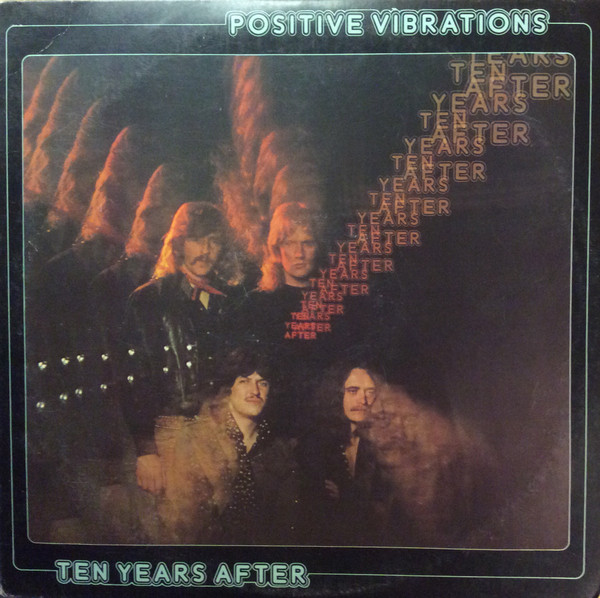
Positive Vibrations
 View on Discogs
 View on Wikipedia
Album Summary
Positive Vibrations came to life in 1974 on the Chrysalis Records label, a swan song of sorts from one of the hardest-working bands to ever come out of the British blues-rock movement. Produced by the band themselves alongside the gifted Chris Thomas — a man who knew his way around a studio board like few others in that era — the album captured Ten Years After at a crossroads, drawing on nearly a decade of road-tested grit and studio wisdom. Alvin Lee and the boys brought everything they had to these sessions, layering their trademark blues-drenched intensity with a harder, more contemporary production sheen that reflected where rock and roll was headed in the mid-seventies. It was a record made by seasoned musicians who had nothing left to prove and everything left to play.
Reception
- The album found its way onto the Billboard 200, earning the band a respectable commercial showing at a time when the hard rock landscape was growing more crowded by the month.
- Critical response was a mixed bag, with reviewers tipping their hats to the band's undeniable musicianship while questioning whether Ten Years After could hold their ground against the wave of newer acts muscling in on the territory.
- Compared to the commercial heights the band had reached in the early part of the decade, Positive Vibrations represented a softer landing, a reflection of shifting radio formats and a rock audience with restless ears.
Significance
- Positive Vibrations stands as a testament to the blues-rock foundation that Ten Years After built their entire legacy upon, with Alvin Lee's searing, quicksilver guitar work firing on all cylinders across tracks like Nowhere To Run and I Wanted To Boogie.
- Released right in the fault line between the classic rock era and the coming storm of punk and new wave, the album planted the band firmly in the tradition of hard-driving, blues-rooted rock at a moment when that tradition was about to be challenged like never before.
- The record demonstrated Ten Years After's maturing craft as composers and arrangers, balancing raw energy with more structured song forms across its ten tracks — a reflection of where album-oriented rock was living and breathing in 1974.
Tracklist
-
A1 Nowhere To Run 87
 3:58
3:58
-
A2 Positive Vibrations 125
4:14
-
A3 Stone Me 117
4:53
-
A4 Without You 82
3:57
-
A5 Going Back To Birmingham 154
2:36
-
B1 It's Getting Harder 103
4:22
-
B2 You're Driving Me Crazy 143
2:23
-
B3 Look Into My Life 110
4:14
-
B4 Look Me Straight Into The Eyes 149
6:18
-
B5 I Wanted To Boogie 133
3:33

Artist Details
Ten Years After was a blazing British blues-rock outfit that came together in Nottingham, England back in 1966, led by the lightning-fingered Alvin Lee whose guitar work could make a grown man weep and shout hallelujah in the same breath. They rode the late sixties and early seventies hard, carving out a sound that was raw, electric, and deeply rooted in the American blues tradition, and they burned their name into rock history forever with that scorching performance of I'm Going Home at Woodstock in 1969 — a moment that stopped the world cold and showed everybody just how dangerous and beautiful a guitar in the right hands could truly be. Ten Years After may not have always gotten the headlines they deserved, but any serious lover of real, honest, hard-driving rock and roll knows that Alvin Lee and those boys were the genuine article, the kind of band that reminded you why music was worth living for in the first place.