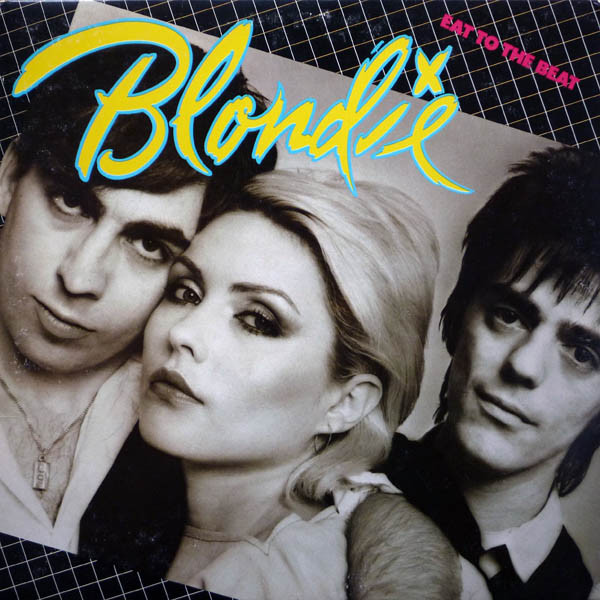
Eat To The Beat
 View on Discogs
 View on Wikipedia
Album Summary
Eat to the Beat is Blondie's fourth studio album, released in October 1979 on Chrysalis Records. Produced by the masterful Mike Chapman — the same cat who helmed the landmark Parallel Lines — this record found the band riding a serious wave of momentum, stepping into the studio with confidence and creative fire. Chapman brought that same polished, radio-ready sheen to the sessions while letting the band push further into dance-floor territory, new wave electricity, and post-punk attitude. The result was a record that felt both inevitable and surprising, a natural next step for a group that was becoming one of the most important acts on the planet.
Reception
- The album reached number 17 on the Billboard 200 and performed with particular strength in the United Kingdom, where Blondie had built a devoted and passionate following.
- Atomic emerged as the album's most celebrated single, becoming a major hit and a defining track of the era.
- Critical reception was warm and enthusiastic, with reviewers recognizing the band's rare ability to marry new wave experimentation with undeniable pop instincts without losing an ounce of their edge.
Significance
- Eat to the Beat cemented Blondie's standing as true architects of the new wave movement, deepening the genre's dialogue with disco, dance music, and post-punk in ways that felt genuinely groundbreaking for 1979.
- The album demonstrated with full authority that new wave music could command mainstream commercial success without compromising its artistic identity, opening doors for an entire generation of acts that followed.
- Mike Chapman's production approach on this record — its use of synthesizers, its rhythmic sophistication, its gleaming sonic architecture — became a foundational template for the pop and dance music that would dominate the coming decade.
Samples
- Atomic — one of the most sampled tracks in Blondie's catalog, with its distinctive instrumental sections appearing across hip-hop, electronic, and pop productions spanning multiple decades.
- Dreaming — sampled and interpolated by various artists across hip-hop and pop contexts, lending its melodic energy a rich afterlife in the decades following its release.
- Union City Blue — has drawn the attention of producers and artists in the electronic and dance music world, with its textures and melodic character finding new life in later recordings.
Tracklist
-
A1 Dreaming 161
 3:02
3:02
-
A2 The Hardest Part 114
3:37
-
A3 Union City Blue 124
3:19
-
A4 Shayla 115
3:51
-
A5 Eat To The Beat 98
2:35
-
A6 Accidents Never Happen 178
4:10
-
B1 Die Young Stay Pretty 89
3:27
-
B2 Slow Motion 138
3:25
-
B3 Atomic 136
4:35
-
B4 Sound-A-Sleep 170
4:12
-
B5 Victor 110
3:19
-
B6 Living In The Real World 94
2:38

Artist Details
Blondie burst onto the scene out of New York City in 1974, led by the impossibly cool Debbie Harry, blending the raw edge of punk with the shimmer of new wave and a little pop magic that made it all go down smooth. These cats were part of that electric CBGB downtown scene, rubbing elbows with the Ramones and Television, but they crossed over in a way nobody else quite did — scoring massive hits like Heart of Glass and Call Me that had everybody from the disco crowd to the punk kids nodding their heads. Blondie broke ground by weaving rap, reggae, and disco into their rock DNA long before it was fashionable, making Debbie Harry not just a pop icon but a genuine trailblazer who helped shape the sound of the decade to come.