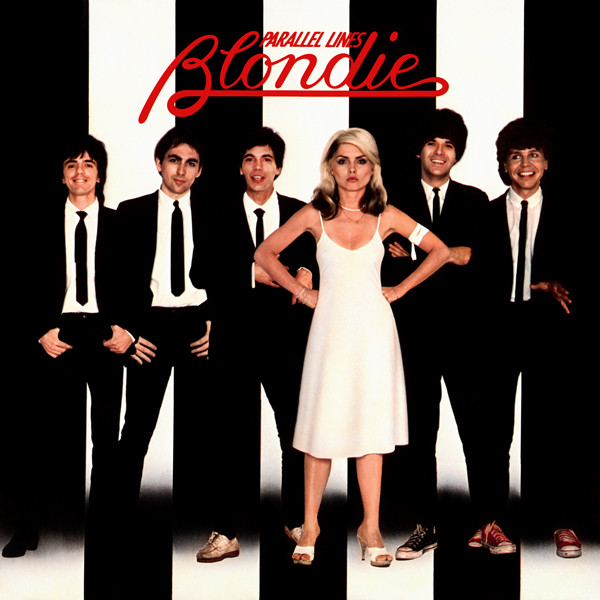
Parallel Lines
 View on Discogs
 View on Wikipedia
Album Summary
Parallel Lines came roaring out of the studio in 1978, landing on Chrysalis Records on September 23rd of that year, and honey, the world was never quite the same after that. Produced by the masterful Mike Chapman — a man who knew how to take raw electricity and bottle it without losing the lightning — the album found Blondie stepping into a bigger, more luminous sound than anything they'd done before. Chapman's sleek, polished production gave Debbie Harry and the boys a sheen that could cut through AM and FM alike, without ever sanding down the danger underneath. Recorded during a period when the New York new wave scene was crackling with possibility, Parallel Lines caught Blondie right at the peak of their creative momentum, hungry, focused, and absolutely ready to take the whole world to school.
Reception
- Parallel Lines became Blondie's commercial breakthrough in a major way, climbing to number 1 in the UK and reaching number 6 on the Billboard 200, where it held court for over 100 weeks — a run that told everybody paying attention that this was no flash in the pan.
- The album sent multiple singles into the stratosphere worldwide, with 'Heart of Glass,' 'Sunday Girl,' and 'Hanging on the Telephone' all making their mark and cementing Blondie's status as genuine international recording artists of the highest order.
- Critics received the album warmly, with widespread praise for the band's uncanny ability to weave new wave attitude together with mainstream pop craftsmanship and hooks sharp enough to stay with you for a lifetime.
Significance
- Parallel Lines stands as one of the defining moments in new wave history — the album that proved beyond any doubt that the genre could step out of the underground and command the mountaintop of mainstream commercial success without selling its soul.
- The album is a masterclass in genre versatility, moving with grace and authority from the disco shimmer of 'Heart of Glass' to the power pop punch of 'One Way Or Another' to the dreamy, atmospheric beauty of 'Fade Away And Radiate,' all held together by Blondie's singular artistic vision.
- Recognized as the best-selling album of 1979, Parallel Lines laid down the template for pop-oriented new wave and cast a long, influential shadow over the direction of popular music well into the 1980s and beyond.
Samples
- Heart Of Glass — one of the most sampled and interpolated tracks in Blondie's catalog, its distinctive disco-new wave pulse has been revisited and referenced across decades of pop and dance music production.
Tracklist
-
A1 Hanging On The Telephone 152
 2:17
2:17
-
A2 One Way Or Another 161
3:31
-
A3 Picture This 127
2:53
-
A4 Fade Away And Radiate 84
3:57
-
A5 Pretty Baby 144
3:16
-
A6 I Know But I Don't Know 128
3:53
-
B1 11:59 184
3:19
-
B2 Will Anything Happen 191
2:55
-
B3 Sunday Girl 145
3:01
-
B4 Heart Of Glass 117
3:54
-
B5 I'm Gonna Love You Too 98
2:03
-
B6 Just Go Away 138
3:21

Artist Details
Blondie burst onto the scene out of New York City in 1974, led by the impossibly cool Debbie Harry, blending the raw edge of punk with the shimmer of new wave and a little pop magic that made it all go down smooth. These cats were part of that electric CBGB downtown scene, rubbing elbows with the Ramones and Television, but they crossed over in a way nobody else quite did — scoring massive hits like Heart of Glass and Call Me that had everybody from the disco crowd to the punk kids nodding their heads. Blondie broke ground by weaving rap, reggae, and disco into their rock DNA long before it was fashionable, making Debbie Harry not just a pop icon but a genuine trailblazer who helped shape the sound of the decade to come.