Aerosmith
 View on Discogs
 View on Wikipedia
Album Summary
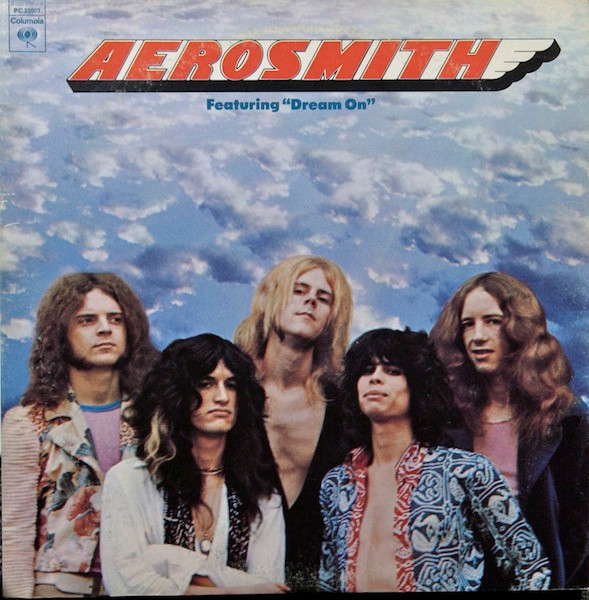
Recorded in late 1972 at Intermedia Sound Studios in Boston, Massachusetts, Aerosmith's self-titled debut dropped in January 1973 on Columbia Records, produced by Adrian Barber. The band had been hustling the clubs of Boston for a couple of years, building that raw, sweaty groove before Columbia took a chance on them. The recording budget was razor-thin and the timeline was tight, but what came out of those sessions had a blue-collar hunger to it that no amount of studio polish could manufacture. This was five guys from New England laying down something primal, something that owed a deep debt to the blues but had its own street-level swagger.
Reception
- The debut album charted modestly, reaching number 166 on the Billboard 200 — hardly a blockbuster entry, and Columbia wasn't exactly throwing a parade.
- Dream On was released as a single but initially went nowhere, barely making a dent in the charts until it was re-released in 1976 and became a genuine top-ten smash, proving the song was ahead of its time.
- Early critical reception was lukewarm at best, with some critics dismissing the band as Rolling Stones imitators, though time has been very, very kind to this record.
Significance
- This album laid the cornerstone for what would become one of the most enduring hard rock legacies in American music history — raw, blues-soaked rock and roll with a swagger that was uniquely homegrown.
- Dream On stands as one of the most remarkable debut album tracks ever committed to tape, a slow-burning power ballad built on Steven Tyler's piano that redefined what hard rock could sound like emotionally.
- The album established the Aerosmith blueprint — bluesy riffs, Tyler's elastic wail, Perry's gritty guitar tone — a formula that would influence generations of American hard rock and heavy metal artists throughout the decade and beyond.
Samples
- Dream On — the song's orchestral drama and melodic power have made it a touchstone for hip-hop and pop producers, with its piano figure and Tyler's vocal interpolated and referenced across multiple genres over the decades.
- Mama Kin — the grinding blues-rock riff has been revisited and echoed in various rock and rap-rock contexts, cementing its status as one of the band's most viscerally influential early grooves.
Tracklist
-
A1 Make It 137
 3:45
3:45
-
A2 Somebody 145
3:45
-
A3 Dream On 78
4:28
-
A4 One Way Street 132
7:12
-
B1 Mama Kin 152
4:25
-
B2 Write Me A Letter —
4:11
-
B3 Movin' Out 160
5:03
-
B4 Walkin' The Dog 125
3:12

Artist Details
Aerosmith formed in Boston, Massachusetts in 1970, built around the explosive creative partnership of vocalist Steven Tyler and guitarist Joe Perry, with Brad Whitford on second guitar, Tom Hamilton on bass, and Joey Kramer on drums. They forged a sound that married the swagger of the Rolling Stones with the gut-punch heaviness of hard rock and the smoldering soul of the American blues — a combination that made them one of the most electrifying live and studio acts to ever come out of New England. From the mid-'70s through their massive commercial resurgence in the late '80s and beyond, Aerosmith stood as one of the defining bands of American rock and roll, influencing virtually every hard rock and heavy metal artist who came after them.