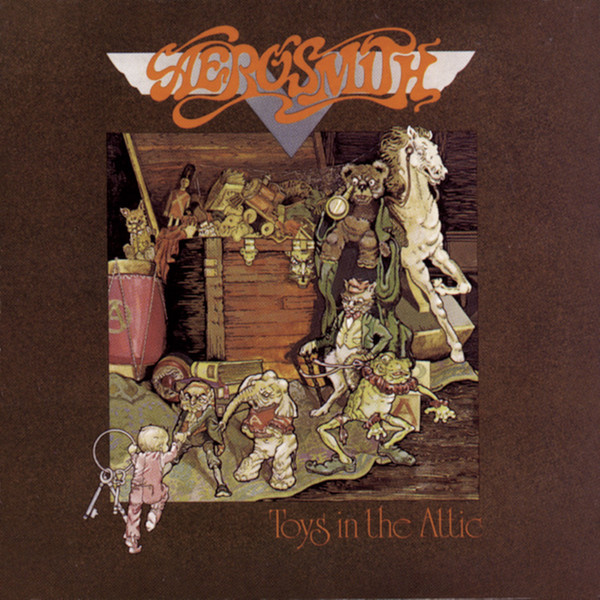
Toys In The Attic
 View on Discogs
Album Summary
Recorded at Record Plant Studios in New York City and released in April 1975 on Columbia Records, Toys In The Attic was the third studio album from Boston's own Aerosmith, produced once again by Jack Douglas alongside the band. Coming off the modest momentum of their first two records, the boys came into these sessions leaner, meaner, and hungrier than ever — Douglas helped them tighten that raw, bluesy swagger into something that hit like a freight train. The album captured a band firing on all cylinders, locking in a groove that was equal parts Keith Richards swagger and pure American street grit, and it would go on to become the record that truly broke Aerosmith wide open to the world.
Reception
- Toys In The Attic cracked the Top 15 on the Billboard 200, peaking at number 11, and proved that Aerosmith had a real audience hungry for that hard-driving rock sound.
- The album was initially met with strong enthusiasm from rock radio, with Walk This Way and Sweet Emotion becoming instant cornerstones of FM programming across the country.
- Over time, critical opinion only grew warmer — what some early reviewers dismissed as derivative Rolling Stones worship was later recognized as a defining document of American hard rock, and the album has since been certified five times platinum in the United States.
Significance
- Toys In The Attic is widely regarded as one of the essential hard rock albums of the 1970s, cementing Aerosmith's place alongside Led Zeppelin and the Rolling Stones as architects of a sound that would define the decade and cast a long shadow over everything that came after.
- Walk This Way and Sweet Emotion introduced a rhythmic, funk-infused approach to hard rock riffing that was genuinely unlike anything else on rock radio at the time, bridging the gap between blues-soaked rock and something that moved your whole body.
- The album marked the moment Aerosmith evolved from a promising club band into a true arena-rock force, influencing generations of hard rock and heavy metal artists who followed and helping establish Boston as a serious city on the American rock map.
Samples
- Walk This Way — perhaps the most sampled and interpolated track in rock history, its drum break and riff were famously reconstructed and brought to a whole new generation when Run-DMC and Aerosmith collaborated on a landmark 1986 version that essentially bridged the worlds of hip-hop and hard rock for mainstream audiences, and the underlying groove has been referenced and borrowed by countless hip-hop producers ever since.
- Sweet Emotion — the opening bass and percussion intro to this track has been sampled and lifted by various hip-hop and electronic artists over the years, its hypnotic groove proving irresistible to producers digging through the crates.
- Big Ten Inch Record — this romping, blues-drenched cover has been sampled and referenced in hip-hop contexts, its raw energy and suggestive lyrical playfulness making it a natural fit for producers looking for something with both humor and heat.
Tracklist
-
A1 Toys In The Attic 99
 3:05
3:05
-
A2 Uncle Salty 122
4:08
-
A3 Adam's Apple 122
4:34
-
A4 Walk This Way 108
3:39
-
A5 Big Ten Inch Record 172
2:10
-
B1 Sweet Emotion 99
4:34
-
B2 No More No More 136
4:35
-
B3 Round And Round 141
5:02
-
B4 You See Me Crying 85
5:12

Artist Details
Aerosmith formed in Boston, Massachusetts in 1970, built around the explosive creative partnership of vocalist Steven Tyler and guitarist Joe Perry, with Brad Whitford on second guitar, Tom Hamilton on bass, and Joey Kramer on drums. They forged a sound that married the swagger of the Rolling Stones with the gut-punch heaviness of hard rock and the smoldering soul of the American blues — a combination that made them one of the most electrifying live and studio acts to ever come out of New England. From the mid-'70s through their massive commercial resurgence in the late '80s and beyond, Aerosmith stood as one of the defining bands of American rock and roll, influencing virtually every hard rock and heavy metal artist who came after them.