Traffic
 View on Discogs
 View on Wikipedia
Album Summary
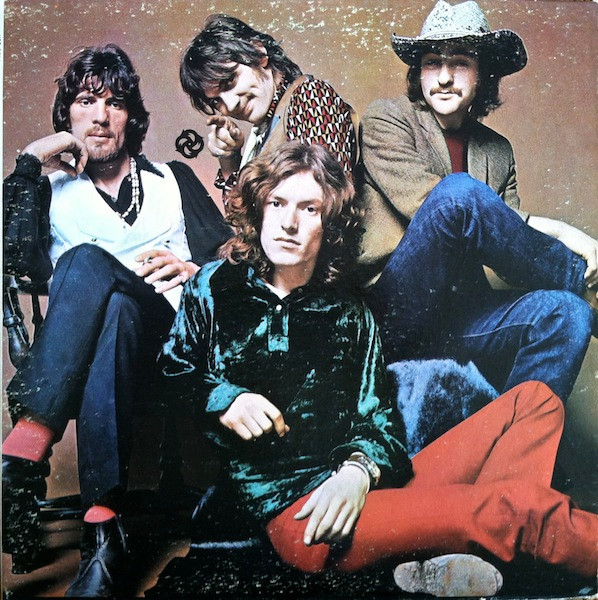
Traffic's self-titled second album came into the world in 1968 — a year when everything in music was shifting, stretching, and reaching for something new — and this record was right there at the center of that beautiful storm. Released through Island Records in the UK and United Artists Records in the US, and produced by the masterful Jimmy Miller, the album was born out of a genuinely turbulent moment for the band. Dave Mason, one of the group's founding voices, had walked out the door — but not before leaving his fingerprints all over several tracks. That left Steve Winwood, Chris Wood, and Jim Capaldi to hold the thing together, and hold it together they did. What emerged was a record that breathed and swayed and grooved in ways that most rock bands of the era simply weren't capable of — a testament to the deep musical chemistry these men had forged together in that Berkshire cottage retreat.
Reception
- The album performed with real commercial strength on both sides of the Atlantic, affirming Traffic's standing as one of the most vital and serious British rock acts of the late 1960s.
- Critics took notice of the album's sophisticated, genre-defying ambition — Steve Winwood's extraordinary vocal performances and Chris Wood's jazz-drenched woodwind work drew particular reverence from reviewers who recognized they were hearing something genuinely elevated.
- The creative tension between Dave Mason's contributions and the core trio's sensibilities — written during a period of personal and professional fracture — was widely noted as one of the album's most compelling and musically rich qualities.
Significance
- This album stands as a landmark in the development of progressive rock and jazz-rock fusion, with Traffic staking out an improvisational, emotionally sophisticated approach to British rock that pointed the way forward for an entire generation of musicians.
- Dave Mason's 'Feelin' Alright?' — tucked right there on side one — went on to become one of the most covered songs of its era, earning monumental recognition through Joe Cocker's definitive rendition and proving that this album was carrying songs of extraordinary, enduring power.
- By refusing to chase commercial pop conventions and instead following the music wherever it wanted to go, Traffic cemented with this record an artistic identity that would influence rock, fusion, and soul acts for decades to come.
Samples
- Feelin' Alright? — one of the most revisited songs to emerge from the late 1960s British rock scene, with its groove and structure drawn upon across soul, hip-hop, and R&B productions over the decades.
- Forty Thousand Headmen — sampled by Massive Attack, whose use of the track brought this haunting, jazz-inflected gem to an entirely new generation of listeners in the 1990s.
Tracklist
-
A1 You Can All Join In 95
 3:12
3:12
-
A2 Pearly Queen 101
4:17
-
A3 Don't Be Sad 94
3:18
-
A4 Who Knows What Tomorrow May Bring 83
3:08
-
A5 Feelin' Alright? —
4:10
-
B1 Vagabond Virgin 133
5:15
-
B2 Forty Thousand Headmen 88
3:15
-
B3 Cryin' To Be Heard 74
5:13
-
B4 No Time To Live 77
5:15
-
B5 Means To An End 191
2:32

Artist Details
Traffic was one of those rare British bands that could take rock, jazz, folk, and psychedelia and blend them into something so smooth and soulful it felt like a cool breeze rolling through an open window — formed in Birmingham, England in 1967 by the incomparable Steve Winwood, Dave Mason, Chris Wood, and Jim Capaldi, these cats were doing something nobody else was doing, weaving improvisational jazz sensibilities into rock music long before it was fashionable. Their albums like *John Barleycorn Must Die* and *The Low Spark of High Heeled Boys* became cornerstones of the progressive rock and jazz-rock fusion movements, influencing generations of musicians who came after them. Traffic proved that rock music could be sophisticated without losing its soul, and their legacy lives on as a testament to what happens when genuinely gifted musicians trust each other enough to stretch out and explore.