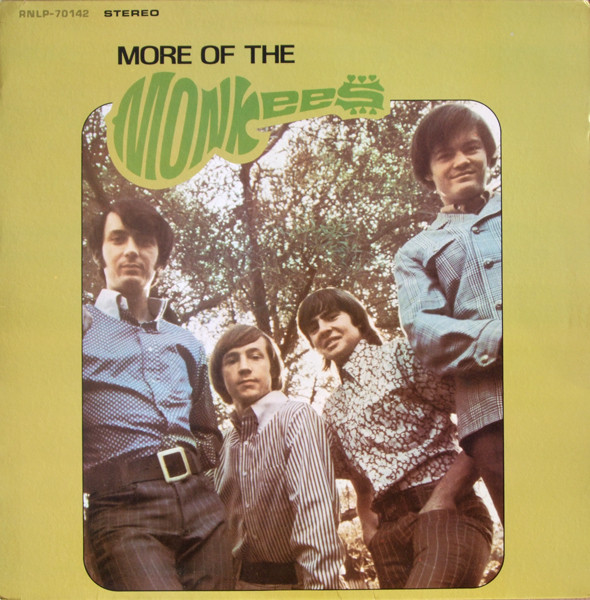
More Of The Monkees
 View on Discogs
 View on Wikipedia
Album Summary
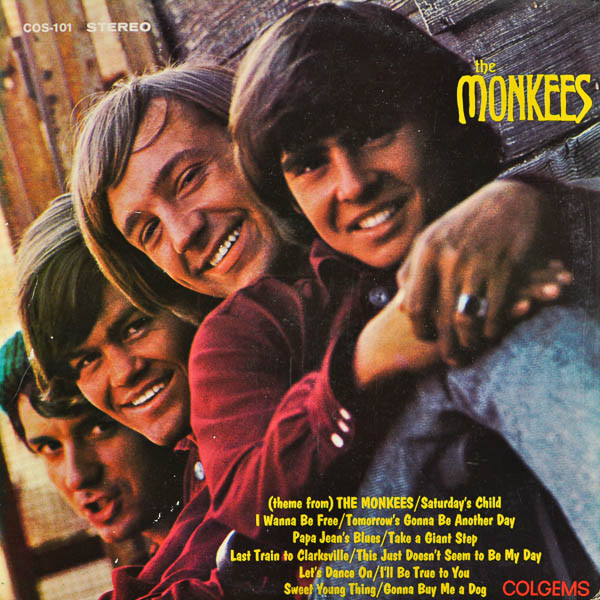
More Of The Monkees came rolling out in January 1967 on Colgems Records, and honey, the world wasn't ready for how big this thing was going to be. Riding the tidal wave of the group's smash television series and their chart-dominating debut album, this second LP was assembled with a sense of urgency and ambition that you could feel in every groove. Production duties were handled primarily by the brilliant team of Tommy Boyce and Bobby Hart, who had already proven they had the Midas touch with this group, alongside other production contributors who brought their own flavor to the sessions. The album drew from a well of studio recordings that captured The Monkees at a fascinating crossroads — still embracing the polished, irresistible pop machine aesthetic that made them household names, while quietly beginning to stretch toward something with a little more grit and soul underneath the shimmer.
Reception
- More Of The Monkees debuted at number one on the Billboard 200, making it the group's second consecutive chart-topping album and cementing their status as one of the most commercially dominant acts of the era.
- The album spent five weeks at the summit of the Billboard 200 and maintained a presence on the chart for well over a year, a testament to the sustained hunger audiences had for everything The Monkees were putting down.
- Critics began to take notice that something more than manufactured pop was happening here, acknowledging stronger musicianship and a more confident production sensibility than the group's debut had displayed.
Significance
- More Of The Monkees stands as a defining artifact of mid-1960s pop craftsmanship, capturing that rare moment when bubblegum accessibility and genuine rock and roll energy were not mutually exclusive — with tracks like Mary, Mary and (I'm Not Your) Steppin' Stone carrying real teeth beneath the surface.
- The album marked a pivotal transitional chapter in The Monkees' story, representing the early stirrings of the group asserting themselves as recording artists rather than simply television personalities assigned to sing someone else's vision.
- The commercial triumph of this album played a significant cultural role in legitimizing the idea that a group born from television could produce music deserving of serious popular recognition, a debate that was very much alive and contentious in 1967.
Samples
- I'm A Believer — one of the most recognized pop recordings of the 1960s, the track has been interpolated and referenced across pop, hip-hop, and film productions, most famously featured in the DreamWorks animated film Shrek (2001) in a version by Smash Mouth, and has appeared in numerous sampled and interpolated forms across decades of popular music.
- Mary, Mary — sampled and covered across multiple genres, with Run-D.M.C. famously recording their own version in 1987, and elements of the track's infectious rhythmic energy finding their way into later productions.
- (I'm Not Your) Steppin' Stone — a track with a long and storied life in rock and punk productions, widely covered and interpolated, with its raw energy making it a touchstone reference point for artists working in garage rock and early punk idioms.
Tracklist
-
A1 She 133
 2:27
2:27
-
A2 When Love Comes Knockin' (At Your Door) 95
1:45
-
A3 Mary, Mary 129
2:12
-
A4 Hold On Girl 145
2:23
-
A5 Your Auntie Grizelda 95
2:28
-
A6 (I'm Not Your) Steppin' Stone 131
2:25
-
B1 Look Out (Here Comes Tomorrow) 129
2:10
-
B2 The Kind Of Girl I Could Love 125
1:50
-
B3 The Day We Fall In Love 82
2:20
-
B4 Sometime In The Morning 126
2:24
-
B5 Laugh 133
2:25
-
B6 I'm A Believer 80
2:41

Artist Details
The Monkees were a pop-rock group assembled in Los Angeles in 1965 for a television show of the same name, blending bubblegum charm with genuine musical chops to create a sound that had the whole country humming — hits like Last Train to Clarksville and I'm a Believer weren't just songs, baby, they were moments frozen in time. Though the music industry initially dismissed them as a manufactured act, these four cats — Davy Jones, Micky Dolenz, Michael Nesmith, and Peter Tork — pushed back hard, fought for creative control, and proved they had real soul beneath all that prefab shine. Culturally, they were the bridge between the British Invasion and the psychedelic era, and their influence on the idea of pop as spectacle — music, television, and personality all wrapped into one — echoes all the way down to the present day.