
Hour Of The Wolf
 View on Discogs
Album Summary
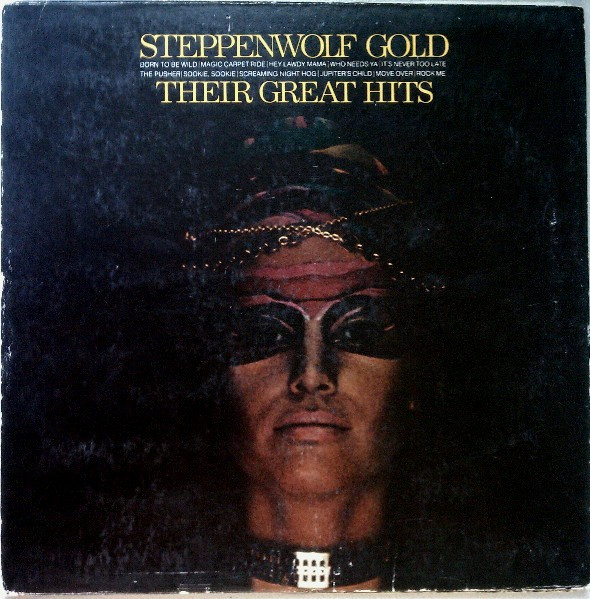
Hour of the Wolf came roaring out in 1975 on Epic Records, and let me tell you, this was Steppenwolf refusing to lay down and die quietly. John Kay, the soul and spine of this outfit, had reconstituted the band and brought them back into the studio with something to prove. Recorded during a mid-decade rock landscape that had moved on from the raw, bluesy thunder that made Steppenwolf legends, Kay pushed the group toward a harder, more stripped-down sound — no frills, no apologies. This was a band that had dissolved, regrouped, and come back swinging, and every note on this record carries that hard-won determination. The production reflects a no-nonsense approach that suited Kay's vision of keeping the Steppenwolf fire burning, even as the industry around them was chasing glam shine and arena spectacle.
Reception
- Hour of the Wolf moved modestly through the charts and did not generate the kind of crossover hit single that had defined the band's commercial peak in the late 1960s, leaving it a quiet entry in their catalog from a sales standpoint.
- Critical response at the time was measured at best — reviewers recognized the committed hard rock performances but felt the album didn't cut through the noise of a crowded mid-1970s rock marketplace.
- Even among the faithful Steppenwolf following, the album was generally received as a solid, earnest effort rather than a triumphant comeback, appreciated more for its grit than for any landmark artistic leap.
Significance
- Hour of the Wolf stands as a testament to John Kay's iron will to keep Steppenwolf alive as a legitimate hard rock force during one of the most transitional and turbulent periods in rock history — the uneasy middle ground between classic rock's golden era and the coming storm of punk and arena rock.
- The album documents the real struggle of late-1960s rock pioneers trying to hold their identity intact in a mid-decade landscape that had little patience for bands unwilling to reinvent themselves, making it a culturally honest artifact of that moment.
- Tracks like Hard Rock Road and Mr. Penny Pincher underscore Kay's unwavering commitment to blues-rooted, working-class hard rock at a time when that sound was being pushed to the margins — a commitment that would define Steppenwolf's enduring legacy long after the charts had moved on.
Tracklist
-
A1 Caroline —
 4:49
4:49
-
A2 Annie, Annie Over —
4:09
-
A3 Two For The Love Of One —
3:40
-
A4 Just For Tonight —
5:35
-
B1 Hard Rock Road —
3:27
-
B2 Someone Told A Lie —
5:03
-
B3 Another's Lifetime —
4:30
-
B4 Mr. Penny Pincher —
6:14

Artist Details
Steppenwolf was a hard-driving rock and roll machine that came roaring out of Los Angeles in 1967, born from the bones of a Canadian band called The Sparrows, led by the gravelly-voiced John Kay who brought with him a sound that was raw, bluesy, and heavy enough to shake the walls. They helped invent what we now call hard rock and heavy metal, laying down anthems like Born to Be Wild and Magic Carpet Ride that became the sonic heartbeat of the counterculture movement, with Born to Be Wild even coining the very term "heavy metal" in its lyrics. Their music was the soundtrack of rebellion, freedom, and the open road, cementing them as one of the most culturally significant bands of the late 1960s and early 1970s, their spirit forever tied to the restless soul of a generation that refused to sit still.