The Who Sell Out
 View on Discogs
 View on Wikipedia
Album Summary
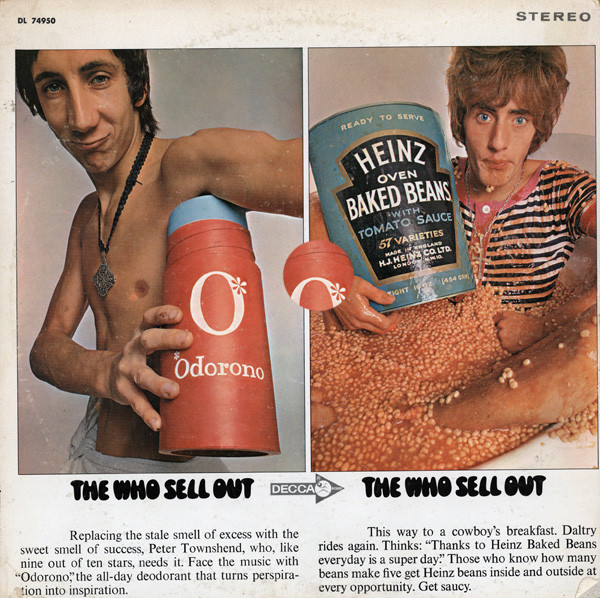
The Who Sell Out came roaring out of 1967 like a pirate radio signal cutting through the static, and baby, it was something else entirely. Recorded that same year and released on Decca Records under the watchful eyes of producers Kit Lambert and Chris Stamp, this record was The Who firing on all cylinders and then some. The concept was bold, audacious, and flat-out brilliant — the band wrapped the whole affair in a framework of fake commercial jingles and mock radio station announcements, presenting the album as a tongue-in-cheek broadcast from one of those renegade offshore pirate radio stations that had been lighting up the British airwaves. It was satire with a backbeat, commerce with a wink, and rock and roll with a whole lot of nerve.
Reception
- The album reached number 13 on the UK Albums Chart and number 48 on the Billboard 200, proving The Who had ears on both sides of the Atlantic.
- Upon its initial release the critical reception was a mixed bag, but time has been extraordinarily kind to this record — it has since been reassessed as one of the most innovative and ambitious album constructions of its era.
- The single 'I Can See for Miles' emerged as one of the crown jewels of The Who's entire catalog, drawing widespread praise for its densely layered production and Pete Townshend's soaring compositional vision.
Significance
- The Who Sell Out stands as a pivotal marker in the band's artistic evolution, capturing the moment they began stretching beyond their mod rock roots and pushing headlong into psychedelic and experimental territory — a journey that would ultimately lead them to Tommy.
- The album's structural conceit of embedding fake radio commercials and jingles between songs was a genuinely radical act of album architecture in 1967, treating the LP format itself as a canvas for cultural satire in a way that few artists had dared to attempt.
- By framing rock music within the language of mass consumerism and broadcast media, The Who Sell Out anticipated and helped define the concept album ambitions that would come to shape the most celebrated rock records of the decade that followed.
Tracklist
-
A1 Armenia City In The Sky - Heinz Baked Beans —
 4:11
4:11
-
A2 Mary-Anne With The Shaky Hands —
2:06
-
A3 Odorono 125
2:18
-
A4 Tattoo 112
3:45
-
A5 Our Love Was, Is —
3:07
-
A6 I Can See For Miles 129
4:05
-
B1 I Can't Reach You - Spotted Henry —
3:31
-
B2 Relax 131
2:38
-
B3 Silas Stingy 129
3:00
-
B4 Sunrise 124
3:00
-
B5 Rael 131
5:38

Artist Details
The Who burst onto the scene out of London, England back in 1964, bringing with them a raw, explosive brand of rock and roll that hit harder than anything coming out of Britain at the time — Pete Townshend's windmill power chords, Keith Moon's thunderous drumming, and Roger Daltrey's lion-roar vocals made them a force of nature unlike any other. They pioneered the rock opera with albums like Tommy and Quadrophenia, proving that rock music could tell deep, complex stories while still making you want to tear the roof off the joint. Their anthems of youth rebellion — My Generation, Baba O'Riley, Won't Get Fooled Again — didn't just soundtrack a generation, they defined what it meant to be young and restless, cementing The Who as one of the most important and electrifying bands in the history of rock and roll.