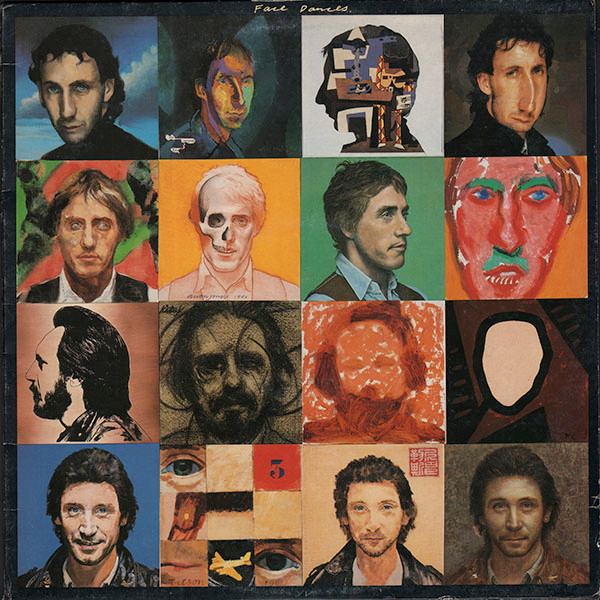

Billy Idol
 View on Discogs
 View on Wikipedia
Album Summary
Born out of the ashes of Generation X and the raw energy of the London punk scene, Billy Idol's self-titled debut came roaring out of Chrysalis Records in 1982, produced by the formidable Keith Forsey alongside Idol himself. Recorded as MTV was just beginning to flex its considerable muscle and reshape the entire music landscape, this record found Idol stepping boldly into his own spotlight — trading in the ragged edges of pure punk for something sleeker, harder, and undeniably more dangerous. It was the sound of a man who had paid his dues on the underground circuit and was now ready to let the whole world feel it, a debut that arrived not with a whisper but with a leather-jacketed, lip-curling roar that nobody in 1982 was quite prepared for.
Reception
- The album peaked at #45 on the Billboard 200 and reached #23 on the UK Albums Chart, announcing Idol as a formidable solo force almost immediately upon release.
- White Wedding became the album's breakout single, cracking the UK top 10 and earning heavy rotation on the fledgling MTV network, where Idol's visual charisma proved just as potent as his music.
- Rock and new wave radio stations on both sides of the Atlantic embraced the record warmly, recognizing a rare artist who could satisfy the punk faithful and the mainstream pop-rock audience at the same time.
Significance
- The album stands as a landmark document of post-punk's evolution — the moment when the raw fury of the late 1970s punk movement began sharpening itself into the more commercially refined but still gloriously rebellious new wave sound of the early 1980s.
- Billy Idol's magnetic visual identity — the sneer, the bleached hair, the studded leather — helped define the aesthetic vocabulary of the MTV era itself, proving that image and music could amplify each other into something far greater than either alone.
- By bridging genuine punk rock credibility with polished, radio-ready production, this debut quietly set the template for an entire generation of post-punk artists who dared to believe that selling records and keeping your soul were not mutually exclusive pursuits.
Samples
- White Wedding — one of the most recognizable riffs of the 1980s, widely interpolated and referenced across hip-hop, electronic, and pop productions over the decades since its release.
- Dancing With Myself — a foundational track in the post-punk and new wave canon that has been sampled and remixed extensively across electronic, dance, and hip-hop communities, cementing its status as one of the era's most enduring and repurposed recordings.
Tracklist
-
A1 Come On, Come On 146
 4:00
4:00
-
A2 White Wedding (Part 1) —
4:11
-
A3 Hot In The City 112
3:40
-
A4 Dead On Arrival 143
3:54
-
A5 Nobody's Business 154
4:06
-
B1 Love Calling 152
4:58
-
B2 Hole In The Wall 125
4:14
-
B3 Shooting Stars 149
4:30
-
B4 It's So Cruel 107
5:20
-
B5 Dancing With Myself 178
3:19

Artist Details
Billy Idol burst onto the scene in London, England, emerging first from the late 1970s punk outfit Generation X before going solo and carving out his own electrifying lane where punk aggression met pop hooks and new wave shine, creating a sound that was equal parts danger and danceable. That bleached-blonde rebel became one of the defining faces of the MTV era in the early 1980s, with anthems like White Wedding and Rebel Yell turning him into a certified rock icon whose sneer and swagger were as much a part of the cultural landscape as the music itself. Billy Idol proved that punk didn't have to stay underground to stay dangerous — he took it mainstream and made the whole world feel the voltage.