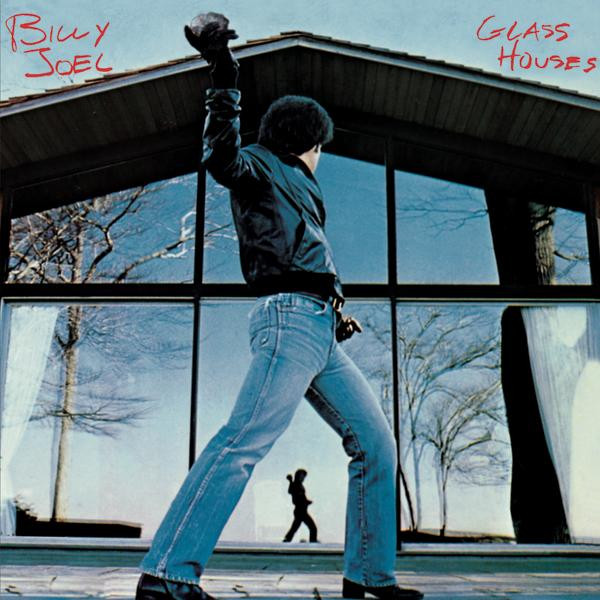
Glass Houses
 View on Discogs
 View on Wikipedia
Album Summary
Glass Houses came roaring out of the speakers in 1980 on Columbia Records, and baby, it was Billy Joel saying loud and clear that he was done being pigeonholed as just the sensitive piano man. Recorded with his trusted producer Phil Ramone — a man who knew how to capture lightning in a bottle — Joel went into the studio with something to prove. He wanted the rock radio dial, he wanted the arenas, and he built this record from the ground up to get there. It was a deliberate, hungry reinvention, stacking electric guitars against those trademark melodies and coming out the other side with one of the most vital records of his career.
Reception
- Glass Houses climbed all the way to No. 1 on the Billboard 200, sitting at the top of that chart for six weeks and becoming one of the biggest commercial triumphs of Joel's storied run.
- The album went multi-platinum and launched two massive hit singles in 'You May Be Right' and 'It's Still Rock And Roll To Me,' the latter of which became a cultural touchstone of the era.
- Critics received the album warmly, recognizing it as a bold and largely successful reinvention that never lost sight of Joel's gift for melody and sophisticated songwriting.
Significance
- Glass Houses marked a genuine and gutsy pivot toward arena rock and new wave sensibilities at a moment when those sounds were reshaping radio, and Joel didn't just dip his toe in — he cannonballed, proving he could run with acts like The Cars and Tom Petty on their own turf.
- The album stands as a snapshot of early 1980s pop-rock at its most confident, capturing an artist in the act of expanding his range without abandoning the melodic intelligence that made him great in the first place.
- By breaking out of the adult contemporary lane and commanding rock radio, Joel demonstrated that a songwriter of his generation could evolve with the times and bring a whole new audience along for the ride.
Tracklist
-
A1 You May Be Right 150
 4:07
4:07
-
A2 Sometimes A Fantasy 161
3:39
-
A3 Don't Ask Me Why 98
2:56
-
A4 It's Still Rock And Roll To Me 144
2:55
-
A5 All For Leyna 142
4:10
-
B1 I Don't Want To Be Alone 129
3:34
-
B2 Sleeping With The Television On 150
2:59
-
B3 C'Etait Toi (You Were The One) 127
3:45
-
B4 Close To The Borderline 90
3:45
-
B5 Through The Long Night 174
2:45

Artist Details
Billy Joel is a piano-driven rock and roll poet out of the Long Island, New York scene, who burst onto the national stage in the early 1970s and never looked back, blending rock, pop, and a little bit of that blue-collar soul into something that felt like it was speaking straight from the gut of everyday America. His catalog — from *Piano Man* to *The Stranger* to *Glass Houses* — didn't just top the charts, it became the soundtrack of a generation wrestling with love, ambition, and the changing American dream, earning him a spot among the all-time greats alongside Elton John and Bruce Springsteen. Billy Joel's cultural staying power runs deep, with his storytelling style and melodic mastery influencing countless artists who came after him, and his music still holding up like fine vinyl — the kind you never stop spinning.