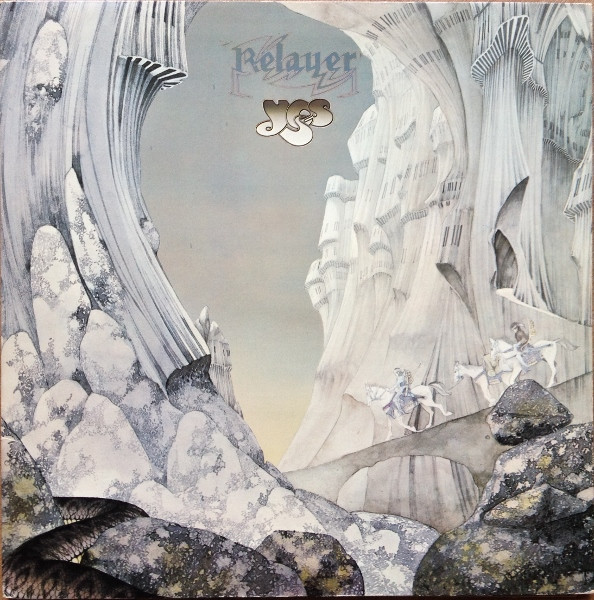
Relayer
 View on Discogs
 View on Wikipedia
Album Summary
Relayer was laid down in 1974 at Manticore Studios in London — that's Emerson, Lake and Palmer's own house, baby — and came roaring out through Atlantic Records that November, a album that let the world know Yes was not done pushing the envelope, not by a long shot. The band produced it themselves, which meant nobody was standing in the way of their vision, and what a vision it was. The most consequential change in the studio was the presence of Patrick Moraz on keyboards, stepping into the considerable shadow left by the departing Rick Wakeman and bringing with him a jazz fusion fire that would color every single note on this record. The sessions were defined by long, searching improvisation and a heavier, more muscular approach than anything Yes had committed to tape before, and the result was something that sounded like no other album in their catalog — or anyone else's.
Reception
- Relayer climbed to number 4 on the UK Albums Chart and number 5 on the Billboard 200 in the United States, a remarkable commercial showing that proved Yes could weather a major lineup change and still move serious numbers on both sides of the Atlantic.
- Critical reception on first release was a complicated thing — some reviewers found the album's dense, aggressive textures and sprawling compositions genuinely difficult to reckon with, and a few walked away shaking their heads — but time has been extraordinarily kind to Relayer, and progressive rock scholars have since elevated it to one of the genre's essential documents.
- The Gates of Delirium, the epic that commands the entire first side of the record and draws its inspiration from Tolstoy's War and Peace, became particularly celebrated among fans and serious critics as one of the most ambitious compositions Yes ever dared to attempt.
Significance
- Relayer stands as one of the most adventurous and jazz-influenced statements in the entire progressive rock canon, a record that stretched the genre's possibilities through knotty time signatures, orchestral sweep, and the kind of extended improvisation that most rock bands simply did not have the nerve or the chops to attempt.
- Patrick Moraz brought something genuinely new into the Yes universe — a distinctly jazz fusion sensibility that made Relayer a singular and somewhat standalone work in the band's long catalog, a bridge between the progressive rock world and the jazz fusion movement that was setting the mid-1970s on fire.
- The album's conceptual and musical ambition has secured its place as a touchstone for progressive rock musicians and historians examining the genre's peak creative years, a record that shows just how far a band could reach when commerce stepped aside and pure artistic hunger took the wheel.
Tracklist
-
A The Gates Of Delirium 71
 21:55
21:55
-
B1 Sound Chaser —
9:25
-
B2 To Be Over —
9:08

Artist Details
Yes is one of those bands that came straight out of London in 1968 and proceeded to rewrite the rulebook on what rock music could be, blending classical sensibility, jazz complexity, and pure cosmic imagination into a sound so lush and layered it felt like the universe itself was playing guitar. With founding members Jon Anderson and Chris Squire steering the ship, Yes became the undisputed kings of progressive rock, delivering epic masterworks like Fragile and Close to the Edge that proved rock music could be as ambitious and sophisticated as any symphony hall experience. Their influence cut so deep that generations of musicians — from arena rock giants to new age experimenters — still carry the fingerprints of Yes all over their work, cementing their legacy as true architects of the progressive rock movement.