Sweetnighter
 View on Discogs
 View on Wikipedia
Album Summary
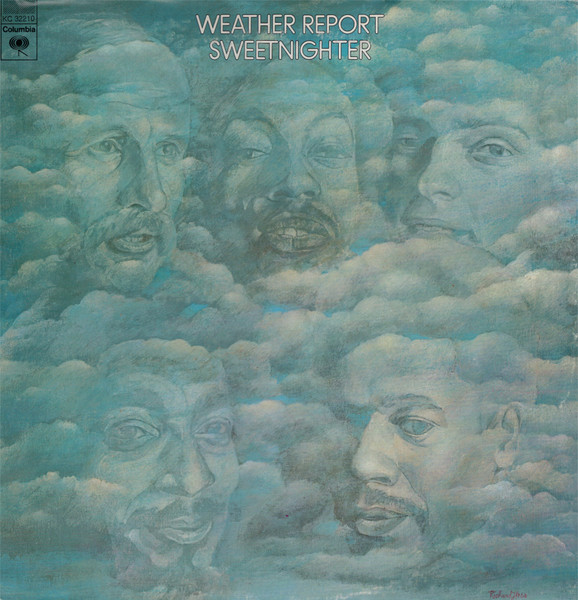
Sweetnighter came rolling out of Columbia Records in 1973, and baby, it was the sound of Weather Report finding their groove — and we mean that literally. The third studio album from this powerhouse ensemble, helmed by the visionary duo of Joe Zawinul and Wayne Shorter, was self-produced by the band themselves, a testament to the total artistic command these cats exercised over their music. Recorded as the jazz fusion movement was reaching its creative peak, Sweetnighter marked a deliberate and bold turn toward rhythm, funk, and electric texture — a deeper, darker, more hypnotic direction than anything Weather Report had attempted before. This was not background music. This was a statement.
Reception
- The album earned critical acclaim for its boundary-pushing fusion of jazz, funk, and world music influences, with reviewers recognizing Weather Report as one of the most adventurous and forward-thinking ensembles of the era.
- Sweetnighter helped cement Weather Report's reputation as innovative leaders of the early 1970s jazz fusion movement, drawing attention from both the jazz community and a wider audience hungry for something new.
- The record's embrace of groove-oriented composition was noted as a significant and somewhat surprising stylistic shift, sparking discussion among critics about the evolving identity of jazz itself.
Significance
- Sweetnighter stands as a landmark document of the jazz fusion movement, capturing Weather Report in the act of pushing past avant-garde abstraction and leaning hard into funk, rhythm, and electric soul — a evolution that would define the decade.
- The album showcased Joe Zawinul and Wayne Shorter's pioneering use of electronic instruments and studio production techniques, placing Weather Report at the absolute cutting edge of what was sonically possible in jazz at the time.
- With tracks like Boogie Woogie Waltz and 125th Street Congress, Sweetnighter demonstrated that jazz could carry the weight of the street, the church, and the cosmos all at once — bridging experimental improvisation with a funkiness that spoke to a generation.
Samples
- Boogie Woogie Waltz — one of the most recognized tracks from the album with a known sampling legacy in later jazz-influenced and hip-hop productions.
Tracklist
-
A1 Boogie Woogie Waltz 129
 13:01
13:01
-
A2 Manolete 85
5:50
-
A3 Adios 57
2:56
-
B1 125th Street Congress 98
12:12
-
B2 Will 83
6:13
-
B3 Non-Stop Home 134
4:50

Artist Details
Weather Report was a jazz fusion powerhouse born out of New York City in 1970, brought to life by the brilliant minds of keyboardist Joe Zawinul and saxophonist Wayne Shorter, two cats who had already paid their dues with Miles Davis before striking out to create something entirely their own. Their sound was a cosmic blend of jazz, funk, rock, and world music — electric, unpredictable, and deeply soulful — reaching its peak groove with the landmark 1977 album Heavy Weather, which gave the world the irresistible bass line of Birdland, played by the incomparable Jaco Pastorius. Weather Report didn't just push the boundaries of jazz — they shattered them, proving that improvisation and innovation could live together on the same stage, and their influence echoes through every genre-bending musician who came after them.